
The political landscape is already buzzing with speculation regarding the 2028 Republican presidential primary, even with the next election cycle several years away. Amidst this early maneuvering, Vice President JD Vance has consistently emerged as a formidable presence in preliminary public opinion polls.

These early numbers, though non-binding and highly fluid, offer a fascinating glimpse into the current sentiment among the Republican electorate and suggest a clear frontrunner is already establishing an impressive lead among potential contenders.
One of the most recent data points capturing significant attention comes from a December 2025 Yale Youth Poll, which specifically gauged support among likely Republican voters for the 2028 contest. The findings from this particular survey placed Vance well ahead of the pack, securing a striking
51% support.
This figure is critical in early polling, demonstrating that he commands the allegiance of more than half of the sampled Republican electorate when President Donald Trump’s name is not included as an option.
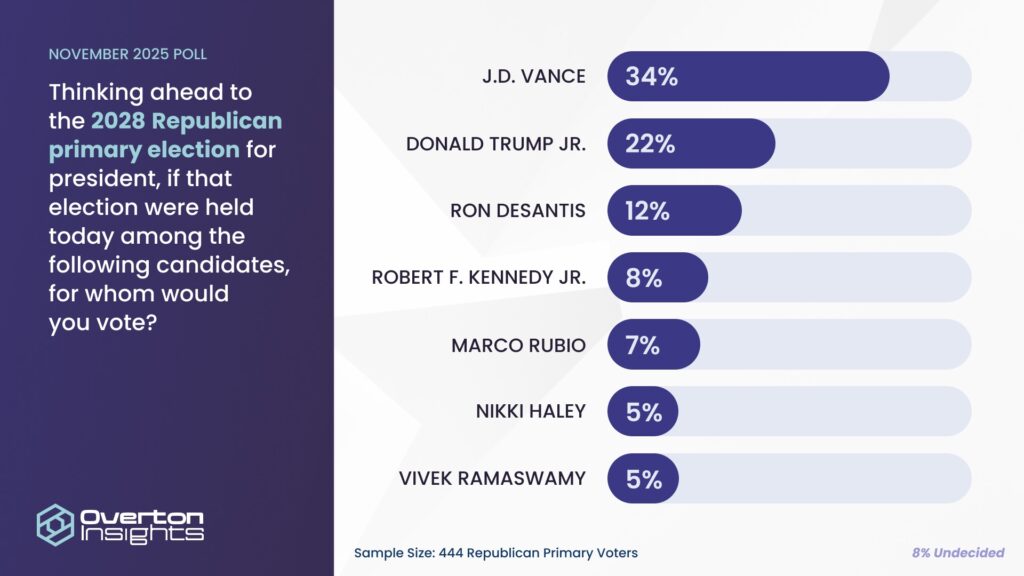
This commanding lead, often echoed across various other independent polls throughout the year, signals a significant consolidation of support behind the Vice President. It suggests that a large segment of the party views him as the natural successor and a torchbearer for the political movement that propelled him into national office.
His ascent in these early preference polls is a direct result of his heightened visibility and his role as a key figure in the current administration’s success and policy achievements.

When comparing Vance’s figures to other rumored candidates—such as former cabinet members, fellow senators, or prominent governors—the separation is stark. While others struggle to break double-digit percentages, Vance’s sustained majority support positions him uniquely.
This kind of early momentum can translate into powerful advantages down the line, including greater fundraising potential, increased media coverage, and the attraction of key endorsements from party leaders and influential organizations.
However, any analysis of these polls must include the critical caveat regarding the influence of President Trump. In scenarios where the incumbent President is included in the polling options, the landscape shifts dramatically.
Historically, any sitting or recently-serving President tends to absorb the vast majority of the party’s support. This dynamic explains why Vance’s percentage might drop significantly in hypothetical matchups against the sitting President, though he still remains a strong runner-up, indicating deep, established support.

Ultimately, these preliminary poll results serve as a powerful narrative tool for the Vance team. They provide quantifiable evidence that his political brand resonates strongly with the base and that he possesses the broad appeal necessary for a national campaign.
While the political environment is certain to change dramatically over the next few years, these December 2025 figures establish a clear benchmark: JD Vance is the undisputed early favorite in the nascent race for the 2028 Republican nomination. His sustained support suggests that his path to the top of the ticket is currently the clearest among all non-presidential contenders, setting the stage for an intriguing electoral cycle.