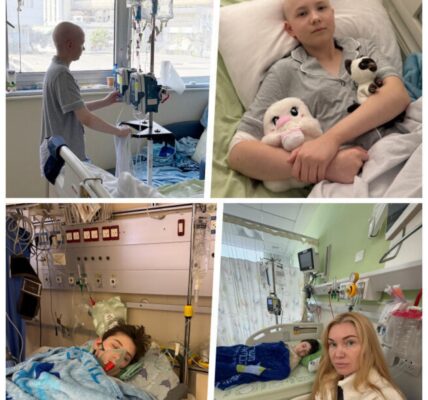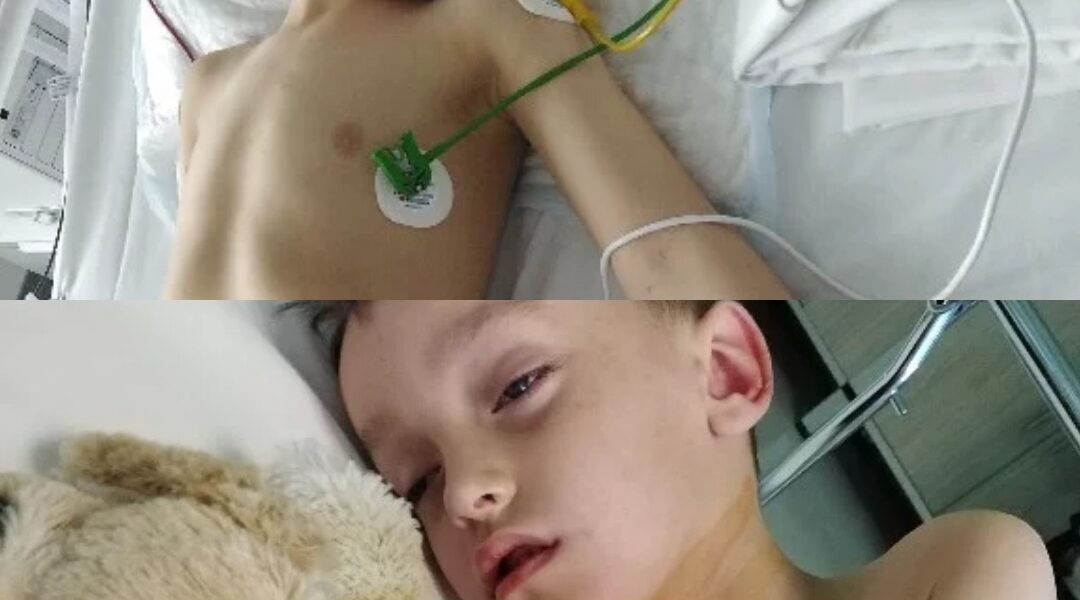

Our nightmare began on May 19th, a day that started like any other. We took our five-year-old son, Olek, for a routine ophthalmology check-up, unaware that his life — and ours — was about to change forever. That visit, meant to be simple and reassuring, quickly became the beginning of a harrowing journey. The ophthalmologist noticed raised discs at the back of Olek’s eyes. At the time, we did not understand the gravity of this observation, but I felt a sinking feeling in my chest. We were immediately referred to the University of Clinical Clinics in Gdańsk for further examination.
The next day, an MRI was performed, and the waiting began. Anxiety gnawed at me with every passing moment. When the results finally came, they confirmed our deepest fears: Olek, a lively, healthy-looking child, had a large tumor on his head. It was a shock so sudden and severe that there was no time to process it. Within hours, arrangements were made for immediate transport to Warsaw, where specialists at the Children’s Memorial Health Institute were ready to perform life-saving surgery. What should have been a routine day had turned into a race against time for Olek’s life.
On May 20th, we arrived in Warsaw, hearts pounding, as we met with the neurosurgical team. The news was overwhelming: the tumor was five centimeters, located near the cerebellum, and causing hydrocephalus, which increased intracranial pressure. The surgery would be complex, fraught with risks, and even after removal, complications were likely. My child’s life hung in the balance, and yet there was no alternative.
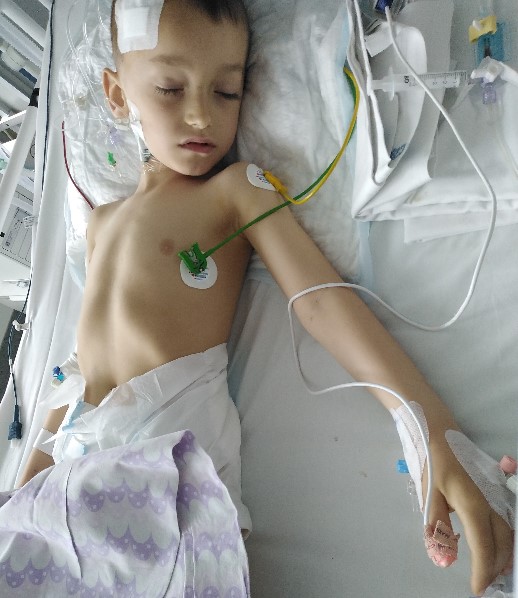
The surgery took place on May 21st, lasting six of the longest hours of our lives. When Olek woke up in the intensive care unit, he looked different — changed by the ordeal he had endured. By the next day, we learned that he had developed left-sided paresis, a consequence of cerebellar syndrome caused by the tumor and surgery. His movements were impaired, and his emotions were raw; tantrums and frustration overtook him, leaving both Olek and me feeling helpless.
As if this were not enough, a cerebrospinal fluid leak was discovered shortly thereafter. While a shunt implantation was scheduled as a precaution, Olek’s resilience and strength allowed the doctors to delay it for the moment. Despite these challenges, our son remained determined, showing an indomitable spirit that inspires everyone around him.
We spent sixteen days in the neurosurgery ward, each moment a tense balance between hope and fear. Time was a constant pressure, yet we faced not only the immediate recovery but the looming threat of oncology treatments. Biopsy results confirmed the diagnosis of medulloblastoma, a highly malignant brain tumor, and revealed that the tumor could not be completely removed during surgery. The reality of what lay ahead was daunting: chemotherapy, radiotherapy, and an extended, difficult rehabilitation process.
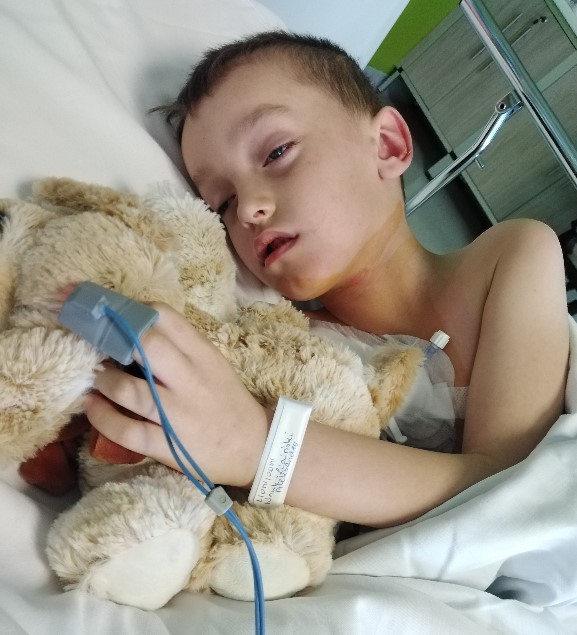
The road to recovery has been long and grueling. Chemotherapy and radiotherapy challenge Olek’s young body daily, testing his strength, endurance, and patience. Rehabilitation sessions are crucial for him to regain function, learn to move with coordination, and adapt to the deficits caused by the tumor and surgery. Speech, balance, and motor skills require constant attention. Every small milestone — a step forward, a hand movement, a moment of clarity or joy — feels monumental.
Olek’s courage, however, remains unwavering. Even in the face of pain, discomfort, and uncertainty, he faces each day with remarkable determination. His spirit shines through every tantrum, every frustrated cry, and every smile that breaks through the challenges. As a parent, watching him struggle and yet continue to fight has been both heartbreaking and inspiring. His strength fuels our own hope and resilience, reminding us why we endure each long hospital stay, each therapy session, and each sleepless night.
Olek’s story is not just about medical procedures or diagnoses; it is about bravery, resilience, and the unwavering love that surrounds him. It is a story of a child forced to grow up too quickly, yet refusing to surrender to fear. His journey reminds us of the power of family, medical care, and community support. Every therapy, every treatment, and every prayer brings him one step closer to reclaiming a childhood altered by illness but not defeated.

We remain committed to providing Olek with every opportunity for recovery, to ensuring he receives the best care and rehabilitation possible. His path will never be easy, but with continued support, love, and determination, Olek has the chance to grow, thrive, and enjoy the life he deserves. Each day is a victory, and each step forward is a testament to his extraordinary courage.
Biggie — The Stray Dog Whose Giant Tumor Couldn’t Crush His Gentle Soul.3557
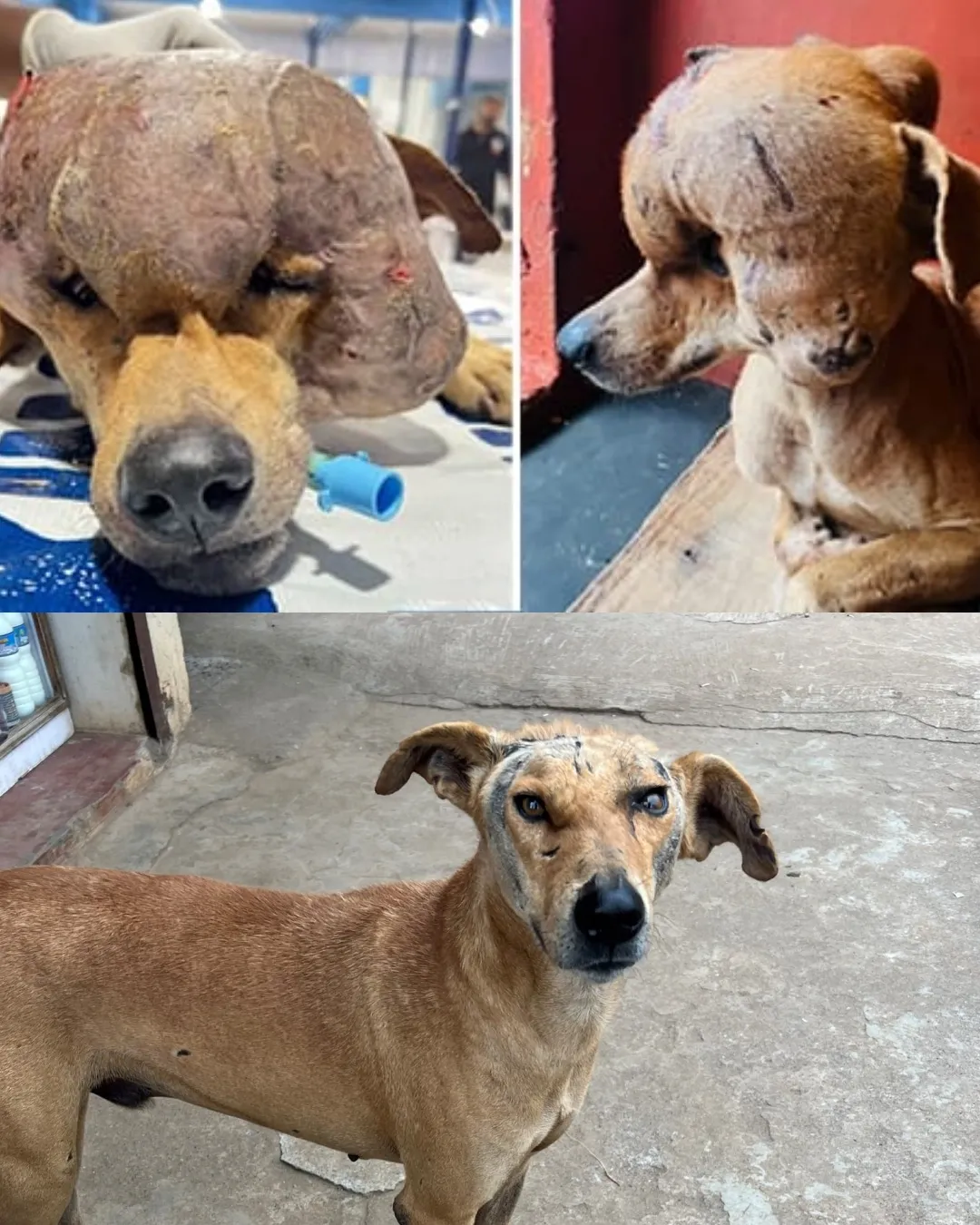
On the crowded streets of Mettupalayam, India, where stray dogs are an everyday sight, one lonely figure brought traffic — and hearts — to a standstill. He wandered slowly, almost painfully, with an enormous swollen mass engulfing the top of his head. His steps were uncertain, his head so heavy he could barely lift it. Yet beneath the shocking sight was a quiet dignity, a soul that refused to disappear.
His name would soon be Biggie.
India is home to tens of millions of stray dogs, many surviving unnoticed amid the noise of daily life. But Biggie was impossible to ignore. Locals had seen him roaming aimlessly for weeks, the massive growth growing larger, weighing him down, stealing his strength. He was alone, exhausted, and clearly running out of time.
For animal lovers, it was the kind of sight that breaks your heart — and for one group of rescuers, it was a call they could not turn away.
Biggie’s guardian angels arrived in the form of a veterinary team from
Worldwide Veterinary Service (WVS), an international organization known for stepping in when cases seem too severe, too complicated, or too late. Thousands of miles from their UK base, the team was working in India to help animals who had nowhere else to go.
And Biggie was one of the most extreme cases they had ever seen.

“We had never seen anything like this”
When the seven-year-old dog was brought to the WVS India center, the team moved quickly. Biggie was dehydrated, in pain, and visibly weakened — yet astonishingly, his spirit was intact. Despite the weight on his head and the discomfort in his body, he wagged his tail. He leaned into gentle hands. He trusted.
“He was suffering immensely, but he was still so affectionate,” recalled one of the veterinarians. “That alone told us he was worth fighting for.”
The team immediately administered fluids and pain relief before running X-rays and scans. What they discovered gave them a fragile but vital window of hope: the massive tumor — weighing an estimated
2 kilograms (4.4 pounds) — had not yet penetrated Biggie’s skull. It was wrapped tightly around the top of his head, but it hadn’t invaded his brain.
That single detail meant everything.
Without surgery, Biggie would not survive. With it, there was a chance.
A surgery that saved a life
Just two days later, Biggie was wheeled into the operating room. The procedure was long, complex, and risky. The tumor accounted for
more than 10% of his total body weight, an almost unimaginable burden for a dog who had been living on the streets.
Slowly, carefully, the veterinary team removed the mass that had been stealing Biggie’s strength and vision of the world. When the tumor was finally separated and weighed, the room fell silent. Few had ever seen a dog endure — and survive — something like this.

Biggie had made it through.
But the journey wasn’t over.
A gentle fighter with a giant heart
Recovery would require more than one surgery. Biggie needed two additional reconstructive procedures
, intensive wound care, and constant monitoring. Infection was a real risk. Pain management was critical. Rest was essential.
And through it all, Biggie remained exactly who he had always been — gentle, patient, and overflowing with love.
“Biggie is one of the most affectionate dogs I’ve ever met,” said Dr. Shreya Bahl, one of the veterinarians overseeing his care. “Despite everything he’s been through, he just wants to be close to people. He wants to be loved.”

At the center, Biggie quickly became a favorite. Staff and volunteers spoiled him with attention, soft beds, kind words, and careful hands. For the first time in his life, he didn’t have to wander. He didn’t have to search for scraps. He didn’t have to carry his pain alone.
“He’s the star of the center,” Dr. Bahl shared with a smile. “And he deserves every bit of it.”
A new life begins
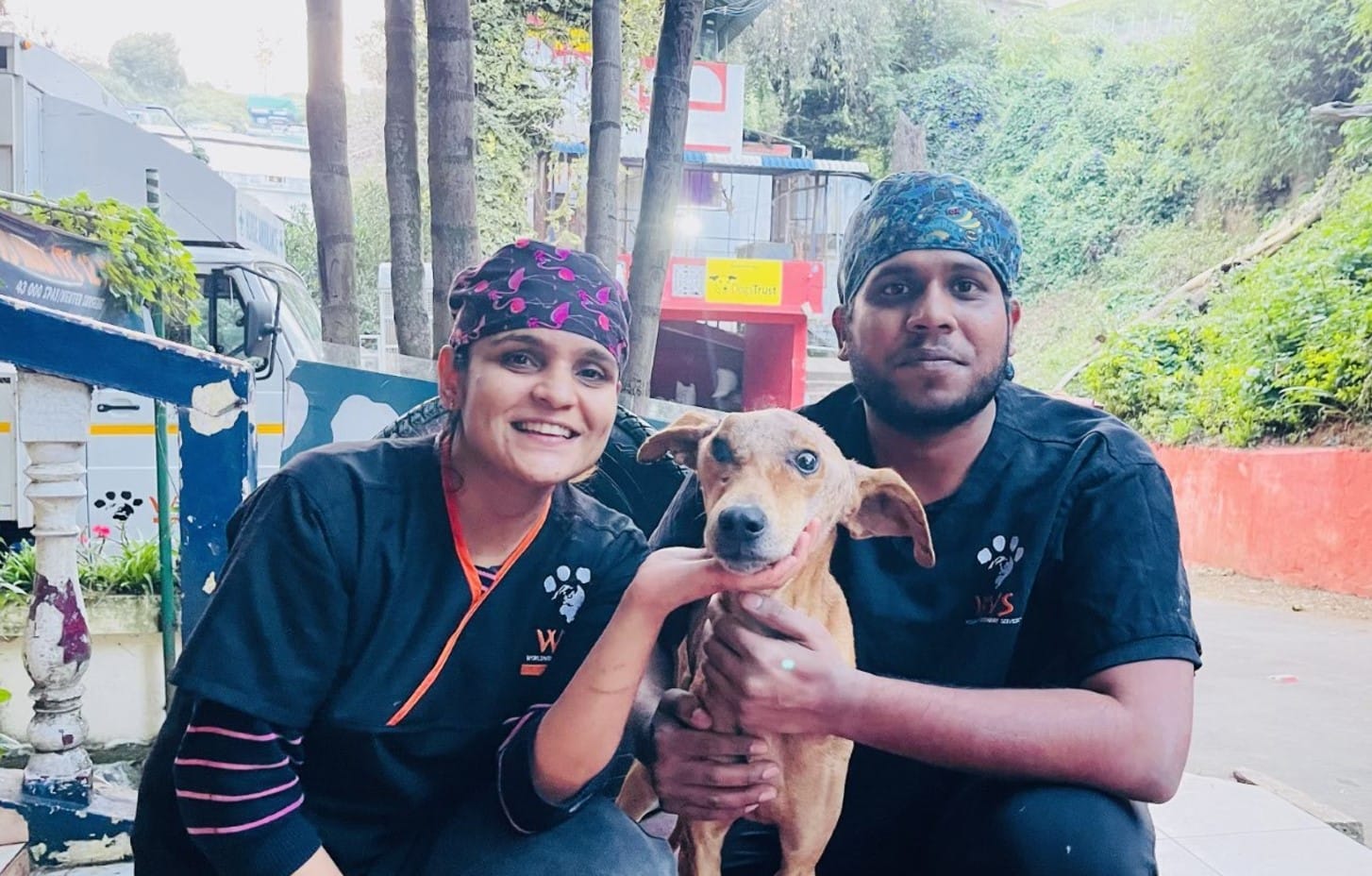
Today, Biggie is recovering at the WVS India facility in Ooty, where he now lives at their International Training Centre. Each day, he grows stronger. He plays more. He eats better. And most importantly — he can finally lift his head and look directly into the eyes of the people who saved him.
Once burdened by a tumor so large it nearly took his life, Biggie is now a living symbol of resilience. Of second chances. Of what happens when compassion meets action.
He will remain under WVS care until the perfect forever home is found — a place where his gentle nature and courageous heart will be cherished for the rest of his days.
More than just a rescue
Biggie’s story is not just about one dog. It’s about what happens when someone chooses not to look away. When a suffering animal is seen not as a problem, but as a life worth saving.
For anyone who wonders whether a single act of kindness can truly change the world, Biggie is the answer.
Once overlooked, once burdened by pain, once fading into the background of a busy town — Biggie now stands as proof that love, skill, and compassion can rewrite even the bleakest stories.
Sometimes, healing doesn’t just save a life.
Sometimes, it reminds us why kindness matters at all.