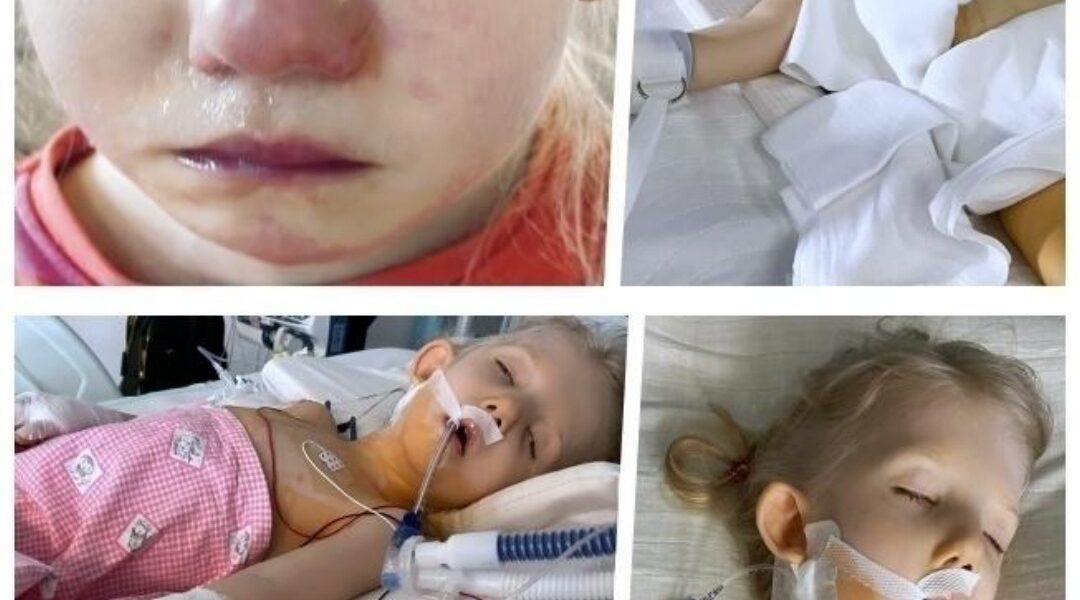

There are only days left before Mila Murawska must return to the operating room. This surgery was never planned, never expected, and yet it has become unavoidable. Time is no longer measured in weeks or months, but in hours and heartbeats, as doctors prepare for another attempt to save the life of a little girl whose heart has fought from the very beginning.
The first photograph of Mila was not taken in celebration. It was taken by a nurse as she waited for an ambulance. That was the first time her mother ever saw her daughter. There were no proud messages sent to family, no quiet moment to breathe in the miracle of birth. Mila entered the world already fighting to stay in it, her tiny body struggling against a defect so severe it threatened her life within moments.
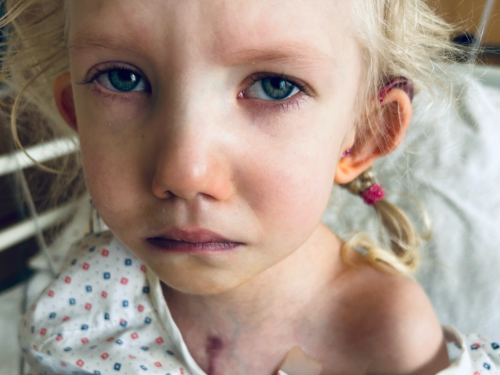
That fight did not ease with time. It stretched on for seven relentless months, during which Mila survived only because she was connected to ECMO, a machine that replaced the work of her heart and lungs. One day, still lying in an incubator, Mila opened her eyes and looked straight at her mother. It felt like a silent promise had passed between them. Her mother would not give up on her, and Mila would not give up either. And she didn’t.
Mila was born with an extreme form of tetralogy of Fallot. In Poland, doctors could only offer palliative care—treatment that might extend her life, but could not truly fix her heart. Shortly after birth, an artificial tube was implanted to allow blood to reach her lungs. Like so many parents clinging to hope, Mila’s mother believed it might be enough. She dared to imagine that perhaps her daughter would grow stronger, that maybe life would find a way.
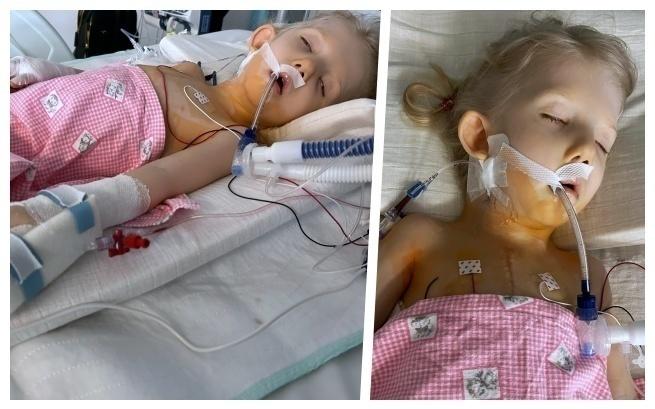
For a time, that hope survived. But three years later, tests revealed a terrifying truth. The shunt had closed. Mila was alive only because her body had created its own fragile network of blood vessels—something never meant to sustain her. She was surviving on borrowed time.
There was no room to wait. Then came another devastating blow. Surgery in Poland was refused. A doctor who had once planned to operate told the family he could not proceed. Just two weeks earlier, a child with a similar defect had died during surgery. The risk was too high. Mila’s parents were forced to look beyond their country, beyond familiarity, searching anywhere in the world for someone willing to fight for their daughter.

Help came from Linz, Austria. Doctors there agreed to take on what others could not. With the support of donors, enough money was raised for the first operation. On January 13th, Mila was given another chance at life. Surgeons implanted a valve and reconstructed her pulmonary artery. The surgery was successful. For a brief moment, it felt as though the worst might finally be over.
But Mila’s heart had more battles ahead.
Weakened by repeated intubations, she stopped eating and had to be fed through a PEG tube. Slowly, painfully, she began to regain weight and strength. Then suddenly, everything unraveled again. Doctors discovered that vessels which could not be closed during surgery were flooding her lungs. Mila was suffocating from the inside, her breath stolen by her own circulation.

In critical condition, she underwent emergency catheterization. One major collateral vessel was closed, saving her life once more. Her condition stabilized enough for her to return home after a month and a half in the hospital. But home came with a crushing reality: a bill far larger than expected, as the original estimate had not included the many unforeseen procedures or the extended stay.
Now Mila is weak again, and another operation looms. One vessel is still leaking, still overwhelming her lungs. It must be closed urgently. First through catheterization, then surgery. If all goes well, doctors will also close the ventricular septal defect. If not—if pulmonary hypertension develops—everything may be delayed, and the danger will grow.

Her mother carries memories that refuse to fade. Mila alone in the NICU, heavily sedated, staring at the wall. Too small to understand where she was, why she was hurting, or why her mother could not always be beside her. Those images live in her heart every day.
Mila wants to live. She has shown it since her first breath. Her mother is asking for help not for comfort, not for ease, but for survival. For a life without constant pain and fear. For a future where Mila can simply be a child.
The surgery is scheduled for March 27th. The countdown has begun. And with every passing moment, hope and urgency walk hand in hand.
Wiktor: A Childhood Lost to Pain and Itching.3287

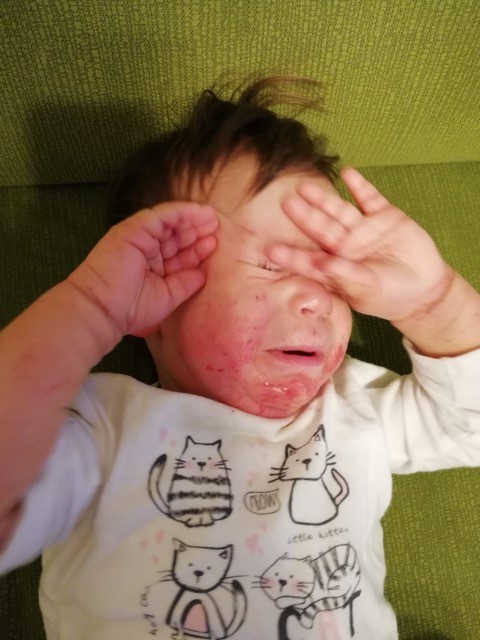
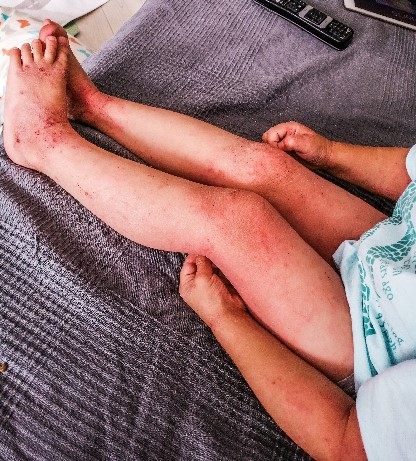
Crying, scratched wounds, and constant discomfort. This is what life looks like for 3.5-year-old Wiktor every single day. Since he was just three months old, he has suffered from a severe form of atopic dermatitis caused by food, inhalant, and contact allergies, leaving his skin perpetually red, inflamed, and unbearably itchy.
The inflammation covers almost his entire body—his legs, arms, belly, back, and groin are constantly affected. No corner of his skin is free from irritation, and he no longer remembers what it feels like to live without itching and pain. Even while trying to play or hold a toy, his hands instinctively scratch, as if driven by an uncontrollable need.
He scratches until the wounds bleed, and only then does he feel temporary relief. The constant trauma to his skin has caused pus to form on his fingers, and despite having his nails trimmed short, they curl unnaturally. The severity of his condition has made daily activities nearly impossible, and his legs, in particular, are in a critically bad state, with only a few patches of healthy skin remaining.

His arms and back are just as affected—extremely dry, with large red, inflamed patches that are painful to touch and hard to moisturize. The skin has become so tough and thick that even applying creams feels like a monumental task. Everyday life has been overtaken by the realities of his condition: bloody clothes stuck to open wounds, sleepless nights, and constant care.
Wiktor’s diet is severely restricted. Any attempt to expand it results in flare-ups of his dermatitis, swelling of his lips and eyelids, and further skin breakdown. Despite following strict guidance from allergists and dermatologists, his condition remains the most severe case they have ever encountered. Stabilizing him is an ongoing struggle that has consumed our family’s daily life and energy.
We have tried every possible conventional treatment: emollients, pharmacy-prepared ointments, and medications, yet nothing has provided lasting relief. His skin remains extremely dry, constantly flaking, and prone to cracking. The sheer volume of creams applied each day barely manages to soothe the constant itching or restore moisture.

After exhausting traditional options, we decided to try therapy at the Avene Spa in France, a facility renowned for treating the most severe dermatological cases. Many children with similar conditions experience notable improvements there, and we are clinging to hope that Wiktor will be one of them.
The Avene treatments involve the use of specialized spa water, which is designed to penetrate deeply into the skin, restoring moisture and elasticity while preventing further cracking and flaking. Strengthening the epidermal barrier may also reduce the rate at which his skin sensitizes to allergens, a vicious cycle that has worsened his condition over time.
This therapy represents more than a potential improvement in skin health; it represents a chance at a childhood that isn’t dominated by pain, discomfort, and endless scratching. We dream of a day when Wiktor can play freely without constantly bleeding from his skin, when he can wear normal clothes without them sticking to wounds, and when he can experience the joy of being a child rather than living in the shadow of his illness.

Every day, we witness the toll this condition has taken on his body and spirit. Simple acts like running, climbing, or even holding a toy are often interrupted by scratching. Sleep is disrupted repeatedly by itching and discomfort, leaving him exhausted and irritable. Seeing our little boy struggle so constantly has been heartbreaking and exhausting.
Yet Wiktor remains strong and remarkably resilient. Even in the face of pain that would crush the spirit of many adults, he continues to play, laugh, and show curiosity about the world around him. His perseverance fuels our determination to seek every possible way to help him live a more comfortable life.
This journey is not easy. The treatments, travel, and care required are expensive and physically demanding, but we are committed to doing everything possible to give Wiktor relief. We hope that Avene’s therapy can restore a measure of normalcy to his life and provide him with the chance to simply be a child again.
Through sleepless nights, constant vigilance, and the frustration of seeing no improvement, we cling to hope. Hope that Wiktor’s skin will heal enough for him to enjoy life without constant scratching. Hope that he will be able to run, play, and experience a world unshackled from the pain that has dominated his first years.
Wiktor may have suffered more in his short life than most endure in a lifetime, but we refuse to give up. With specialized care, constant love, and the possibility of Avene’s advanced treatments, we dream of the day when he can finally experience the relief and freedom that every child deserves.
Our son deserves a life that is not defined by pain. He deserves the chance to grow, explore, and play. And with your support and hope, we believe he can have it.