
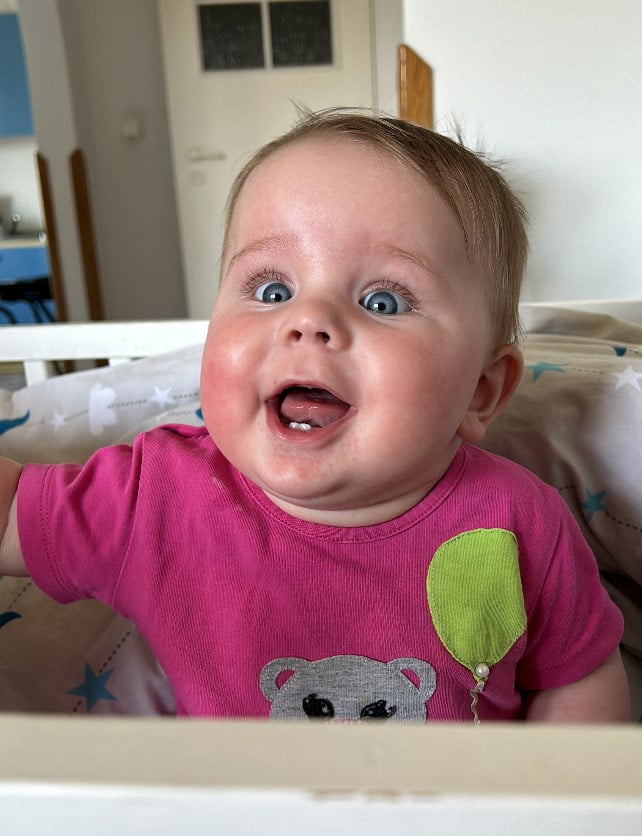
Our daughter, Wiktoria, came into this world as a bright, healthy baby, full of curiosity and joy. From the moment she was born, her laughter and wide-eyed wonder brought happiness into every room. She was reaching milestones like any other baby, sitting, rolling, and exploring with delight. But as parents, we never imagined that in the span of a few short months, her life would change in ways we could never have prepared for.
At seven months old, the first subtle signs appeared. Wiktoria began vomiting more frequently, and we noticed a troubling regression in her development. She stopped sitting and rolling over, losing the skills she had already gained. Concerned, we took her to her pediatrician. The diagnosis seemed simple at first — an upper respiratory infection, treated with inhaled steroids and antibiotics. We hoped she would recover quickly, but instead, her condition worsened. Her previously bright, alert eyes now seemed unfocused, and one began to appear squinty. Her balance deteriorated, and the once active, playful child could barely stand or move without assistance.
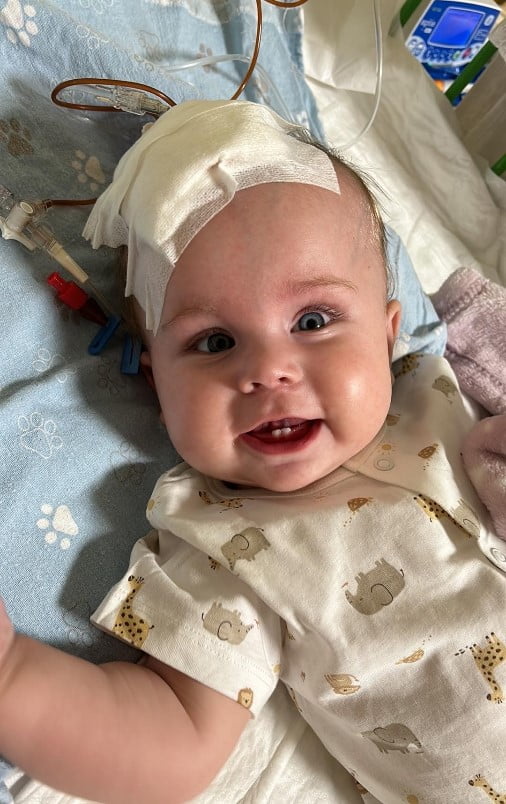
By her eighth month, the situation became urgent. On May 15, 2024, after constant vomiting and unusually deep, unbroken sleep, we took Wiktoria to the hospital. She underwent a
head CT scan the following day, and our world shattered in an instant: the doctors had detected a brain tumor. The pain, fear, and disbelief that filled us that day are impossible to describe. How could our tiny, precious baby face something so terrifying so early in life? Within hours, Wiktoria was transported by ambulance to the
University Children’s Hospital in Krakow, where a team of specialists urgently prepared her for treatment.
The tumor had caused hydrocephalus, a dangerous accumulation of fluid in her brain, and the first life-saving intervention was the placement of a
Rickham device to relieve the pressure. Surgery to remove the tumor was scheduled, but complications arose: Wiktoria developed an infection, forcing doctors to postpone the procedure. Each day of waiting was agonizing. We could not hold her through the wires and monitors, and every moment away from her in the hospital felt unbearable. Our hearts ached as we watched our baby endure pain and uncertainty beyond what anyone should have to face.
Finally, Wiktoria underwent surgery to remove part of the tumor. For a brief moment, hope flickered. But it was quickly replaced by fear. The diagnosis was confirmed: AT/RT — atypical teratoid/rhabdoid tumor
, a rare and highly aggressive brain cancer. Our daughter was only nine months old, and already she was facing one of the most formidable challenges imaginable. The knowledge that her tumor was both aggressive and difficult to treat filled us with dread, but also determination. We knew we could not give up on her.
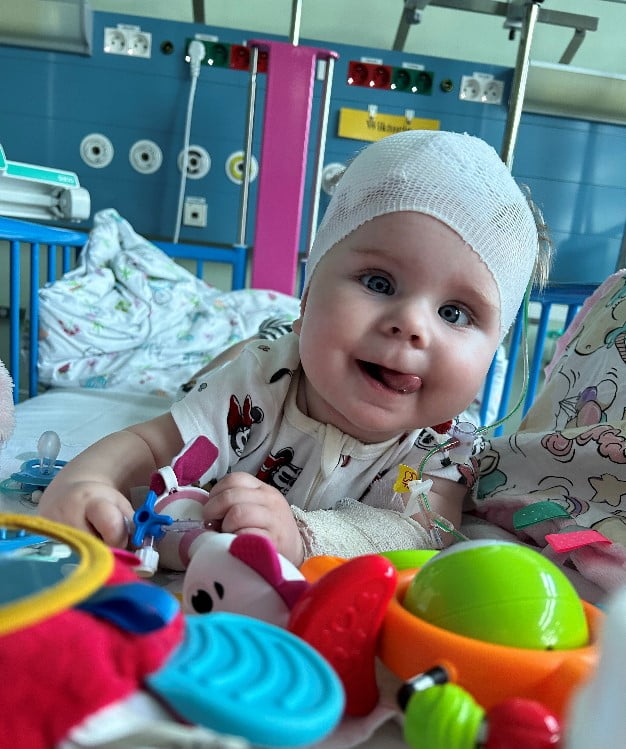
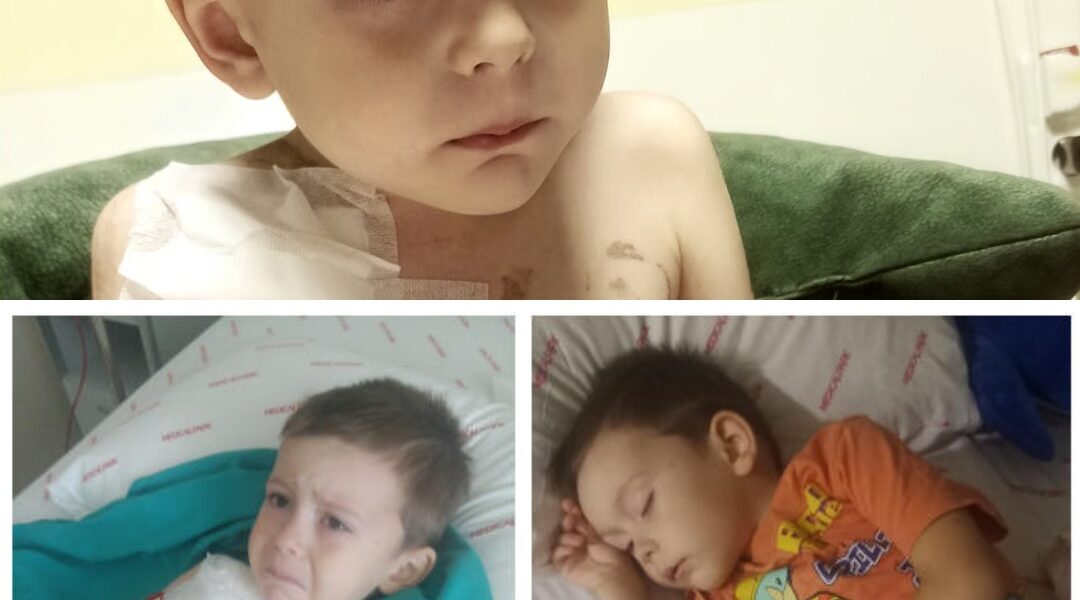
Treatment began immediately with chemotherapy, a harsh and demanding regimen for a child so young. Each cycle brought physical hardship and emotional strain. Wiktoria’s tiny body endured fatigue, nausea, and the painful effects of the drugs necessary to fight the tumor. Despite this, she demonstrated a resilience and strength that left us in awe. Every small sign of progress — a flicker of movement, a brief smile, or even a moment of alertness — was a victory in a battle that often seemed insurmountable.
Further diagnostic tests are ongoing, guiding doctors on the next steps to maximize Wiktoria’s chances. Her treatment is intensive, and the journey ahead is long. We know she will require
rehabilitation to rebuild strength, coordination, and motor skills, as well as ongoing support to recover from the developmental setbacks caused by both the tumor and its treatment. Her care involves a multidisciplinary team of specialists, including neurologists, oncologists, physical therapists, and psychologists, all working tirelessly to help our little warrior regain what was lost.
Despite the immense challenges, Wiktoria’s spirit remains unbroken. She fights every day with courage that belies her age. Her determination to move, to play, to interact with the world around her is a testament to the strength of her will and the love that surrounds her. Her tiny hands, often connected to IVs and monitors, hold on to life with fierce determination, reminding us that even the smallest patients can demonstrate extraordinary bravery.
As parents, we are committed to doing everything in our power to support her fight. We have explored options for treatment abroad, knowing that specialized care may give Wiktoria the best possible chance at survival. However, such care comes with extraordinary financial challenges. Every test, procedure, and hospital stay carries a cost, and the most advanced therapies are not fully covered by insurance. This is why we are reaching out for help — for prayers, for emotional support, and for contributions that can help ensure Wiktoria receives the treatment she desperately needs.
Wiktoria’s story is one of hope, resilience, and unwavering love. From the joyful early months of life to the devastating diagnosis and ongoing battle, she continues to inspire all who know her. Every day she survives and shows signs of progress is a triumph over a disease that threatens to take far too much from a child too young to understand the full extent of her struggle.
We believe in our daughter. We believe in her fight. And we believe that with support, care, and compassion, Wiktoria can overcome this challenge. Every contribution, every kind thought, and every prayer brings her closer to a life of health, play, and joy — a childhood she deserves. She is our miracle, our hope, and our greatest treasure, and we will never stop fighting for her.
Please join us in supporting Wiktoria’s journey. Help give her the chance to survive, thrive, and experience the childhood she was meant to have.