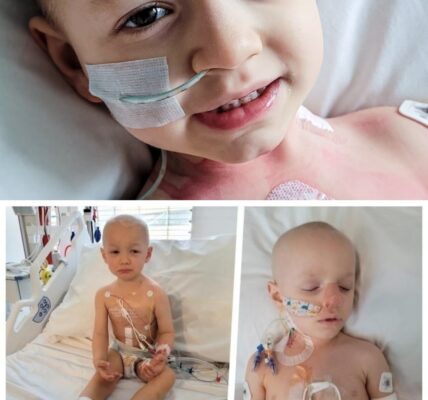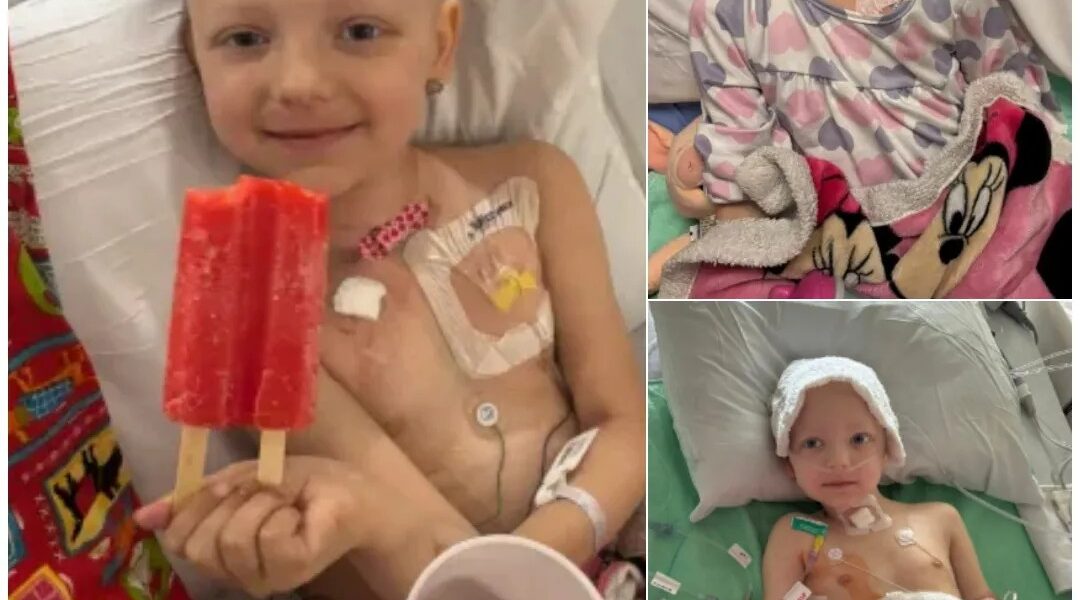

We’re still in the hospital. Days have stretched into nights that blur together. The walls seem to hold their breath, waiting for the next beep, the next lab result, the next fever. Every minute feels heavier than the last. And through it all, Lily keeps fighting.

The neutropenic fevers have returned, though thankfully less frequent than before. Yesterday at 3:30 p.m., she spiked one; this morning, just before six, another. Each one sends a ripple of anxiety through my chest. I know the doctors take precautions—blood cultures, antibiotics “just in case”—but deep down, fear never fully leaves. Memories of the last long hospital stay when a C-Diff infection left her weak and dehydrated are still fresh, a reminder of how fragile her small body is and how fast things can change.

I spoke gently to the doctor, asking if, provided the cultures remain clean, perhaps we could stop antibiotics soon. His eyes softened with understanding. “Let’s give it another day,” he said. “If there’s no sign of infection, we can stop.” And for the first time in days, I felt a flicker of relief.
Yesterday, Lily received her final dose of Vincristine for cycle seven of chemotherapy. Seven cycles. I cannot believe we’ve made it this far. Each cycle has been a mountain — nausea, transfusions, low blood counts, hospital stays, endless waiting. Watching her endure all of this is almost unbearable, yet somehow, she does it with a grace I cannot fully understand. Now we have just one more cycle remaining. A single final hurdle before she can begin to reclaim some normalcy.

The labs this morning were a mix of hope and worry. Neutrophils rose from 40 to 81.2, a small but significant victory. WBC up slightly, hemoglobin down a little, platelets alarmingly low. Another transfusion would be required. To anyone else, these numbers might be mere statistics. To me, they are a language of survival, a map of hope and fear, of life hanging by a delicate thread.

We are pushing to go home tomorrow. If she remains fever-free tonight, perhaps the dream of home — a place of warmth, sunlight, soft laughter, and normalcy — can finally become reality. Hospital walls keep her safe, but healing cannot fully happen here. Home is where blankets smell familiar, where family sounds soothe, where pancakes and sunlight restore the heart in ways medicine cannot. I pray, quietly, continuously, that tonight brings no more fevers.

Late yesterday, something beautiful occurred. Close to sunset, when the hall lights flickered on, Lily looked up from her iPad and asked, “Mommy, can we go for a walk? I’m bored.” The word “bored” never felt so precious. It meant she had energy, that her spirit had returned, even for a few moments. We walked together, hand in hand, her pink knit hat snug over her bald head, IV pole trailing behind like a quiet shadow. The hospital corridor became a sanctuary for a brief instant, a space where hope and normalcy collided.

We stopped by a small Dunkin’ Donuts tucked near the waiting area. The smell of coffee and baked goods mingled with antiseptic and polish. Lily’s eyes shone as people passed by. And then a small, miraculous act of kindness: an older man, carrying a bouquet, handed her a single flower. “This one’s for you, little warrior,” he said. The simplicity of that gesture brought tears to my eyes. Lily’s smile, wide and bright, reminded me that beauty and compassion still exist, even in the sterile corridors of a hospital.

That night, I placed the flower in a small plastic cup by her bed. It was nothing fancy, but under the pale hospital light, it symbolized hope, resilience, and the kindness that sometimes appears when least expected. Lily fell asleep clutching it and whispered, “Maybe it’ll bring me good luck.” And I knew it already had.

This morning brought confirmation: no fever overnight. Relief, disbelief, and gratitude collided inside me. When the nurse entered, her smile said everything. Home. The word itself carried the weight of joy, longing, and the promise of normal life. Lily’s eyes lit up, and she squealed with excitement. I held her close, feeling the rapid rise and fall of her chest, the gentle rhythm of life I had so desperately clung to.

Packing up, I glanced around the room one last time. The monitors, machines, and walls had witnessed our fear, our hope, our tears, and our prayers. But they also bore witness to resilience, courage, and a young girl’s indomitable spirit. Lily walked beside me, IV pole finally removed, hand in hand. The flower remained behind, a quiet symbol of the kindness and hope that guided us through every dark hour.

Throughout these seven cycles, I’ve watched my daughter face challenges that no child should ever know. She has lost her hair, appetite, and strength, yet never her will. Every time she whispers, “I’m okay, Mommy,” it is a declaration of resilience, a reminder that courage is often quiet, small, and yet infinitely powerful. Every transfusion, every round of chemotherapy, every sleepless night has been part of a larger tapestry — a story of survival, love, and unwavering determination.

The beauty of moments like the flower, the walk, the whispered “I’m okay,” is that they reveal the profound truth about healing. It is not just physical. It is emotional, spiritual, and relational. It exists in the small acts of kindness, in shared smiles, in human connection. Hospitals can provide medicine, but they cannot fully restore what home, love, and normal life offer. These moments — fleeting, fragile, luminous — are just as vital as any treatment.

Looking back, I realize that the hospital, with all its cold efficiency, has been a theater for both suffering and miraculous moments. It has witnessed the depth of human fear and the heights of human compassion. It has been a place where strangers become angels, where machines measure life itself, and where the resilience of a child can illuminate the darkest corridors.