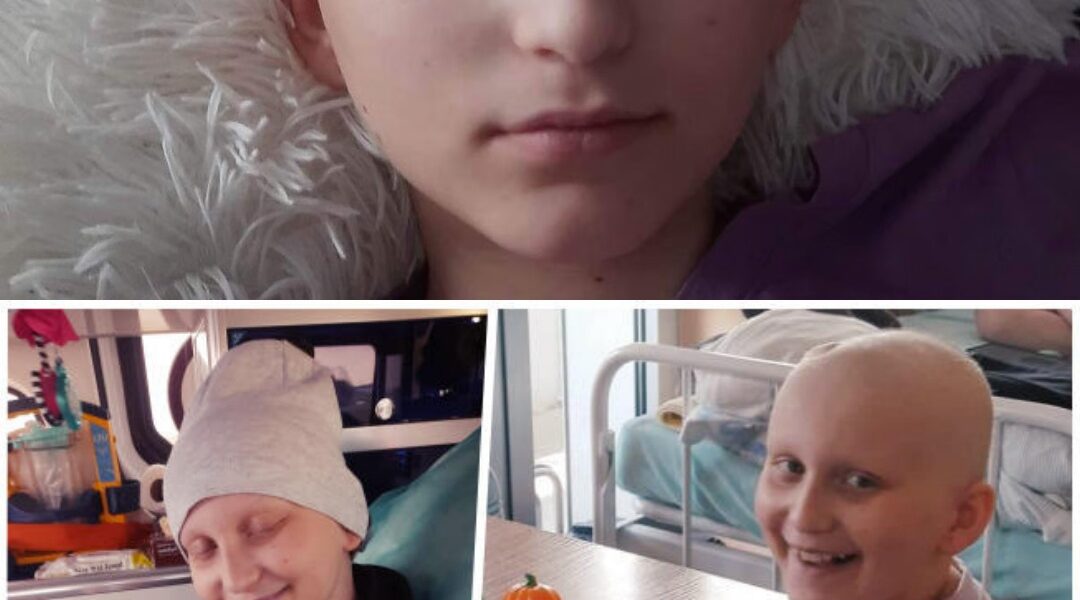

On January 26, 2022, our world changed forever. For many children, it was a normal day—school, friends, laughter. For my daughter, Basia, who will turn 13 on May 19, it was the day her life was irrevocably altered. That was the day we discovered a monster had invaded her head—a brain tumor—and our battle for her life began.
Until recently, Basia was a bright, cheerful, and lively girl. She had plans, dreams, and a heart eager to help others. She loved school, enjoyed spending time with her friends, and participated in extracurricular activities with enthusiasm. Her first friendships blossomed naturally, as every child deserves. But all of that vanished in an instant. Today, Basia is confined to the oncology ward, fighting for every breath, every movement, every heartbeat.
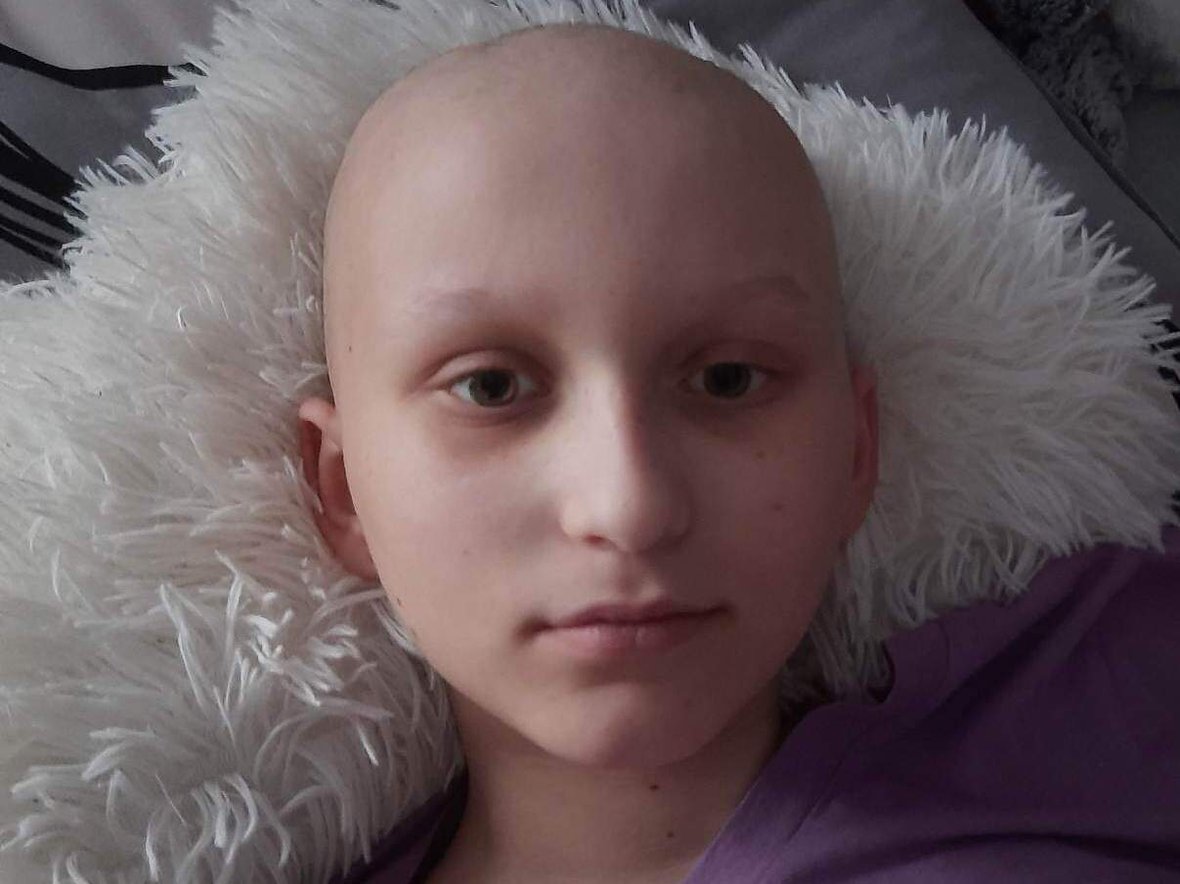
The first warning signs appeared in November. Basia began having difficulty eating, complained of headaches, and occasionally fainted. Her strength dwindled; she needed help just to walk. Multiple tests failed to indicate any clear medical problem. Doctors suggested stress or psychological causes, citing the trauma of losing her father and the uncertainties of the pandemic. Teachers and classmates were supportive, ensuring she was never left alone. For a brief time in December, during remote learning, her condition seemed slightly better, giving a glimmer of hope. But after Christmas, everything deteriorated rapidly. The silent threat lurking in her head revealed itself.
It was confirmed that Basia had a tumor in the posterior part of her skull. She was urgently admitted to the pediatric neurology clinic in Szczecin with acute hydrocephalus. By the time she reached the hospital, Basia was already showing serious symptoms: weakness on the left side of her body, impaired eye movements, convergent strabismus in the left eye, and overall psychomotor weakness. Surgery was immediately required to save her life.
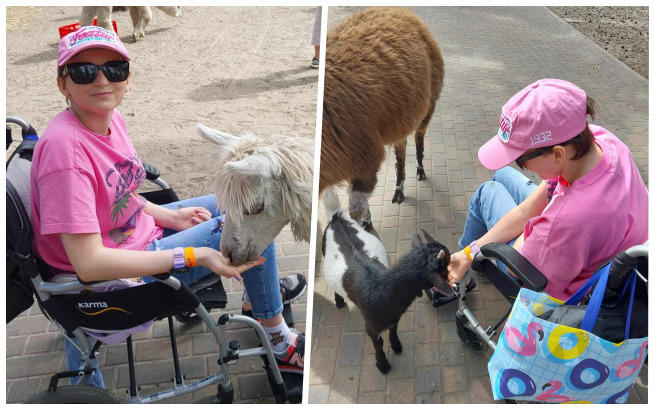
The operation itself brought a mixture of relief and dread. While the tumor was successfully removed, we anxiously awaited the histopathology results. On February 11, our hopes were crushed. Basia was diagnosed with a malignant cerebellar tumor. Ten days later, she was transferred to the oncology ward in Poznań. Every hour, every moment, became a fight for her life. Each day was filled with fear, hope, exhaustion, and the desperate longing to see her smile again.
Now, our struggle continues at home and in hospitals, beyond surgeries. Basia requires intensive rehabilitation to regain strength, mobility, and coordination. She needs further diagnostic testing to monitor her recovery and identify the most effective treatment strategies. Many of the necessary therapies are non-standard, not reimbursed, and require significant financial resources. We are determined to pursue every possible avenue to give Basia a chance at a full, healthy life.
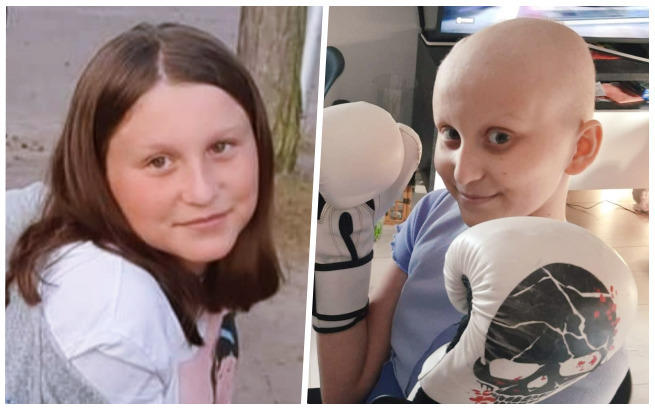
Basia’s younger brother, Mateusz, family, friends, and teachers are all waiting for her return. We long to see her back at home, at school, laughing, learning, and living the life every child deserves. Each day of rehabilitation brings us closer to that goal, but it is only possible with your support.
I am a mother asking for help—not just for Basia’s treatment, but for her life. Every donation, every act of kindness, every share of our story brings hope and strengthens our ability to fight this disease. Your generosity can provide access to vital therapies, advanced diagnostics, and the resources needed to give Basia a fighting chance.
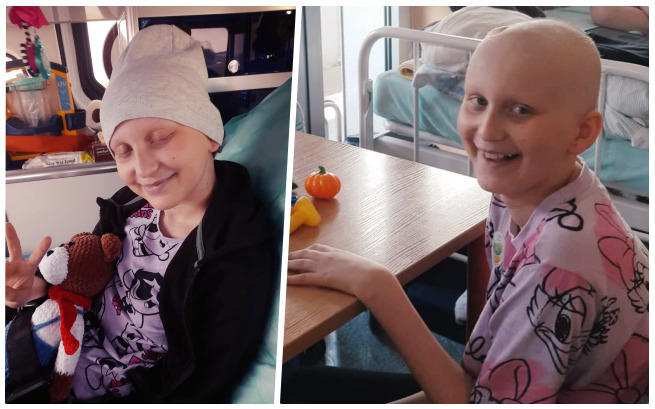
No parent should face the fear of losing a child. Yet here we are, holding on to hope, fighting every day for our daughter, and believing in the power of compassion and solidarity. Basia is a brave, courageous girl, and with your help, she can overcome this illness and reclaim the childhood she deserves.
Please, join us in this fight. Help us give Basia a future filled with health, happiness, and the simple joys that every child deserves—the ability to play, to learn, and to smile freely once again.
With gratitude and hope,
Mother Honorata and brother Mateusz
Primrose: The Little Girl with Half a Heart Who Taught Her Family the Meaning of Strength.471

In late 2021, our family received the news we’d been praying for — we were expecting our fourth baby. After enduring two heartbreaking miscarriages, the joy that filled our home was indescribable. Our three boys — full of boundless energy and muddy boots — were thrilled about having another sibling.
Then, in February 2022, we found out something that made the whole world shine brighter — we were finally having a baby girl. After three boys, we couldn’t wait to welcome a little sparkle into our family. “A bit of glitter among all the dinosaurs,” I remember joking. Our boys were already calling her “baby sister,” and we were counting down the days until she’d join our noisy, love-filled home.
But on April Fools’ Day, of all days, our lives changed forever.

At our 20-week scan, we walked in smiling, expecting another routine check. I was being scanned by a trainee, who then quietly called in her senior. The silence that followed was unbearable. I remember holding my breath as the new sonographer studied the screen. Then she said gently,
“I’m not seeing enough of your baby’s heart. I’d like you to see a consultant.”
Half an hour later, sitting in that consultation room, our joy turned to fear.
The doctor’s words still echo in my mind:
“Your baby has a very serious and complex heart condition.”
The air left the room. My husband squeezed my hand, and all I could hear was the pounding of my own heart.
We were referred to fetal cardiology, where specialists confirmed the devastating truth. Our baby girl — whom we had already named Primrose — had hypoplastic right heart syndrome (HRHS),
transposition of the great arteries (TGA), coarctation of the aorta, tricuspid atresia, and a ventricular septal defect (VSD) — essentially, she had only half a working heart.

From that moment, my pregnancy was filled with anxiety, tears, and constant medical appointments. Every week brought new scans, new terms, and new fears. Yet, amidst the worry, there was also hope — hope that modern medicine could give our daughter a fighting chance.
In June 2022, I underwent an MRI to give doctors a clearer image of her heart. They created a 3D model to help plan her surgery. Seeing my unborn child’s heart in such detail — so tiny, so fragile — was both haunting and awe-inspiring. It reminded me how incredible medical science can be, and how much love drives every heartbeat.
In August 2022, our brave little Primrose entered the world — fighting from her very first breath. She was quickly taken to the NICU, surrounded by teams ready to act. At just
six days old, she underwent her first open-heart surgery, known as The Norwood.

Walking into the PICU afterward shattered me. My tiny daughter — no bigger than a doll — was covered in wires, tubes, and machines. Her chest rose gently with the rhythm of the ventilator. Nothing prepares a parent for that sight. Even now, thinking about it makes my throat tighten.
But our little girl was fierce.
She fought hard and, against all odds, we brought her home four weeks later. There were hospital readmissions, sleepless nights, feeding struggles — but through it all, she smiled. Eventually, she needed an NG feeding tube to help her grow strong enough for her next surgery.
In January 2023, at just five months old, Primrose’s oxygen levels began to drop dangerously low. Her shunt had failed, and she was rushed for her second open-heart surgery, known as The Glenn.
This time, it was even harder. We had bonded so deeply with her — her little giggles, her curious eyes, her tiny fingers gripping ours. Watching her go through it again broke something inside me. I remember sobbing into my hands, whispering prayers into the sterile air of the hospital corridor.

After surgery, Primrose had complications — internal bleeding and a blood clot. Yet, even as her tiny body healed, she woke with a smile. That smile, fragile yet full of life, said everything: she wasn’t giving up.
Today, Primrose is ten months old — and thriving. Her laughter fills our home, her big brothers dote on her endlessly, and she’s every bit the mischievous, sparkling little sister we dreamed of. She signs for “milk,” giggles at Bluey, and charms everyone who meets her.
Every day, I thank the sonographer who first noticed something wasn’t right. Her sharp eyes and compassion saved our daughter’s life. Without that early detection, Primrose might not be here — and that thought will forever humble me.
Primrose’s journey is far from over, but she is a miracle. Her scars tell a story of survival, of love, of the extraordinary power of modern medicine — and of a little girl with half a heart who gives ours more reason to keep beating.

She is proof that even the tiniest hearts can hold the greatest strength — and that hope, once planted, can bloom as beautifully as a Primrose.