An 18-Month-Old Trapped Behind a Locked Door: The System That Failed De’Ali Blia Delgado. Hyn

The day began with a decision made in a room where children rarely understand what is at stake.
A judge spoke from the bench, papers shuffled, attorneys stood and sat with practiced movements.
Somewhere beneath all of that, an eighteen-month-old baby girl’s future quietly changed direction.
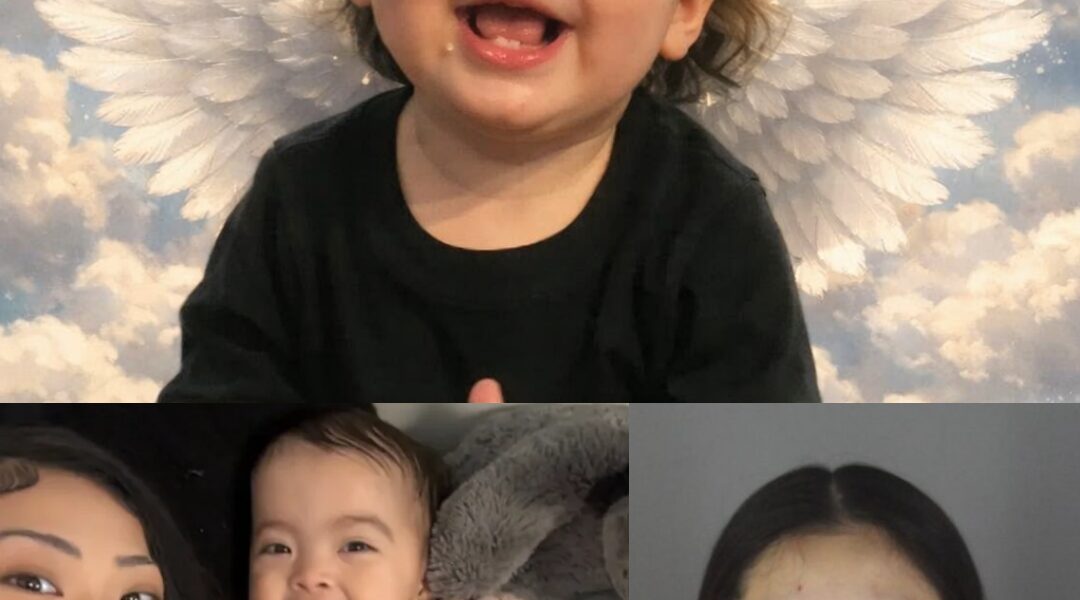
Her name was De’Ali Blia Delgado.
She was small enough that most of the world still towered over her, big enough to recognize familiar faces and reach out when she wanted to be held.
Her life was supposed to be a long road of firsts that hadn’t even started yet.

On that day in Minnesota, the courthouse air felt heavy with the kind of tension that clings to custody hearings.
Words like “temporary,” “placement,” and “custody” moved back and forth, but for De’Ali those words meant only one thing.
Where she would lay her head that night, and who would be there when she woke up.
The judge granted temporary custody to her father, Erick Delgado.
To Erick, it felt like the moment he had been waiting for, fighting for, hoping for.
He believed it was the beginning of something better for his daughter.
For her mother, twenty-three-year-old Maige Elizabeth Yang, it felt like the end of something she didn’t know how to live without.
The decision landed like a weight she couldn’t carry and couldn’t put down.
She walked out of that courtroom with her child in her arms and a storm in her chest.

Outside, the day looked ordinary.
Cars drove past, people checked their phones, the sky held its color without comment.
No one looking at the front steps of the courthouse would have guessed that a catastrophe was already in motion.
They went back to the home on Castle Rock Court in Champlin.
To the neighbors, it was just another house on a quiet street lined with driveways and trimmed lawns.
To the family inside, it had become a place where fear and anger were starting to gather in the corners.
Family members noticed the way Maige moved, the way she spoke less and stared more.
Her silence did not feel peaceful, only tight and brittle.
They saw a young mother who had just lost temporary custody, and they worried, but they did not yet know what to fear.

After they got home, Maige took De’Ali upstairs.
She carried the toddler to a bedroom and locked the door behind them.
The sound of the latch sliding into place was small, but it would become the dividing line between before and after.
Downstairs, time stretched.
Family members waited, assuming the baby was napping, assuming the mother just needed a moment alone.
Assumptions can be deadly when no one knows what is happening out of sight.
In that locked bedroom, investigators say, Maige made a choice that would take everything away.
She poured a significant amount of sleep medication into her daughter’s bottle.
She fed it to the child she was supposed to protect.

Later, when questioned by police, she would say she wanted the pain to go away.
She would say she hoped her little girl would pass peacefully in her sleep.
Those words were quiet when she spoke them, but they roared on the page when officers wrote them down.
For an eighteen-month-old, a bottle is usually comfort, not danger.
It is warmth, fullness, the familiar rhythm of being cared for.
On that day, it became something else entirely.
No one knows exactly what thoughts ran through Maige’s mind as she watched her daughter.
Despair can twist itself into logic that makes sense only in the darkest corners of a person’s mind.
But the outcome of her choice was brutally clear.

Downstairs, unease began to replace patience.
Too much time had passed, and the door at the top of the stairs remained closed, locked, silent.
A feeling crept into the house that something was wrong.
It was Maige’s father who could not ignore that feeling anymore.
He went upstairs, his steps heavier with each stair.
He knocked, called her name, waited.
No answer.
No sound of movement, no crying, no voice on the other side.
Just the muffled, suffocating quiet of a room that would not answer back.

He forced his way into the locked bedroom.
The door gave way, opening onto a scene that would replay in his mind for the rest of his life.
De’Ali was on the floor.
Her lips were turning blue.
Her small chest did not rise and fall the way it should have.
Her body looked too still for any child, especially his granddaughter.
He grabbed her, panic overriding everything else.
He ran downstairs, shouting for help that could not come fast enough.
Someone called 911, their voice shaking with terror as the address on Castle Rock Court was given.

On the phone, they described an unresponsive toddler.
They tried to follow instructions, tried chest compressions, tried to hold back the truth they already felt pressing in.
Time kept moving even as their world felt like it had stopped.
First responders arrived to a home that would never feel safe again.
Paramedics took over, moving with practiced urgency around such a tiny patient.
They worked on her there, then rushed her to the hospital.
They also found Maige in medical distress from what police described as an apparent suicide attempt.
She, too, was transported to the hospital, conscious enough to be caught between life and the consequences of her actions.
Two patients left that house, but only one had any chance to come back.
At the hospital, the staff fought for the life of an eighteen-month-old girl they had never met before that day.
Machines beeped, monitors traced fragile lines across glowing screens, and hands moved quickly.
But the medication in her system and the time lost behind that locked door had taken too much.
The child, De’Ali Blia Delgado, was pronounced dead at the hospital.
The words “time of death” were spoken for a baby who had not yet learned her colors, her shapes, or her full name.
In that moment, a future full of birthdays, first days of school, and whispered goodnights vanished.

News of her death traveled through the family like a shockwave.
Each person received it differently—some with screams, some with silence, some with a collapse that looked like their bones had given out.
Grief does not ask permission before it occupies every room.
Back at the police station, once she was medically stabilized, officers sat down with Maige.
They read her the Miranda warning, each right a reminder that this was now a criminal investigation.
She listened, then she talked.
According to police, she admitted to pouring the sleep medication into her daughter’s bottle.
She admitted that she did it “to make the pain go away.”
She admitted she hoped her daughter would die peacefully.
There was nothing peaceful about the aftermath.
Nothing gentle about a grandfather finding his granddaughter with blue lips, about strangers in uniform trying to restart a heart that had been drugged into silence.
Nothing kind or merciful about stealing a child’s future.
Prosecutors charged Maige with second-degree murder.
She was taken to Hennepin County Jail, the gravity of what had happened measured, in part, by the $1.5 million bond set in her case.
A court date was scheduled: February 10, a day that now sits like a marker on a timeline that began and ended with a little girl’s life.

Meanwhile, another story was being written by someone else who loved De’Ali.
Her father, Erick Delgado, was not planning a homecoming anymore.
He was planning a funeral.
He started a GoFundMe to cover the expenses that no parent is ever ready to face.
On that page, he did not hide his heartbreak behind polite sentences.
His words were raw, simple, and devastating.
“I did everything right,” he wrote.
“I was supposed to wake up next to my daughter.”
“I fought my hardest for you, and the justice system failed you.”
Those lines carried more than grief.
They carried the weight of someone who had shown up to court, followed the rules, trusted the process.
And still ended the day with a child who was gone.
He had just been granted custody of his daughter hours before her life was taken.
The irony of that timing was cruel enough to feel like something out of a nightmare.
A system meant to protect had arrived too late to do so.
In the days that followed, people outside the family read about the case in brief headlines.
“SHE POURED SLEEP MEDICATION INTO HER TODDLER’S BOTTLE AFTER LOSING CUSTODY. THE CHILD DID NOT SURVIVE.”
A bold line on a screen trying to contain a horror that spilled far beyond the edges of any article.
Some saw it as another tragic story in a world full of tragic stories.
Others saw it as a reminder of how quickly despair can turn into irreversible harm.
For those who knew and loved De’Ali, it was not a story at all.

It was the reason her bed would stay empty.
The reason her toys would gather dust instead of fingerprints.
The reason her father would wake up in the night reaching for a child who was no longer there.
People will talk about mental health in the shadow of what happened.
They will talk about stress, custody battles, and the ways isolation can distort reality.
All of that may be true, and still not enough to explain or excuse.
Because explanations do not bring back a child.
They do not change the fact that an eighteen-month-old girl depended entirely on the adults around her, and those adults failed in the most catastrophic way.
They do not alter the finality of a small body on a hospital bed.
This was not mercy.
Mercy does not come wearing the face of a child whose lips have turned blue.
Mercy does not require paramedics to race against a clock that someone else has already stopped.
This was not love.
Love does not pour poison into a bottle and call it peace.
Love does not lock a door and silence every other voice that might have intervened.
This was a child who depended on adults to protect her.
She did what all children do—she trusted, she reached out, she accepted what was given.
She had no way to know that the hands feeding her that day were taking her life away.

🕊️ Rest in peace, De’Ali Blia Delgado.
You deserved safety.
You deserved a future.
You deserved to grow up.
To have first days of school and scraped knees and birthday candles you tried to blow out all at once.
To learn the difference between good dreams and bad ones, and to wake up from both.
You deserved adults who could handle their pain without turning it into your ending.
You deserved a world where love meant protection, not possession.
You deserved so much more than a headline, a case file, and a grave.
Now, all that is left is the choice the rest of us make when we hear your name.
To look away, or to let your story change the way we see the quiet, locked doors around us.
To excuse what happened, or to call it what it was.
A preventable horror.
A betrayal of trust.
A life taken that can never be replaced.
A Mother Survives What Her Children Could Not.5587

A Story of Sudden Loss on a Texas Highway
The stretch of Interstate 10 near Sierra Blanca is known for its openness.
Long, flat lines of road cut through West Texas, giving drivers a sense of distance and time.
On Thursday afternoon, that sense of safety disappeared.
Traffic moved steadily through Hudspeth County.
The sky offered no warning, the road no obvious danger.
It was meant to be just another drive.

Inside an SUV traveling westbound was a young family.
A 29-year-old mother behind the wheel.
Her children riding with her.
One was only three months old.
A baby boy whose life had barely begun.
The other was a ten-year-old girl, old enough to know songs, stories, and plans for tomorrow.
Near mile markers 101 to 102, something went wrong.
Investigators say the SUV veered off the roadway without warning.
In seconds, control was lost.

The vehicle struck the median cable barrier.
Metal met force.
Momentum took over.
The SUV rolled.
Once.
Then again.
Each rotation stripped away safety.
Glass shattered, metal bent, and gravity did the rest.
The road became a blur of motion and noise.
When the vehicle finally came to rest, the damage was catastrophic.
Emergency calls flooded in almost immediately.
Drivers slowed, then stopped, unsure of what they were seeing.

First responders rushed to the scene.
The heat, the debris, the silence between sirens.
Time became urgent.
A three-month-old baby boy was pronounced dead.
A ten-year-old girl also died from her injuries.
Two young lives ended on the side of a highway.
Their mother survived.
She suffered serious injuries and was transported to a hospital in El Paso.
Her condition was described as critical but stable.

For responders, the scene was especially heavy.
Accidents involving children always are.
But this one carried a weight that lingered.
Traffic on Interstate 10 came to a standstill.
Lanes were closed as investigators worked and debris was cleared.
Drivers waited, unaware of the story unfolding just ahead.
Some stepped out of their vehicles.
Others sat quietly, watching emergency lights reflect off the asphalt.
No one moved quickly.

The Texas Department of Public Safety confirmed the crash was a single-vehicle rollover.
No other cars were involved.
No charges have been filed.
Investigators are now searching for answers.
Possible mechanical failure.
Possible driver fatigue.
These are standard questions.
Necessary questions.
But they offer little comfort.
The mother’s life has been forever divided into before and after.
Before the drive.
After the loss.

Hospitals can treat broken bones.
They can stabilize injuries.
They cannot mend grief like this.
The baby boy had not yet learned to speak.
His world was warmth, sound, and familiar arms.
His future was unwritten.
The ten-year-old girl had already begun shaping hers.
School days, friendships, dreams not yet spoken aloud.
All of it ended on that highway.

In the days ahead, their names will be spoken softly.
By family.
By strangers who read about the crash.
Community members far beyond Hudspeth County will feel it.
Because stories like this cut through distance.
They remind everyone how fragile a single moment can be.
Interstate highways are designed for speed and efficiency.
They carry families, workers, and travelers every day.
They also carry risk.

A slight drift.
A moment of fatigue.
A mechanical failure.
Sometimes, that is all it takes.
No recklessness.
No intent.
Just physics and time intersecting at the wrong second.
Authorities will reconstruct the crash carefully.
Measurements.
Reports.

They will examine the barrier.
The vehicle.
The roadway.
But the truth may never feel complete.
Some losses defy explanation.
They simply exist.
As lanes reopened and traffic resumed, the road looked the same.
But it was not.
It never is after something like this.
Drivers continued west.
Others headed east.
Life moved forward.
Somewhere in a hospital room in El Paso, a mother lay injured.
Her body healing.
Her heart shattered.
She survived the crash.
She survived the flames of chaos.
Now she must survive the silence left behind.
For those who witnessed the aftermath, the images will linger.
Twisted metal.
Small shoes.
For first responders, the weight will follow them home.
They see these scenes so others do not have to.
They carry them quietly.
Two children are gone.
A family is broken.
A highway bears witness.
This was not a crime.
It was not an act of violence.
It was a tragedy born of circumstance.
And yet, the outcome is the same.
Empty seats.
Unanswered questions.
On Interstate 10 near Sierra Blanca, the road continues.
But for one family, the journey ended.
And nothing will ever be the same again.