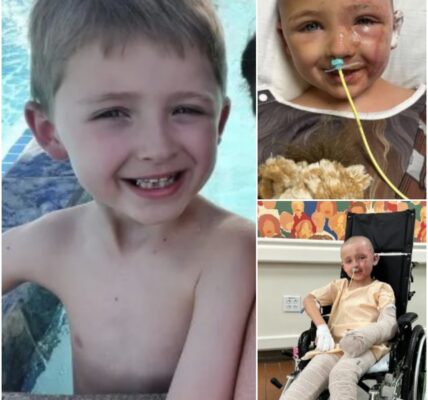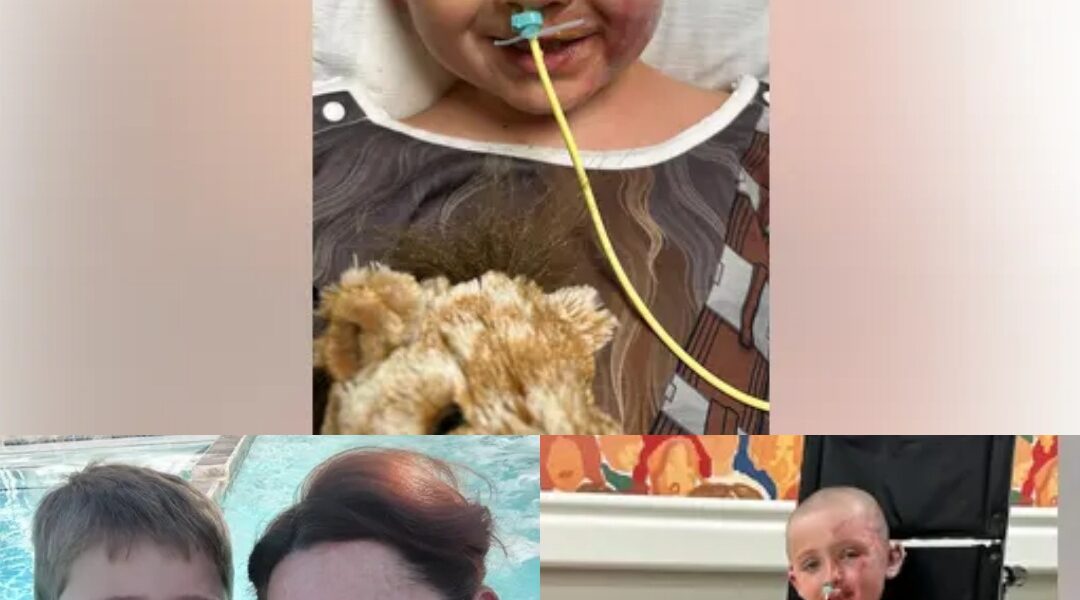

What began as an ordinary day after a violent Texas storm turned into a life-altering nightmare for the Winters family, leaving a six-year-old boy and his grandmother fighting to survive injuries no one ever imagined possible. A downed power line, still energized and unseen as a deadly threat, changed everything in a matter of seconds.
For Morgan Winters, the moment is frozen in time. Her phone rang, and on the other end was her mother, 56-year-old Charlotte Winters. The words didn’t make sense. Charlotte sounded confused, disoriented, struggling to explain what had happened before the call abruptly ended. Shortly after, Morgan learned the truth: her son Nathan and her mother had been electrocuted by a fallen power line at the Lake Conroe campground, where Charlotte lives.
Charlotte had noticed the line on the ground after the storm and was trying to warn others to stay away. According to what she later recalled, neither she nor Nathan were anywhere near touching it. They believed they were at a safe distance. But electricity does not require contact. The current surged through the ground, burning them both where they stood. A 59-year-old man nearby was also injured and later found lying on the ground still in contact with the live wire.
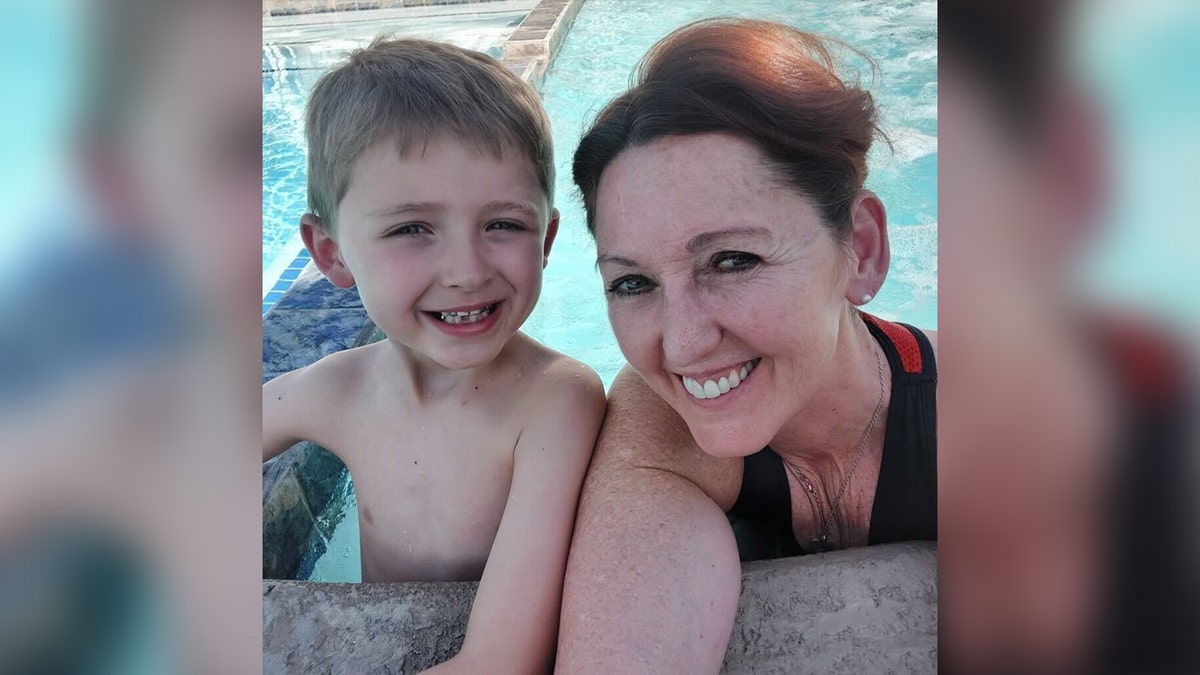
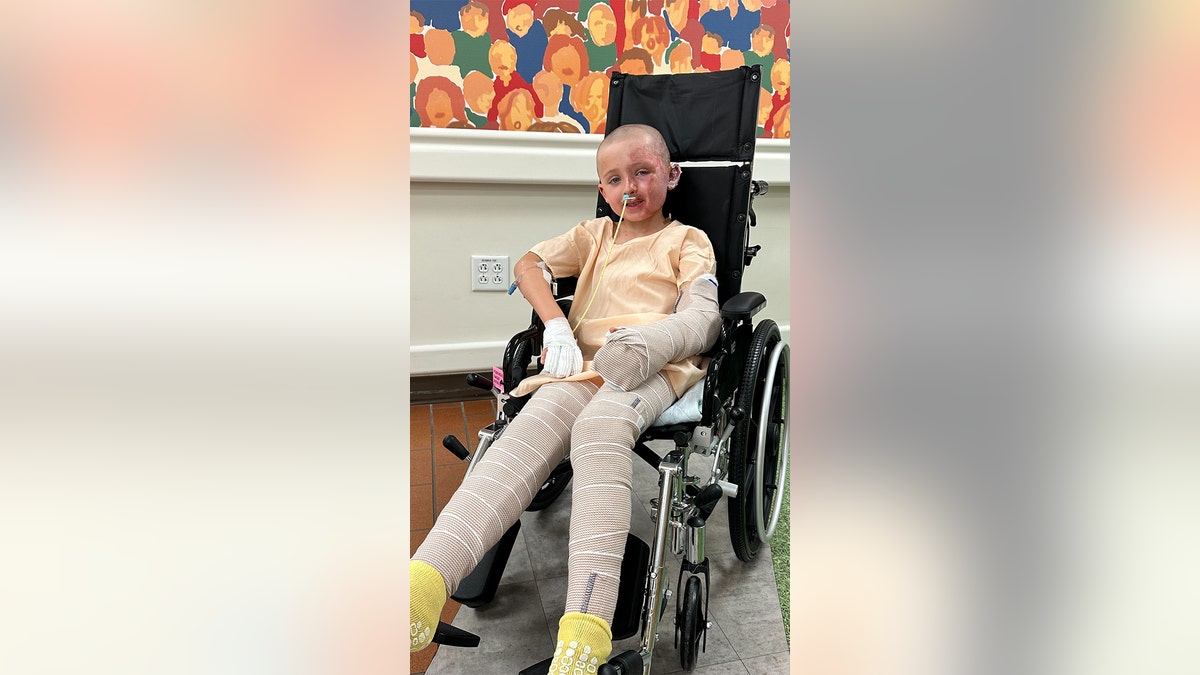
Now, Morgan spends her days running between hospital floors at the Texas Medical Center, pulled in two directions as both a daughter and a mother. Nathan suffered second-degree burns across 18 percent of his body. Charlotte’s injuries are far more severe, with second- and third-degree burns covering more than 55 percent of her body.
“It’s been overwhelming,” Morgan said quietly. “Two burn units, two teams of doctors, surgeons, psychiatrists. It never stops.”
Nathan has already undergone surgery for skin grafts and was recently released from the intensive care unit, a milestone that brought cautious relief. Charlotte remains in critical condition. Doctors expect her to spend at least two more months in the burn unit, followed by additional months in recovery. Multiple surgeries lie ahead, including the possibility of amputations to several toes and a finger.
For Nathan, the pain is not only physical. At just six years old, he struggles to understand why doctors come every day to change his bandages, why his body hurts, and why nothing feels familiar anymore. During a video call, the first time he truly saw his injuries—burns extending up the left side of his face—his reaction broke his mother’s heart.
“He looked at himself and said, ‘Mommy, I am hideous,’” Morgan recalled. “And I told him, ‘No, you’re not. You’re just injured right now.’”
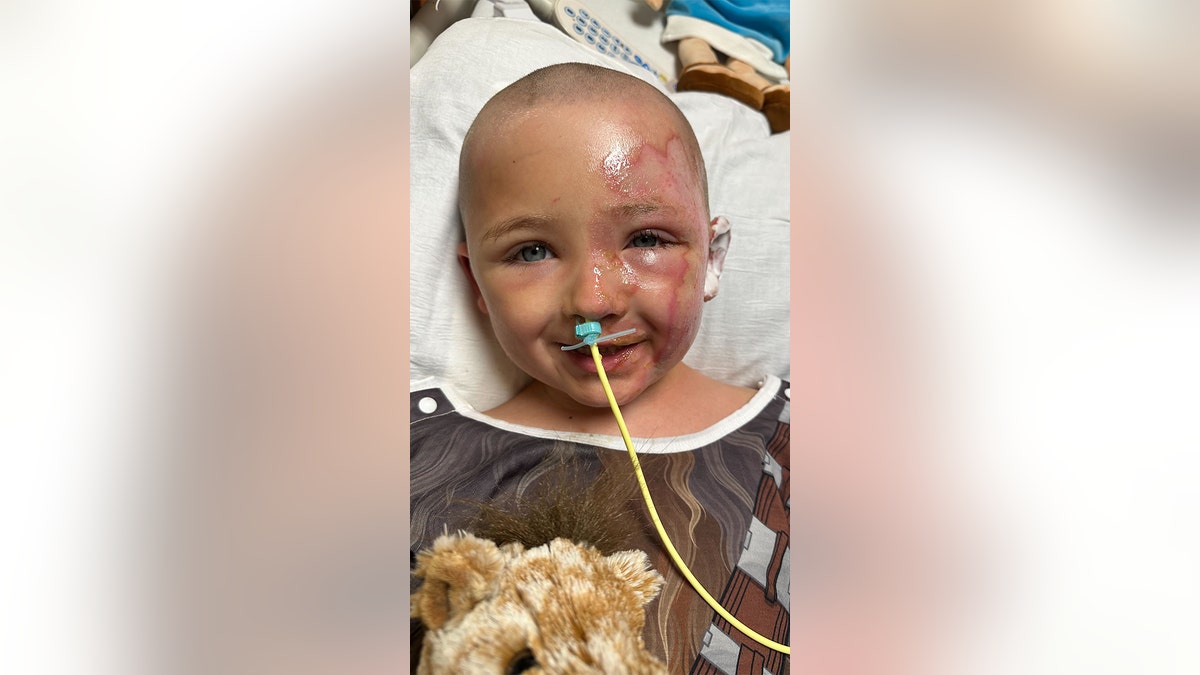
Despite her own devastating injuries, Charlotte’s focus has never shifted from her grandson. With the little energy she has, she asks the same question again and again: How is Nathan? How’s my baby? Though they are in the same hospital, they have not yet been able to see each other in person, relying instead on FaceTime calls to stay connected.
When asked what he looks forward to most once he leaves the hospital, Nathan answered without hesitation: seeing his Nana.
Morgan now wears her mother’s cherished necklace, a piece Nathan gave to Charlotte before the accident. It was removed in the emergency room and later returned to Morgan, who keeps it close as a reminder of love, survival, and the fragile line between before and after.
The road ahead is long and uncertain. Recovery will be painful, slow, and emotionally exhausting. The family has launched a fundraiser to help cover mounting medical costs, knowing that healing will continue long after hospital doors finally open.
Fire officials are using this tragedy to warn others: downed power lines are always dangerous. You do not need to touch them to be harmed. Electricity can travel through the ground and jump through the air, striking from as far as 35 feet away. Every fallen line should be treated as live.
For the Winters family, that lesson came at an unbearable cost. But through fear, pain, and uncertainty, one truth remains unshaken: the bond between a grandmother and her grandson, and a family’s determination to survive together, is stronger than the storm that nearly took everything from them.
Cassidy Sakoulos: The Final 911 Call That Exposed an Unthinkable New Year’s Tragedy.4145

What was meant to be an ordinary New Year’s Eve ended in an unthinkable tragedy that has shaken a community and left a three-year-old child’s life heartbreakingly short.
Just after sunset, a 911 call came in from a Columbus home. On the line was a mother pleading for help, telling dispatchers that her young daughter was not breathing and would not wake up from a nap. Her voice carried panic as she described her child drooling and bleeding. The dispatcher calmly instructed her to begin CPR, clinging to the hope that the little girl could still be saved.
That child was Cassidy Sakoulos. She was only three years old.
Police arrived at the home shortly after 5:30 p.m. and found Cassidy unresponsive. Officers rushed her to Nationwide Children’s Hospital, where doctors fought desperately to save her life. About thirty minutes later, Cassidy was pronounced dead. What initially appeared to be a sudden medical emergency soon revealed a far darker truth.

According to court documents, Cassidy’s mother, 41-year-old Sharon Sakoulos, later admitted to suffocating her daughter with a plastic bag. Investigators determined that the child’s death was a homicide rooted in domestic violence. Authorities say Cassidy had visible bruises, and records indicate an intent to harm her sibling as well. Sakoulos has now been charged with aggravated murder, murder, strangulation or suffocation, and endangering children. She remains in the Franklin County Jail on a $2 million cash bond.
Newly released 911 audio and police body camera footage paint a chilling picture of the moments after the call for help. In the background of the footage, an officer can be heard expressing concern, noting that this was not the first time police had worried about the situation at the home. Those words, spoken casually in the moment, now carry devastating weight.
Court records reveal a troubling history. Sakoulos has two prior felony assault cases, including a 2020 incident involving the assault of a police officer and a 2016 case in which she allegedly punched, kicked, and attempted to bite sheriff’s deputies. In 2022, she was found incompetent to stand trial and was treated at a behavioral healthcare facility. Prosecutors have also told the court that she has been diagnosed with bipolar disorder.

Cassidy lived with her mother at the time of her death. Sakoulos also has a 13-year-old daughter, who lives with her father under a full custody arrangement. Franklin County Children’s Services confirmed they had contact with the family more than a year ago but were not actively involved at the time of Cassidy’s death.
For neighbors, the loss is incomprehensible. Many remembered Cassidy as a happy, energetic child, often seen playing outside, waving to passersby with the carefree joy only a toddler can possess. To them, she was not a name in court documents or a headline in the news. She was a little girl with a bright smile and a life that had barely begun.
Cassidy’s death comes amid a disturbing pattern of deadly child abuse cases in the Columbus area. In recent months, multiple parents and caregivers have been charged in cases involving severe harm or death to young children. Each case carries its own details, but together they paint a painful picture of vulnerability and failure, where the most defenseless pay the highest price.

As Sakoulos awaits indictment and prepares to return to court, the investigation into Cassidy’s death remains ongoing. Authorities have not released all details, but what is already known has left many asking the same haunting questions: How could this happen? Were there missed warnings? Could anything have been done to save her?
In the aftermath, state officials continue to urge the public to speak up when they suspect a child may be in danger. Ohio’s child welfare hotline, 855-O-H-CHILD, is available to connect callers directly with local child protective services or law enforcement. One call, they say, can be the difference between intervention and tragedy.
But for Cassidy Sakoulos, that call came too late.

She should have been falling asleep after a long day, dreaming of toys, cartoons, and the simple magic of being three years old. Instead, her life ended in violence, leaving behind grief, anger, and a silence that will echo far beyond one home.
As the legal process moves forward, a community mourns a little girl who never got the chance to grow up. And amid court dates, charges, and investigations, one truth must not be lost: Cassidy was a child who deserved safety, love, and a future — and that future was stolen before the new year ever began.