A Little Boy’s Fight for Life: A Family’s Desperate Plea From the Oncology Ward. Hyn

We are writing these words from inside the oncology ward — a place that has become a personal hell for us. Here, every hallway echoes with fear, and every room holds children far too small to fight battles far too big. Tiny heads without hair, bodies too weak to rise from bed, eyes that should be filled with wonder now clouded by pain. Among them lies our son, Tymek. Our bright, joyful, energetic boy who, just three months ago, was running to school, planning games with friends, and excitedly preparing for his tenth birthday party. That birthday never came. Instead of balloons and laughter, Tymek celebrated turning ten surrounded by IV drips, machines beeping through the night, and the unmistakable scent of hospital disinfectant.
The nightmare began the moment doctors said the words no parent should ever hear: “malignant cerebellar tumor… medulloblastoma.” A deadly, aggressive brain cancer. In that instant, the world around us collapsed. We felt the floor disappear beneath our feet, our breath stolen by terror, our minds unable to process the cruelty of such a diagnosis. Within hours, Tymek was rushed into emergency surgery to remove the tumor compressing his brain. There was no time to adjust, no time to think — only the desperate instinct to save our child.
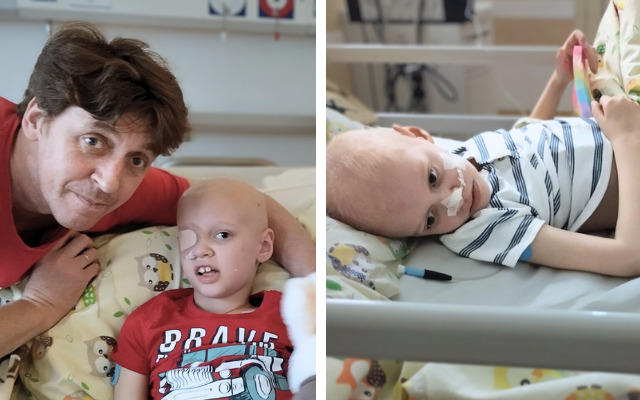
After surgery came chemotherapy — a word we had only heard in stories, never imagining it would enter our home. Now it flows into our son’s veins every day. Today, Tymek lies in a hospital bed, pale and bluish, his tiny body frail and trembling. The cheerful boy who once filled our lives with noise and excitement now barely has the strength to lift his head. His soft hair has fallen out completely. Even his teeth have begun to crumble from the harsh treatment. The change is so drastic, so shocking, that some days we can hardly recognize the child lying before us.
The worst part is that he doesn’t fully understand what’s happening. He only knows that everything hurts. He doesn’t understand why he cannot swallow, why he cannot speak, why he cannot walk on his own. After surgery, Tymek became completely dependent on us — for feeding, for turning, for comforting, for every basic need. He looks at us with confusion, asking silently why he is suffering, and all we can do is hold his hand and try to smile through our own tears.
We tell him he is brave, that this nightmare will end, that he will go home soon. But the moment he closes his eyes, we step out into the hallway and break down. We cry where he cannot see us, where our fear cannot reach him. No parent should ever stand beside a hospital bed and wonder if their child will survive the week, the month, the year. Yet that is our reality. Doctors tell us daily that it is too early to predict anything. Every day is uncertain. Every hour feels like walking on thin ice.
When the second cycle of treatment ends, we will be allowed to take him home briefly before he begins radiation and more chemotherapy. But the costs of everything — treatment, rehabilitation, special medical equipment — are unimaginably high. We would give up everything we own without hesitation, but even that isn’t enough. For the first time in our lives, we must beg for help, because this is the only way to keep him alive.
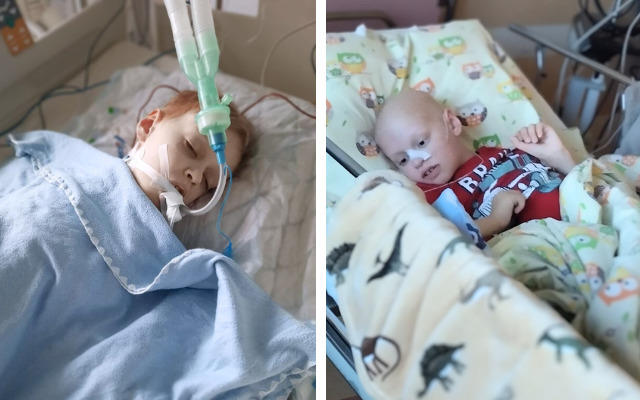
We have never known despair the way we know it now — standing over our son as he lies hooked up to bags of chemicals, his bald head resting on a cold pillow, his breath shallow and fragile. We cannot express the pain of watching a child suffer like this. As parents, all we can do is plead: please do not look away. Please do not ignore this. Our son wants to live. He deserves a chance to grow up, to laugh again, to run, to return to the world outside these hospital walls.
We are fighting with everything we have, but we cannot win this battle alone. Every gesture, every donation, every shared message gives Tymek a greater chance at survival. From the bottom of our breaking hearts, we thank you for reading these words and for caring enough to stand with us in the darkest time of our lives.
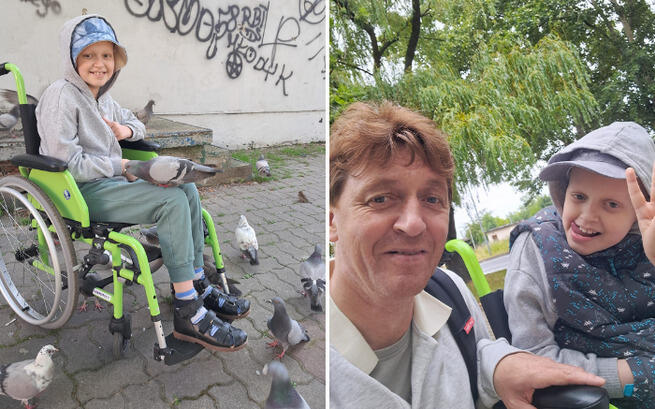
Tymek’s parents – fighting for their son’s life, praying for a miracle, holding onto hope with trembling hands.
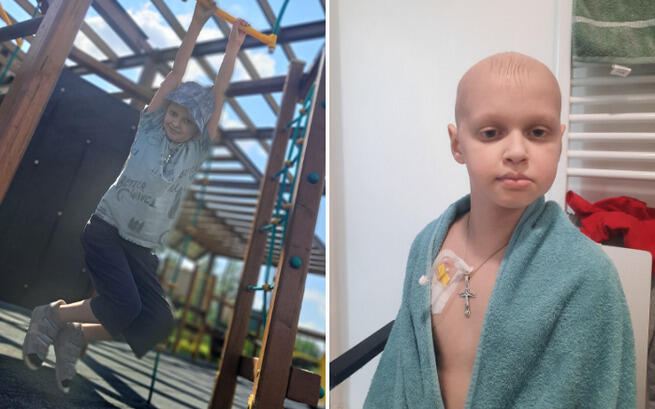
Konrad’s Vision: A Journey of Courage, Love, and Possibility.1629

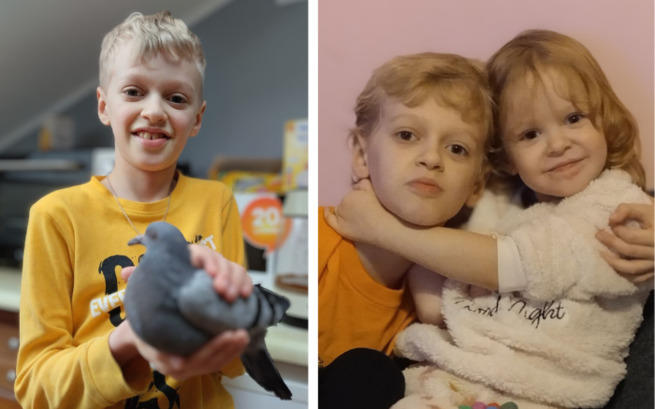
Konrad’s journey began with a diagnosis that left his parents both shocked and determined: anophthalmia, the absence of one eye. It was a term they had never heard before, and the reality it represented was daunting. From that moment, their lives changed forever, and every step became a careful navigation through a world of uncertainty, medical appointments, and the challenge of ensuring that Konrad could grow up confident, happy, and supported.
The early days were filled with questions, research, and countless consultations with specialists. Konrad’s parents quickly learned that while they could provide love and encouragement, they could not do it alone. The journey ahead would require not only medical expertise but also community support, empathy, and resources to help Konrad thrive despite the challenges he faced.
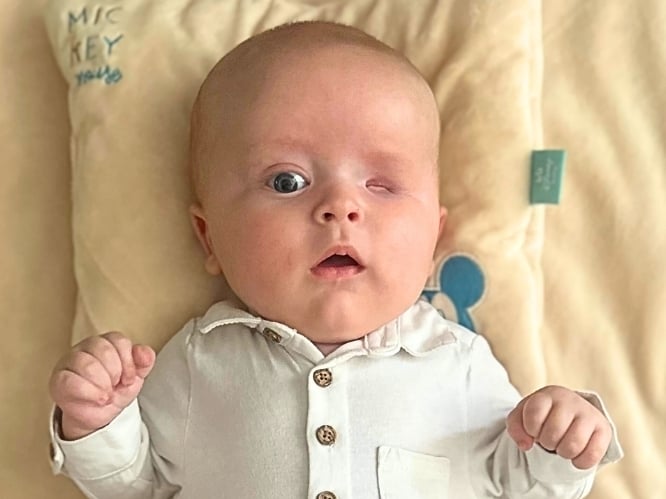
Anophthalmia is more than a medical term; it is a life-altering condition that affects not just sight, but confidence, development, and everyday experiences. For Konrad, it meant multiple visits to ophthalmologists, surgeons, and therapists, each appointment carefully scheduled and coordinated. It meant learning to adapt to a world built for binocular vision and seeking ways to help him feel safe, capable, and included.
Despite the challenges, Konrad’s spirit has remained unyielding. With his family by his side, he approaches life with curiosity, energy, and a joy that inspires everyone who meets him. He has learned to navigate daily routines, participate in play and learning, and develop confidence in himself. Yet there are moments when the obstacles feel overwhelming — when surgeries, prosthetics fittings, therapy sessions, and travel schedules weigh heavily on both Konrad and his parents.

This is where the kindness and generosity of others make a tangible difference. Every donation, every act of support, directly contributes to Konrad’s well-being. It helps cover the costs of prosthetic eyes, specialized therapy sessions, travel to medical appointments, and other essential care. These contributions are not just financial—they are symbols of community, hope, and belief in Konrad’s potential. They say to him, and to his family, that he is not alone, and that together, we can help him achieve so much more than he could ever do on his own.
For Konrad, prosthetics are not just functional; they are a source of confidence and self-expression. Each adjustment, each new device, is a small triumph that allows him to engage with the world in ways that were once impossible. Therapy sessions, meanwhile, build not only physical and visual skills but also social, emotional, and cognitive confidence. Every milestone, from mastering a new task to achieving comfort in social settings, is a testament to his resilience and the support network around him.
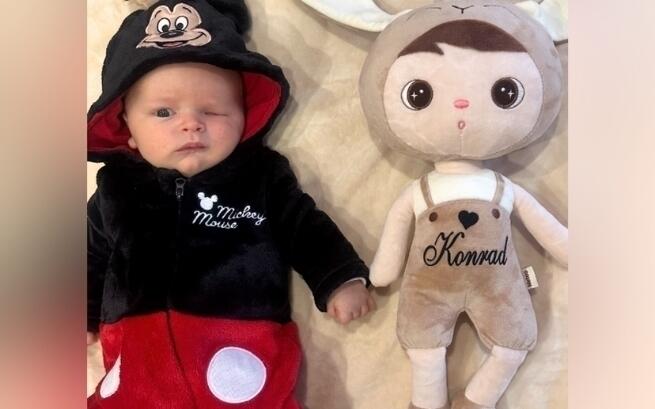
His parents reflect on the journey with a mixture of pride and humility. They see how far he has come, yet they understand the road ahead will continue to require patience, dedication, and care. But with the support of generous donors and compassionate individuals, Konrad’s possibilities expand every day. He is not defined solely by his condition; he is defined by his courage, his curiosity, and the love that surrounds him.
Konrad’s story reminds us that courage is not the absence of difficulty, but the presence of hope and determination in the face of it. It demonstrates that love and support—whether from family, friends, or the wider community—can empower a child to overcome challenges, embrace opportunities, and imagine a future filled with possibility. Every gift, every donation, every word of encouragement helps him see not just with his eyes, but with his heart.

Together, we can ensure that Konrad’s journey is not limited by circumstance but guided by compassion, care, and belief in his potential. He may have been born with one eye, but he has countless ways to see the world, to explore, to play, to learn, and to dream. And with every act of kindness, we help him see his future clearly—through the lens of courage, hope, and love. 💙
Konrad’s story is a testament to the power of human generosity. It is a reminder that a community’s compassion can transform a child’s life, turning challenges into triumphs and obstacles into opportunities. By supporting Konrad, we are helping him not just to navigate the world, but to thrive in it, embracing every possibility with confidence and joy.