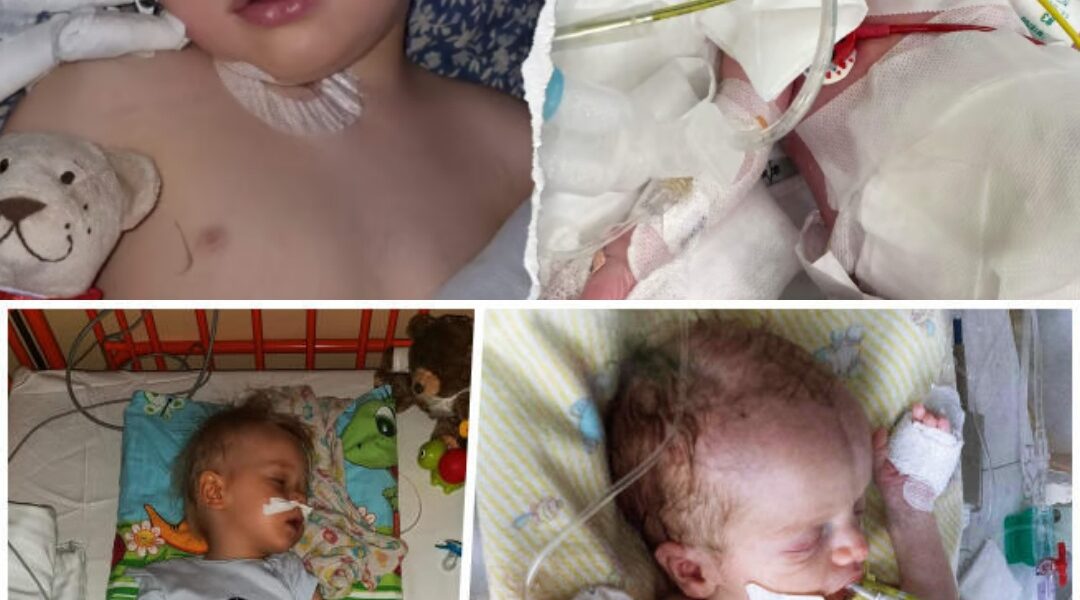

Being a mother is never easy, but raising two children with serious health challenges is a trial few can imagine. Patryś is three years old, and his younger brother, Jaś, was born just a few months ago. Despite their tender ages, both have already faced life-threatening battles. Our home has become a place of constant vigilance, with hospital visits and treatments shaping our daily life. Each day feels like walking on a ticking time bomb, where a sudden complication can shatter the fragile calm in an instant.
Patryś was born on December 3, 2018, a healthy, curious boy who amazed us with each new skill. From the moment he took his first steps with my support, I believed everything would unfold naturally. But in an instant, our world changed. On
June 22, 2020, Patryś began to feel unwell. He cried, sweated profusely, and started vomiting. Panic seized me as I called an ambulance, carrying my unconscious child into the hospital. Suspected stroke, status epilepticus — I felt as though I were trapped in a nightmare I couldn’t wake from.
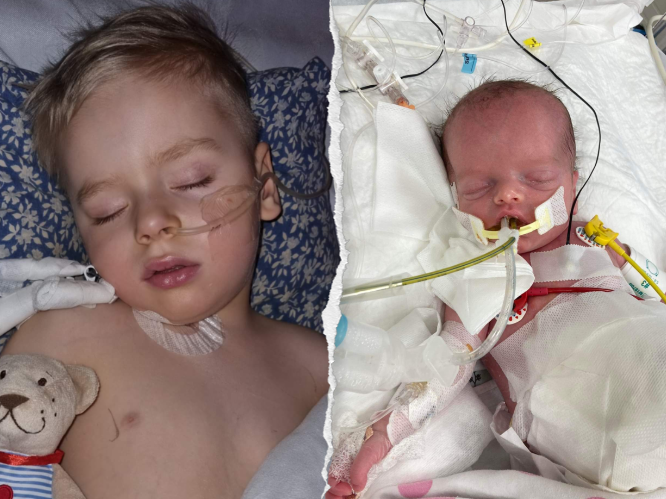
Patryś’s condition was critical. He was transferred to another hospital and admitted to the intensive care unit. That was when we learned he had encephalitis, a severe brain inflammation, coupled with
epilepsy that would later bring him up to 24 seizures a day, and right-sided paralysis. Each seizure robbed him of the abilities he had fought so hard to acquire, and each hospital stay felt like losing a little more of the life we had imagined for him.
Even when Patryś was an only child, his illness demanded all my energy and attention. I thought I could manage, but soon, another blow fell upon us. During my second pregnancy, at just 24 weeks, prenatal tests revealed that Jaś’s intestines were developing outside his body — a congenital defect called
gastroschisis. The fear, the shock, and the urgency of the situation were overwhelming.
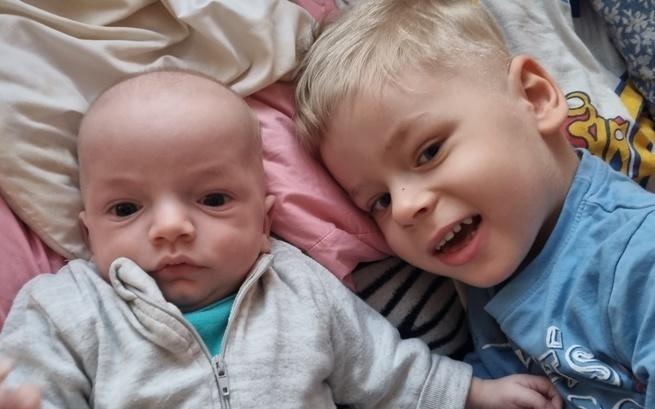
Jaś was born on December 28, and within hours was on the operating table, fighting for his life. I remember watching the tiny, fragile form of my son, praying for every breath, every heartbeat. He remained hospitalized for months, and even after returning home, the stability was fleeting. On
March 27, Patryś suffered another severe seizure, sending him back to intensive care, while Jaś contracted pneumonia. The reality was cruel: both my children needed constant medical attention, and the risk of complications never left our home.
Today, Patryś is bedridden. He cannot walk, sit, or speak. We fight every day to regain even a fraction of what the disease has stolen from him. Rehabilitation, tests, constant hospital visits — these have become our life. Jaś, though younger, also requires ongoing treatment and careful monitoring. Each morning, I wake in fear: will Patryś have another seizure? Will Jaś’s fragile intestines respond properly? And yet, despite the fear, I fight, because these two boys are my everything.
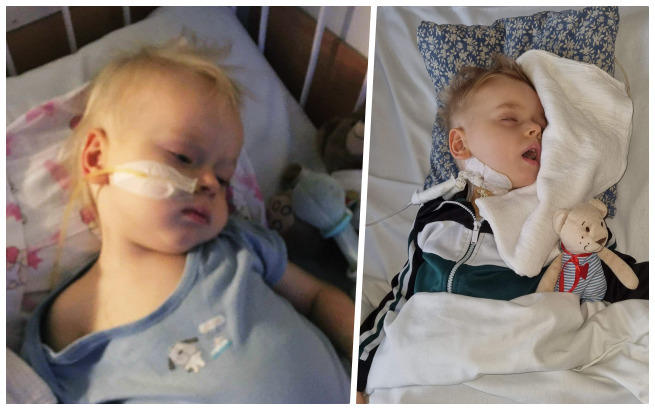
I am not yet 21, yet I am the mother of two children with severe disabilities. The challenges are overwhelming, and exhaustion is constant. But every small smile, every flicker of recognition, every tiny progress my sons make gives me strength to continue. I would give anything to ease their suffering, to give them a childhood as full of joy and opportunity as any other child deserves.
That is why I am asking for help. I cannot provide all the therapies, medical treatments, and rehabilitation equipment my sons need on my own. Every contribution, every message, every act of support is a lifeline for Patryś and Jaś. Your generosity can ensure they receive the best possible care, and that I can continue giving them the love and support they need to fight for every small victory.
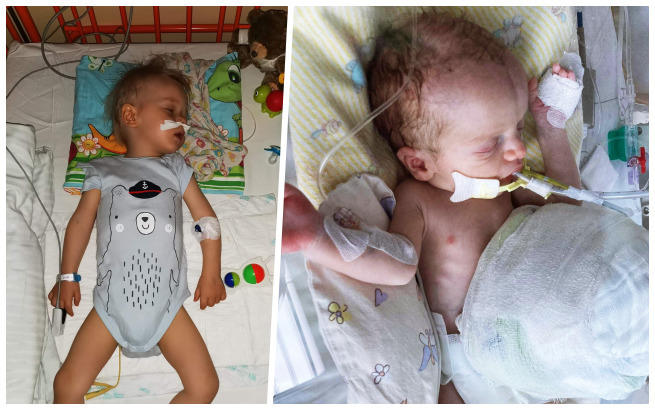
Please join us in giving my sons a chance at life, at progress, and at the childhoods they deserve. Every penny matters. Every share matters. Every act of kindness brings hope, healing, and strength to my family.
— Daria, mother of Patryś and Jaś
Hope’s Heart: A Story of Loss, Courage, and the Miracle of One Tiny Warrior.474

Our journey into parenthood began with both joy and heartbreak. Early in our pregnancy, after several anxious trips to the early pregnancy unit for bleeding, we were told that one of our twins hadn’t survived. It was devastating — a loss that words can never fully capture. Still, the other baby looked strong and healthy, and we clung to that hope.
At our 12-week scan, it was a compassionate sonographer who confirmed the loss of one twin, but she also reassured us that our remaining baby was thriving. Through the grief, we began to dream again.
By the time our 20-week scan came, excitement had replaced fear. We were ready to learn if our baby was a boy or girl, ready to celebrate new beginnings. But life had other plans.

The sonographer called us in, smiled kindly, and began the scan. For the first few minutes, everything seemed normal — until it wasn’t. She struggled to get clear images, saying the baby was sitting too low in my pelvis. After half an hour, she suggested a short walk to help reposition the baby. When we returned, another sonographer joined her. They whispered, their expressions tight. My heart sank.
Then came the words that will stay with me forever:
“We can’t see your baby’s heart properly.”
My stomach turned cold. Panic gripped me as they referred us to a senior sonographer — the same woman who had helped us at 12 weeks. She spent another 20 minutes studying the scan before finally speaking.
“I can only see three chambers of the heart.”
It was the Thursday before Easter 2022, and she promised to contact the fetal medicine unit to get us seen as soon as possible. The wait until
Tuesday felt endless. Every heartbeat, every breath, every kick was filled with uncertainty.

When we finally saw the specialist, our worst fears were confirmed. Our baby girl — our little fighter — was diagnosed with
Hypoplastic Right Heart Syndrome (HRHS), Transposition of the Great Arteries (TGA), Tricuspid Atresia, and both VSD and ASD (holes in the heart).
The cardiologist explained, gently but honestly, that HRHS is a rare and complex condition. There was only a
70% chance she would live to see her fifth birthday. We were given the option to terminate. But looking at that screen, watching her heart beat against the odds, I knew I couldn’t give up on her. She had already survived the loss of her twin. She deserved a chance.
From that moment, my pregnancy became a series of hospital appointments, weekly growth scans, and constant monitoring. At 28 weeks, we met with consultants, paediatricians, and the NICU team to plan her birth and discuss every possible outcome — including palliative care if she didn’t survive. I remember leaving that meeting feeling hollow, terrified, and unable to comfort my partner, who was also struggling with anxiety.
But then, against all odds, the rest of my pregnancy passed peacefully.

On 15th August 2022, one day before my scheduled induction, I went into labour naturally. Within hours, I was in the hospital surrounded by nearly 20 medical professionals, all prepared to care for our baby the moment she entered the world.
At 8lbs 1oz, our daughter Hope arrived — strong, beautiful, and defiant from her very first breath. Her skin had a blue tinge, as the doctors had warned us, but she was here, alive. I held her for a few precious moments of skin-to-skin before she was taken to NICU for stabilisation.
An hour later, I was able to visit her. She was perfect — tiny, pinkish-blue, with a peaceful expression that made me believe everything might be okay. Hope spent 24 hours in NICU before being transferred to a surgical centre for close monitoring. To everyone’s amazement, she needed no immediate intervention — no oxygen, no prostaglandin — just a feeding tube. She even managed to breastfeed directly, something we hadn’t dared to hope for.

After four days, we were discharged on a home monitoring plan. But at ten days old, Hope developed bronchiolitis and had to be readmitted. She began medication to help her heart function more efficiently.
At five weeks old, she underwent her first heart surgery — an atrial balloon septostomy to widen one of the holes in her heart, followed by the placement of a pulmonary artery band to control blood flow to her lungs. The surgery went well, but soon after, her left leg turned mottled. Tests showed a blood clot in her groin, and she was immediately started on daily enoxaparin injections. Once I was trained to administer them, we were discharged home again — a small victory in a long war.
In the months that followed, we faced multiple hospital stays for infections — bronchiolitis, rhinovirus, enterovirus — but Hope always bounced back. Her strength continues to astonish everyone who meets her.

Now, as we wait for her next surgery — the Glenn procedure — our cardiologist believes she may even reach her first birthday before needing it. He told us something that moved me deeply: that her heart, in its own remarkable way, seems to have partially corrected itself.
When I began searching for stories of HRHS, I found so few — especially for right-sided cases like Hope’s. That’s why I share ours. Because somewhere, another parent might be sitting in a dimly lit room after hearing those same terrifying words, searching for hope.
And they’ll find her — our Hope.
The little girl who survived the loss of her twin.
The baby with the mended heart and the unbreakable spirit.
The reason we believe that miracles don’t just happen — they fight to stay.