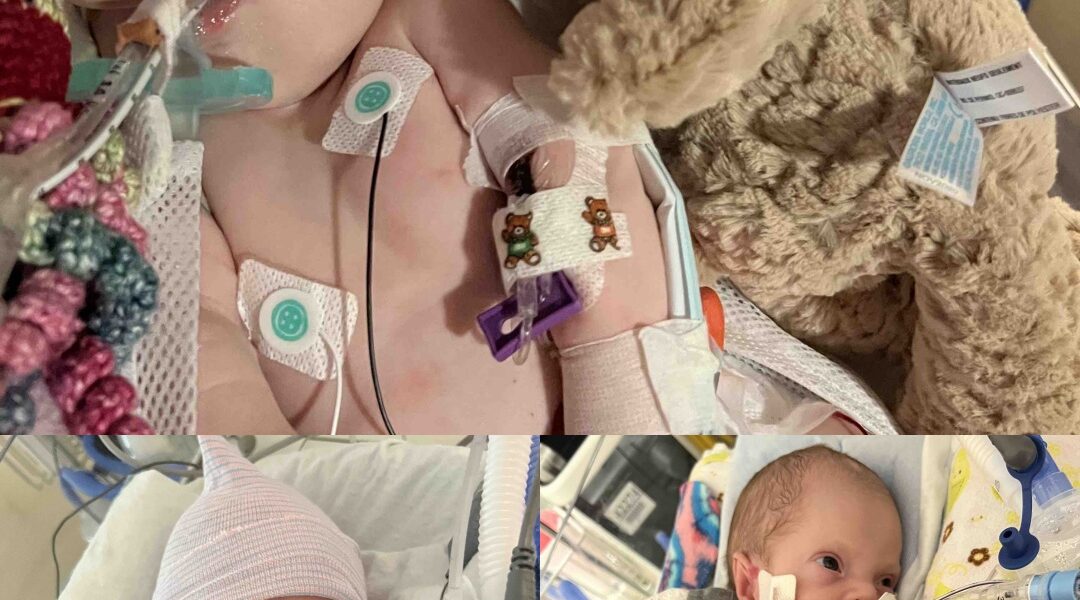

Sophia Marie was born on February 5th, 2022, and from the moment she entered this world, she captured the hearts of everyone around her. However, her first few months were filled with struggles and uncertainty that no parent could ever prepare for. Before her birth, Sophia’s parents, Anthony and Taylor, had already faced many worries, but nothing could have prepared them for the fight they would endure in those early days.
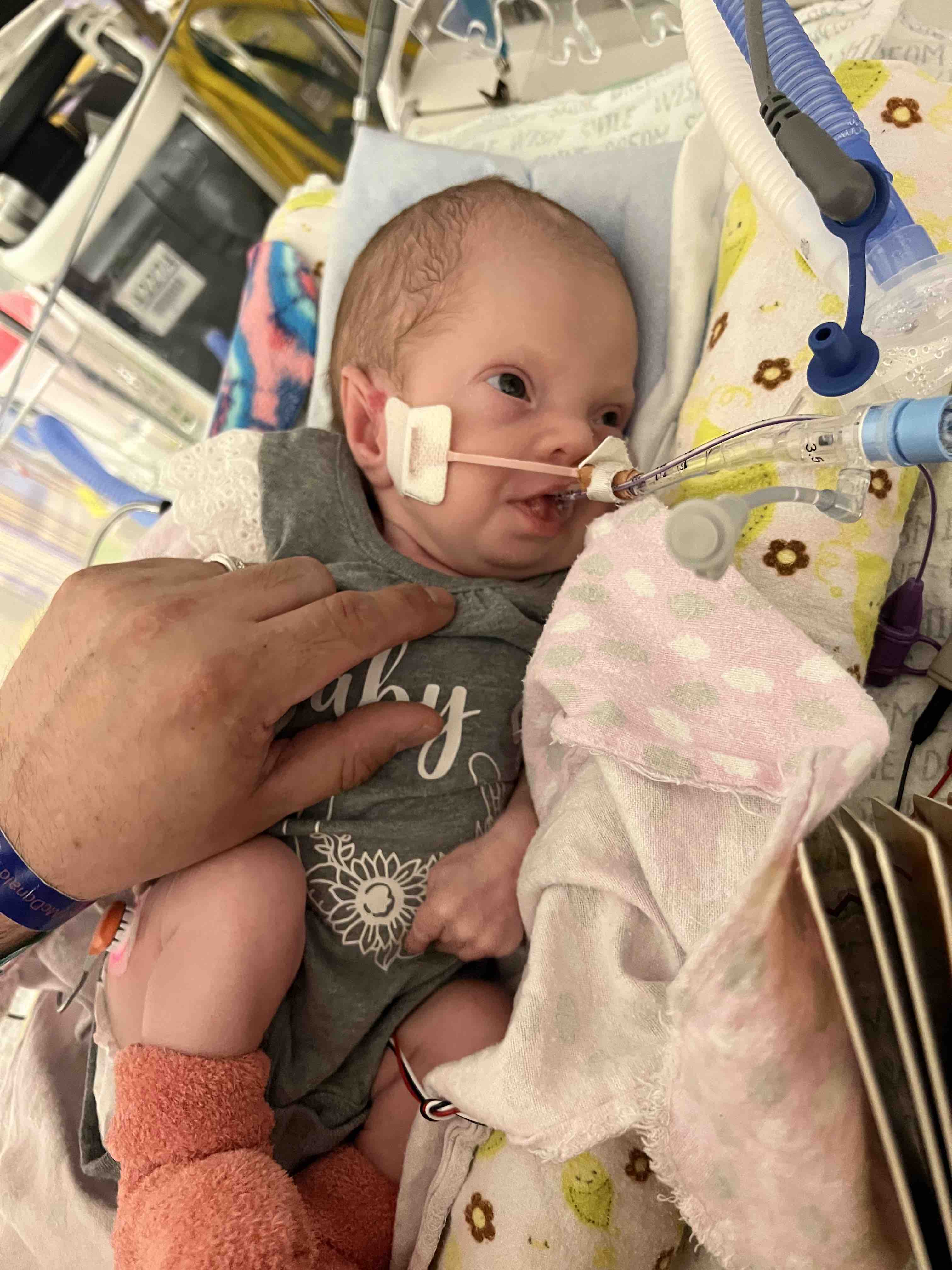
When Sophia was born, she could not breathe on her own. The medical team immediately rushed her to the NICU at Wesley Medical Center, where she was placed on a breathing tube to help her survive. The doctors quickly diagnosed her with Choanal Atresia, a blockage in her nasal passages that made it nearly impossible for her to breathe. The challenges did not stop there—doctors also expressed concerns about a potential genetic disorder that could complicate her condition even further.
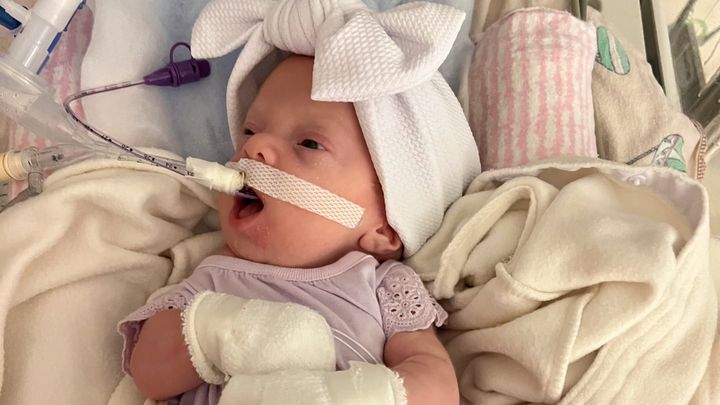
At less than 24 hours old, Sophia was airlifted to Children’s Mercy in Kansas City, where she would receive the specialized care she needed. Anthony followed shortly after to be with her while Taylor stayed behind to recover from delivery. From the moment she arrived at Children’s Mercy, Sophia was put through a series of tests—MRIs, CT scans, lab work, and X-rays—to determine the full extent of her condition. Initially, doctors suspected that Sophia might have Schinzel-Gideon syndrome, an extremely rare disorder with only 50 known cases in the world. They gave her a very short life expectancy, leaving Anthony and Taylor devastated.
But through the power of prayer and hope, they waited anxiously for the results of genetic testing, refusing to give up on their daughter. After weeks of uncertainty, the results came back, and the diagnosis was not what they had feared. Sophia did not have Schinzel-Gideon syndrome, but the results revealed something equally as rare—Sophia has an unbalanced complex chromosome disorder that can’t even be named. While the disorder is unique to her, doctors have told Anthony and Taylor that she will live a full life, though it will come with challenges that they are still unsure of.
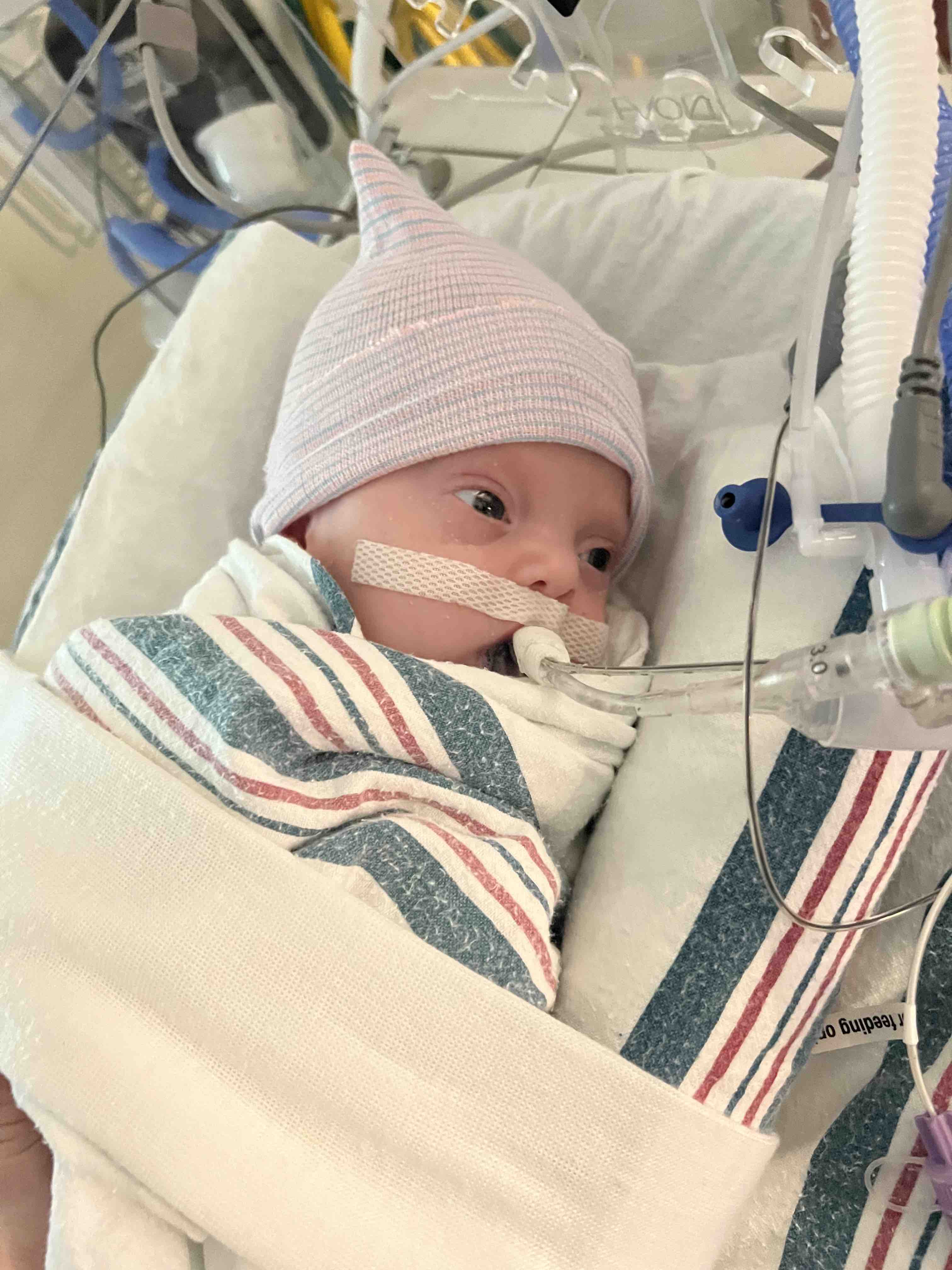
Sophia’s journey has been far from easy. She has undergone three nasal surgeries to help open up her airway, which has allowed her to breathe more comfortably. She remains on a breathing tube and is hoping to have it removed soon, but her recovery is still ongoing. Each day is a new challenge, but Sophia’s strength and determination continue to inspire everyone who meets her.
For the past eight weeks, Anthony, Taylor, and Sophia have been living in Kansas City as they navigate her complex medical needs. They have been fortunate to stay at the Ronald McDonald House, where they have been supported by the kindness of strangers and the love of their family and community. However, the financial strain of being away from home, the mounting medical bills, and the cost of traveling back and forth to Kansas City has been overwhelming. Anthony returned to work in early March, but he is still making the long drive back and forth from their home in Western Kansas to be with his family on the weekends. Taylor will need to return to her job in May, which adds another layer of financial and emotional stress as they continue to care for Sophia.
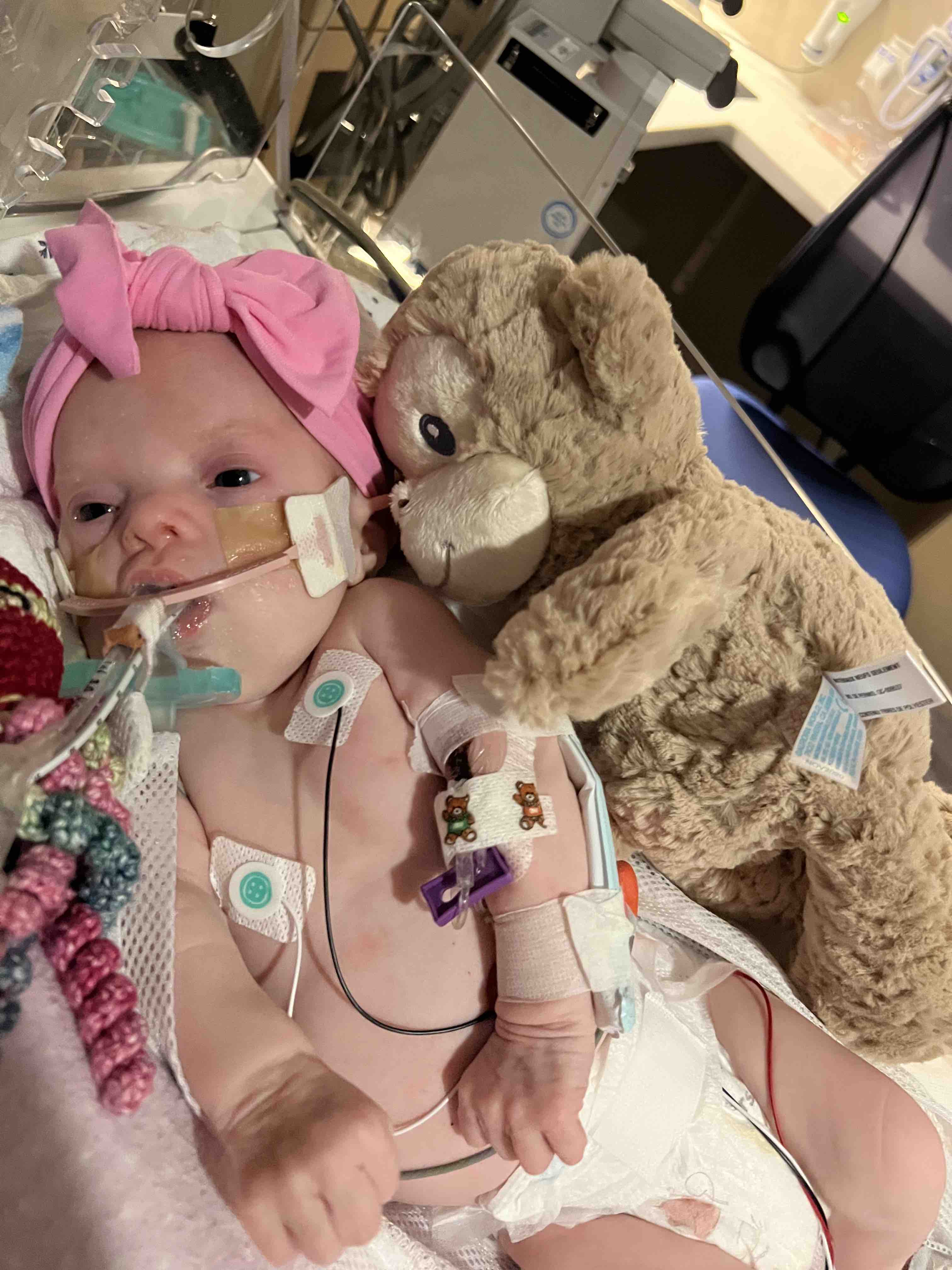
The cost of gas, lodging, meals, and medical expenses has been adding up, and any help would be deeply appreciated. Anthony and Taylor have spent their lives giving back to their community—whether it was through their family restaurant or helping local farmers and ranchers. Now, it’s our turn to give back to them. Your donations, no matter how small, will help cover travel expenses, medical bills, and daily living costs as they continue to support their daughter.
In addition to financial help, the family would greatly appreciate your prayers and encouragement. Anthony and Taylor know that God has a plan for Sophia and that He has given her the strength to fight through everything she’s faced. Every day, they are reminded of how blessed they are to have her in their lives. They are committed to being there for Sophia every step of the way, but they can’t do it alone.
Please consider donating or sharing their story with others. Any contribution will make a significant difference as they continue their journey. Your kindness and support will help them stay focused on what matters most—Sophia’s recovery and their family’s well-being. They are forever grateful for the love and prayers they’ve already received and are humbled by the outpouring of support from friends, family, and even strangers.
From the bottom of our hearts, thank you for being a part of this journey with them. Your generosity will help give Sophia the best chance at a healthy, happy future. Together, we can support this beautiful family as they navigate the challenges ahead and help Sophia grow stronger every day.
With gratitude and hope,
Melissa, Noah, Blakely, and Brinley.
Julian: Half a Heart, a Full Life, and Endless Courage.3285

When Julian was still living carefree in my heart, and I was walking with my almost three-year-old son, people would ask with sympathy, “Will it be a boy or a girl?” When I answered that it was a second son, the most common response I heard was, “Oh, but the most important thing is that it’s healthy!” And I already knew how important that thing wouldn’t happen for us.
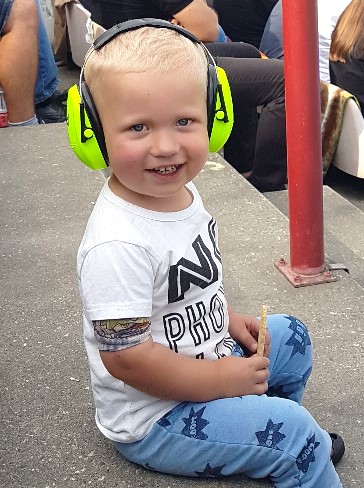
Julian is a joyful and curious boy, almost two years old. Unfortunately, fate was stingy with him from the start, giving him only half a heart. In June 2016, we learned that our second son wouldn’t be like other children, like his older brother.
The mid-term scan was not a joyful, playful sight. It was an attempt to detect the red dots on the ultrasound monitor, signaling that blood was flowing into the left ventricle of the heart, and that it was working. Unfortunately, the flow was minimal, and the ventricle wasn’t working as it should.
All the abnormalities pointed to one thing: the most severe congenital heart defect, hypoplastic left heart syndrome (HLHS). A critical, incurable defect. Our world collapsed in a matter of minutes.
A very winding road lay before us, one that only we knew about. For our son to live, he required at least three stages of palliative surgical treatment. Julian had to be born in a hospital where a team of specialists would begin fighting for his life immediately after birth.
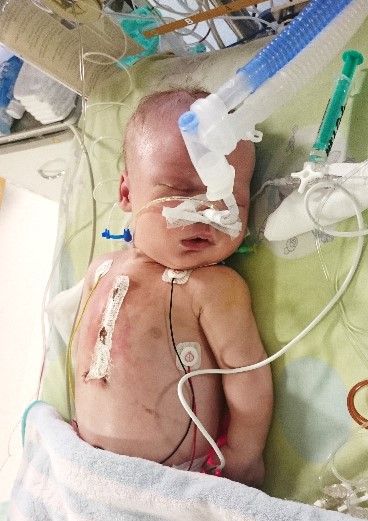
He spent only 15 minutes in my arms, then was placed in an incubator for long days and nights, hooked up to continuous infusions, wires, and cables. Doctors had to use medications to maintain fetal circulation so that Julian could survive until his first surgery.
During our pregnancy, we were fortunate that our doctor detected the heart defect early, for which we will be forever grateful. He was the first to give Julian a second life. Not all parents are so lucky.
Looking at our newborn, no one would ever have guessed he was terminally ill and would soon die without help. He was a large, robust, full-term boy, weighing 3930 grams, measuring 59 centimeters, and scored a full 10 on the Apgar scale. He barely fit in the incubator.
The birth of a child is a life-altering experience for the entire family. Shifting priorities and not enough hours in the day are probably what the average parent of a newborn experiences. It was similar for us, but on a more elevated level.
Julian’s performance declined with each passing day, his parameters were dropping, and his condition was classified as moderately severe. Every day, as visiting hours passed, I said goodbye to him, unsure if he would live to see the next day. The doctors offered no comfort; they simply told us how it was.
Finally, after almost a week, we were asked to sign the consent form for the first surgery. Without a doubt, it was one of the most difficult days of our lives. While signing the documents, we were informed of the risks and the difficulty of the surgery.
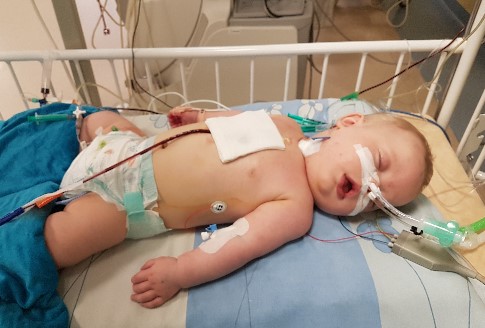
We knew once again that Julian was terminally ill, and the congenital HLHS defect could not be corrected or cured. His heart would never function like a healthy heart. The first stage of palliative treatment carries the highest mortality rate, and we didn’t know if he would survive.
After a difficult moment, we went to the hospital chaplain to ask for his Baptism. In the darkness, illuminated only by the heart monitors and small lights at the children’s stations, we prayed for Julian and reaffirmed our commitment through the familiar ceremony of receiving Holy Baptism. Moments later, we had to say farewell to our warrior and disappear behind the door.
The next day, zero hour struck. Julian was rushed to the operating room. Every second of waiting for information felt like an eternity. When we finally received the news that the operation was complete, we were told he had been brought out of general hypothermia and was stable, though connected to a specially designed device to maintain circulation.
Relief was long in coming. Julian now had to channel all his strength into the fight for life. The next few days were crucial. An open incubator, ventilator, drains, tubes, cables, pumps, syringes, and the intermittent beeping of the heart monitor alarm surrounded him.
We drew strength from our deepest reserves to support our warrior and his older brother, who tried to understand little. Each day, we drove the familiar route to the hospital, watching over Julian and squeezing every minute of our short visiting hours. We waited for him to start peeing, to tolerate food, to come off the ventilator, and to taper off his medication. Step by step, he moved forward.
After the first stage, Julian spent 26 days in the hospital. The day he went home was unforgettable. Our three and a half hearts were bursting with joy and pride.
Three months later, during a second checkup, we learned that the aortic stenosis had returned. Immediate cardiac catheterization was required. The balloon dilation was unsuccessful, so the doctors inserted a stent.
Months later, Julian returned for the third stage of surgery. Waiting in the intensive care unit for news about the operation was excruciating. When we finally saw him, swollen and attached to familiar equipment, our hearts shattered. He had grown, become stronger, but the battle was far from over.
Four days later, he was transferred to the cardiac surgery ward. Though he was with me 24/7, the postoperative period was very difficult. Oral medications were hard to tolerate, appetite was poor, and pumps and syringes restricted movement. Only intravenous painkillers brought relief.
After more than a week, treatment began to show effect, and Julian slowly returned to himself. Twenty days after surgery, he was cleared to go home. The reunion with his older brother brought tears of joy.
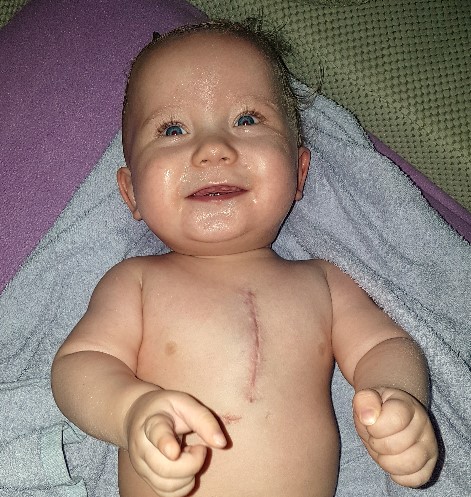
The third stage of palliative surgery remains essential for Julian’s survival. Without it, he cannot live. Professor Edward Malec from the Muenster Clinic has agreed to perform the operation. Thanks to generous donors, the full amount needed for surgery in Germany has been collected — approximately 170,000 złoty.
Julian’s treatment also involves medications, medical equipment, and specialist visits. After the third surgery, his blood clotting will need constant monitoring, requiring special devices and ongoing care. Travel, hotel accommodations, and perioperative expenses are additional challenges.
Julian will never have a healthy heart, but he wants to live and grow like other children. He may only have half a heart, but his will to fight and zest for life are more than whole. Every day he inspires us, reminding us that courage and hope can survive even the most difficult circumstances.