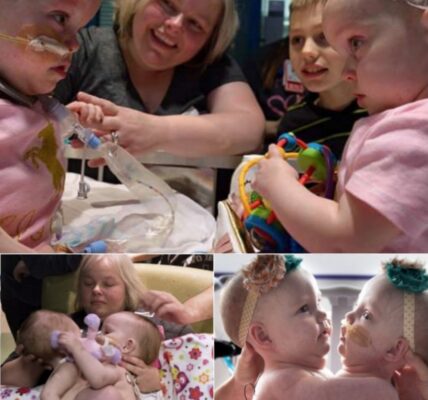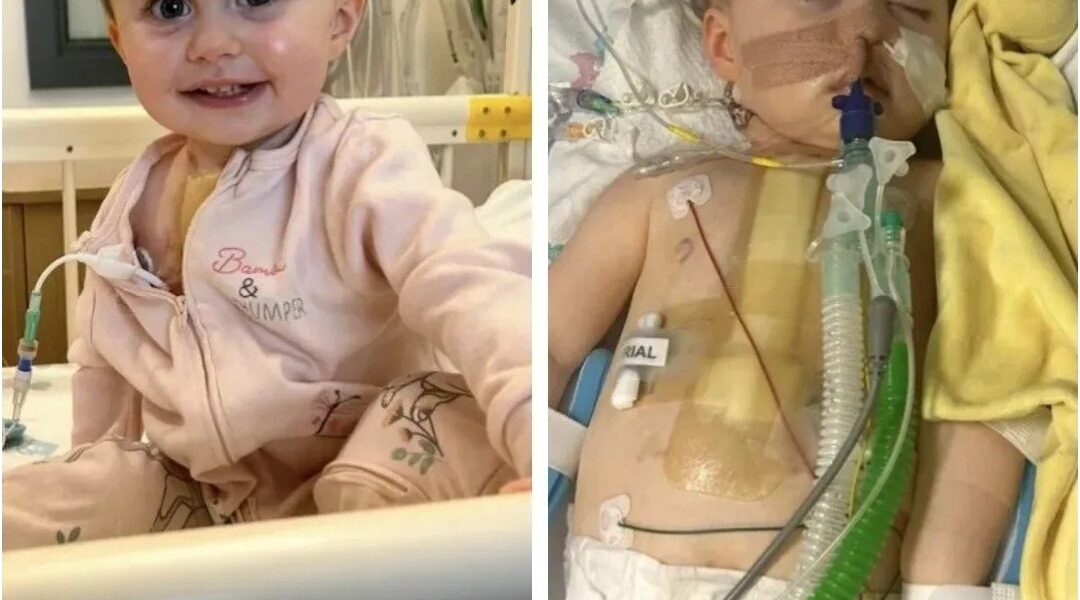

From the moment Hallie’s heart was seen on a 20-week scan, her parents, Suzie and Kerry, knew their lives would never be the same. The flicker of life on the ultrasound screen carried with it a weight they had never imagined. Doctors spoke in measured tones, explaining that Hallie was diagnosed with Tetralogy of Fallot, a congenital heart defect, compounded by the rare absence of her pulmonary valve. For Suzie and Kerry, those words felt like a storm crashing down, shaking the foundation of their hopes for a normal pregnancy.
The weeks that followed were filled with an anxious anticipation. Every kick, every movement of Hallie in the womb became a miracle in itself. Suzie poured over medical journals late at night, researching what this rare diagnosis would mean for her daughter. She read stories of courage, of tiny fighters who defied odds, and clung to each account like a lifeline. Kerry spent his days coordinating appointments, advocating for Hallie with specialists, and trying to remain a pillar of calm, though behind closed doors, fear gnawed at him.

Prenatal visits became a rhythm of hope and dread. High-resolution ultrasounds, fetal echocardiograms, and consultations with pediatric cardiologists painted a stark picture. Hallie’s heart was not only struggling to function but would require surgery immediately after birth. The absence of her pulmonary valve meant her blood circulation was compromised, and without intervention, survival was uncertain. Yet, despite the medical jargon and chilling statistics, Suzie and Kerry refused to succumb to despair. They chose instead to embrace each day, each movement, each moment that Hallie reminded them of her presence.
As the pregnancy progressed, preparations for Hallie’s arrival became a delicate balancing act between fear and hope. The couple visited the neonatal intensive care unit where their daughter would spend her first days. Nurses explained the machinery, the monitors, the procedures that would stabilize her. Suzie held back tears as she imagined the tiny infant who would need tubes, medications, and surgeries before she even had a chance to cry freely. Kerry, though stoic, felt the weight of responsibility pressing down, vowing to be her advocate, protector, and source of unwavering love.

Finally, the day arrived. Labor was long and filled with tension, every contraction echoing the uncertainty that had shadowed the family for months. When Hallie was born, the room was silent except for the muffled cries of the medical team. Suzie and Kerry were allowed a fleeting moment to see her, wrapped in tiny blankets, her fragile body struggling to draw the breaths that many take for granted. Immediately, she was whisked to the neonatal intensive care unit, where a team of specialists worked tirelessly to monitor her oxygen levels, blood flow, and heart function.
The following days were a blur of beeping monitors, whispered reassurances, and medical interventions. Hallie’s first surgery loomed like a mountain over the family. Pediatric cardiologists explained that the operation would reconstruct parts of her heart, create a pathway for blood to reach her lungs, and attempt to compensate for the missing valve. It was high-risk, but the alternative was unthinkable. Suzie and Kerry found themselves leaning on each other, their love and faith becoming the only constants in an ocean of uncertainty.
During these first critical days, Hallie surprised everyone. Her tiny body proved resilient, responding to treatments and interventions in ways that defied initial expectations. Each small improvement—a stable heart rate, a slight weight gain, a stronger cry—was celebrated as a victory. Suzie whispered stories to Hallie about the world she would one day explore, about the adventures that awaited beyond the sterile walls of the hospital. Kerry gently held her tiny hands, promising that they would face every challenge together, side by side.
The weeks stretched on, and Hallie’s journey became one of courage, resilience, and the unbreakable bond of family. Every heartbeat, every breath, every flutter of her tiny fingers reminded Suzie and Kerry of the gift of life, fragile yet fiercely determined. Though the road ahead remained uncertain, they held onto hope, drawing strength from each other, from their daughter, and from the medical team that became an extended family.
Hallie’s story is far from ordinary. It is a testament to the courage of those who face life-threatening conditions from the very beginning, to the relentless determination of parents who fight for every possible chance, and to the miracles that can occur when love and hope persist in the darkest of times. Suzie and Kerry continue to walk this path with their daughter, celebrating small victories, cherishing fleeting moments, and embracing the future with hearts full of love and unwavering faith.
The Forgotten Companion: A Dog’s Silent Plea for Love.2727

In the quiet streets of a small town, most people passed by without noticing the suffering around them. But one frail dog, barely holding itself together, caught the attention of anyone who happened to look closer. Skin clinging tightly to bones, eyes pleading, it had survived not by care or love, but by sheer instinct. Its days were spent scrounging for scraps, hiding from harsh weather, and avoiding the very hands that should have offered kindness.
The dog’s owner, a man who once promised protection and affection, had grown indifferent. Each morning, he would pass by the animal without a glance, leaving it tethered, hungry, and cold. On particularly bad days, the dog would escape, venturing into the empty streets, hoping for a morsel of food or a gentle touch. But humans, busy with their own lives, often turned away, unaware of the silent cries.

When the dog found itself peering through the manhole of a local shelter, its ribs clearly visible, it seemed to understand that hope lay beyond the concrete walls. Yet, the owner, oblivious to the suffering, walked past, his shadow stretching over the dog as though casting finality on its misery. The contrast was heartbreaking: a creature yearning for love, ignored by the very person who vowed to care for it.
Volunteers at the shelter first noticed the dog through surveillance footage. Thin, trembling, and hesitant, it barely entered the frame. Their hearts sank at the sight of the animal’s emaciated body and eyes that seemed to ask,
“Why am I left behind?” Immediate action became essential. They organized feeding stations and tried to lure the dog closer, but it retreated at the first hint of human approach. Survival had taught caution. Trust had been broken long before.
Days turned into weeks. The dog’s condition worsened. Its energy waned, but determination remained. Every step was deliberate, every glance calculated. The shelter workers documented the animal’s plight, sharing images online to raise awareness. The posts went viral, touching hearts far and wide. People felt the ache of helplessness, the sorrow of knowing that love could be withheld even from the most loyal companion.

A breakthrough came one rainy afternoon. The dog, driven by hunger and instinct, approached the shelter gate. Volunteers were ready. Calm voices and soft gestures invited it in. The dog hesitated, ears back, body low, but the scent of food and warmth was irresistible. Slowly, it stepped inside, trembling but alive. It was the first time in weeks that someone had offered it safety rather than indifference.
Medical examinations revealed the full extent of neglect. Severe malnutrition, dehydration, and minor infections painted a grim picture of the life it had endured. Each vet visit, every careful touch, and gentle word from the volunteers began the process of healing—not just the body, but the spirit. For the first time, the dog felt a sense of protection, a sense that someone truly cared.
But the emotional scars ran deep. Trust had to be rebuilt slowly. Volunteers took turns sitting quietly beside it, offering food without rushing, allowing it to explore at its own pace. Gradually, the dog began to wag its tail, a small but significant sign of newfound hope. Each day brought more courage, more confidence, and a hint of the playful spirit that had once defined its early life.
Social media updates chronicled the journey. Followers were captivated not just by the dog’s frailty, but by its resilience. Names were suggested, stories were shared, and a community of advocates formed around the idea that no animal should ever face such abandonment. Donations poured in to support medical care and long-term rehabilitation.

Months later, the dog—now healthy, strong, and wary but loving—was ready for adoption. A family, moved by the viral story, offered a home filled with warmth, safety, and affection. The transformation was remarkable: from skin and bones, abandoned and ignored, to a vibrant companion who had survived cruelty through courage and the kindness of strangers.
The story became more than just about one dog. It was a reminder that even in the smallest gestures, love can heal. The difference between neglect and care could be as simple as a glance, a gentle hand, or the decision to stay present rather than turn away. This dog’s silent plea had been heard. Its resilience, a lesson for all who witnessed its journey: hope can survive even in the bleakest circumstances.

And while the dog now thrived in a new home, memories of those painful days lingered—reminders of the human responsibility to protect those who cannot speak for themselves. Its story continues to inspire, educate, and remind the world that love, when offered freely, can overcome even the deepest neglect.