Huxley: Our Tiny Warrior with a Mighty Heart, Overcoming Life-Threatening Heart Conditions and Inspiring Hope in Every Beat. Hyn

At our 20-week scan, the world as we knew it shattered. Huxley was diagnosed with hypoplastic left heart syndrome (HLHS), a severe congenital condition that meant only about 50% of children survive all three of the required surgeries. Even those who did survive would not be cured; the procedures would only prolong his childhood, and he might need a heart transplant in the future. The news was devastating. The second half of my pregnancy became a whirlwind of fear, uncertainty, and anxiety, but amidst it all, we clung to hope and positivity, preparing ourselves for the fight ahead.

When Huxley arrived at 39 weeks via planned C-section, weighing a healthy 8lb 2oz, our excitement was immediately tempered by reality. He wasn’t well. Taken straight to intensive care, intubated, and surrounded by a tangle of wires and tubes, we didn’t get to hold or see him properly for the first 24 hours. On that very first day of his life, Huxley underwent a
septostomy, a critical procedure to create a small hole between the left and right atria of his heart, allowing his blood to circulate.
Finally meeting him, sedated and fragile, our hearts ached. But as the hours passed, Huxley began to thrive. Within five days, he was breathing on his own, off oxygen support, and awake enough to finally cuddle. For the first time, we saw his beautiful eyes and introduced him to his big sisters, Scarlett, five, and Aria, just 1.5 years old. The joy of those moments was immense, but we knew the hardest battles were still ahead.
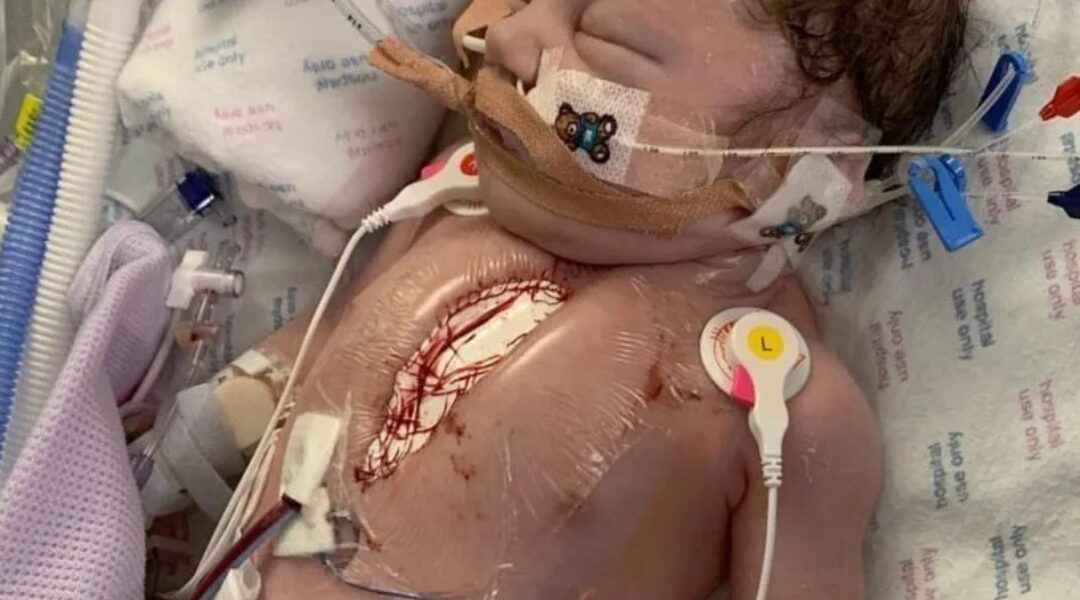
At just eight days old, Huxley faced the first of three monumental open-heart surgeries: the Norwood procedure. Walking him into theatre, kissing him goodnight, I felt a surge of anger and fear—why him? Eleven hours later, we saw our baby again. Nothing could have prepared us for the sight of his grey, swollen body, his chest left open. It was terrifying.
The days that followed were critical. Three days after the Norwood procedure, Huxley had to return to theatre for a blood clot on his heart. The doctors’ words, “We need to get to theatre now or he will die,” made my knees buckle. Yet, through the skill and dedication of the surgeons, doctors, and nurses, Huxley pulled through. Two days later, his chest was closed, and a week after that, he left
PICU to continue recovery on the children’s cardiac ward. There, we trained to care for our baby at home—learning tube feeding, weighing, administering medication, performing baby CPR, and recognizing signs of medical distress.

At five weeks old, Huxley came home for the first time. But within two days, he was unable to keep his feeds down and had to return to hospital. Doctors recommended he remain an inpatient until his second open-heart surgery. At four months old, Huxley underwent the
Glenn procedure, a four-hour operation. Initially, all seemed well. But shortly after, he developed Chylothorax, a rare condition where lymphatic fluid leaks into the space between the lung and chest wall. His recovery slowed, further complicated by
sepsis, and we spent the next eight weeks on the cardiac ward, fighting alongside him every step of the way.
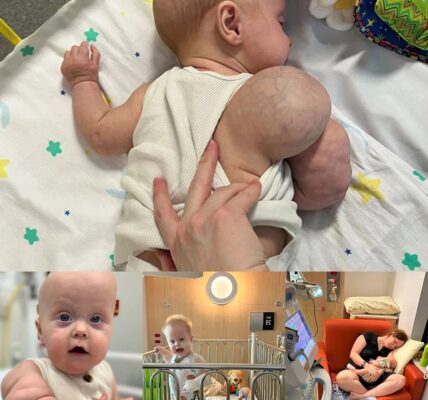
Finally, just before his sixth month, Huxley came home for good—right in the middle of the coronavirus pandemic. It was terrifying, but we were overjoyed to have our family together at last. Now, at nine months old, Huxley is thriving. Every smile, every giggle, and every milestone is a testament to his resilience and strength.
There are more battles ahead. Huxley will require the Fontan procedure, likely when he is between three and five years old. But today, he is happy, healthy, and full of life—a true miracle. The surgeons, doctors, and nurses at
Southampton Hospital are our heroes. They have saved Huxley countless times, and for that, we owe them everything.

We are beyond proud of our little boy. Huxley has fought harder than anyone could imagine, and in return, he fills our lives with love, hope, and unending joy. He is our tiny warrior, our beautiful heart, and every day with him is a gift. Each moment—whether it’s his small hand gripping ours, his tiny coos and giggles, or the way he curls up on our chest—reminds us of the incredible courage embedded in his tiny frame.
Huxley’s journey has been a masterclass in patience, preparation, and unwavering love. It has shown us that the human spirit—combined with expert medical care—can achieve miracles. Watching him grow, even in the face of such overwhelming challenges, is a daily reminder that hope and resilience are not abstract concepts, but living, breathing realities manifested in the courage of a tiny heart.
This story is not only about medical triumph but also about family, support, and the power of never giving up. It’s about the countless hours spent learning, monitoring, and advocating for Huxley, about the sleepless nights and the constant vigilance required to keep him safe. It’s about the emotional endurance of parents who watch, helpless at times, yet steadfast in love and determination.

Huxley is more than a survivor. He is a symbol of what can be achieved when hope meets action, when love meets expertise, and when a community—including doctors, nurses, and family—rallies around the most vulnerable. Every heartbeat, every breath, every laugh is a triumph over fear, a victory against odds that were once stacked impossibly high.
In a world that often seems chaotic, Huxley’s life reminds us of the miracles that can unfold through courage, determination, and unwavering human compassion. He embodies the essence of resilience and the unyielding power of hope. And while the future will still present challenges, we know that with the love and skill surrounding him, Huxley’s heart—tiny but mighty—will continue to beat strongly, guiding our family through every step, every smile, and every precious moment yet to come.
Fighting for a Daughter’s Life at 80: Monika’s 40-Year Battle Against Pain and Silence

I am almost 80 years old, and for nearly four decades, my life has revolved around one mission: keeping my daughter, Monika, alive and as comfortable as possible. She is 35 now, but her journey has been defined by struggle since the first week of her life. Born frail, she survived sepsis in those early days, a cruel twist of fate that set the stage for a lifetime of medical battles.
Monika never spoke. She never walked. She never had the independence that most of us take for granted. Her world is confined to a bed, a small room, and the constant presence of caregivers. She has no logical verbal communication, requires round-the-clock care, and suffers from epilepsy. Every seizure, every spasm, every involuntary twitch is a reminder of how fragile her body is, and how relentless this disease is.

For decades, I shared her care with my late wife. We learned every nuance of her needs, every signal she could give, every subtle indication of pain or discomfort. But now, I am alone. My body grows older, my strength wanes, and the weight of her care feels heavier with each passing day.
Monika’s body is a battlefield. She is permanently dependent on a PEG tube for nutrition and carries a stoma bag to manage waste. Her muscles are stiff, twisted by spasticity. Her spine is deformed, bent into extreme “C” and “S” curves, making simple movements agonizing. Even a minor shift can trigger sharp pain. Every day, I struggle to keep her comfortable, to move her safely, to maintain her hygiene without causing further suffering.
Despite her condition, Monika is alive, resilient, and present. Every small sign — a blink, a twitch, a fleeting smile — is a victory. But these moments of life and awareness come at a tremendous cost. Rehabilitation is essential to prevent her body from deteriorating further, to relieve her constant pain, and to maintain the tiny fragments of mobility she has.
The truth is harsh: I cannot do this alone. My body is tired, my joints ache, and my own health is fragile. Yet, every morning, I rise to face the day because Monika depends on me. Every therapy session missed is another moment of suffering. Every day without proper care risks undoing years of struggle.
Monika suffers from relentless epilepsy. Seizures strike without warning, locking her muscles, shaking her frail body, and sometimes threatening her breathing. I have spent countless nights holding her, powerless to stop the spasms, praying she will come through another day. Each episode leaves me physically exhausted and emotionally drained, yet I cannot leave her side.
Over the years, we have faced hospital after hospital, specialist after specialist. Each appointment is a journey of hope and fear. Every intervention — a therapy, a medicine, a new procedure — is a lifeline. And yet, the cost is staggering. Years of out-of-pocket expenses, specialized medical equipment, therapy sessions, and daily care have pushed our family to the brink.
Monika has never known the freedom of childhood. She has never run in a park, laughed freely, or learned to feed herself. But she has small victories that mean the world. A head lifted to acknowledge me, a hand that moves slightly, a blink that tells me she is aware. These fragments of life are precious, but fragile. They require constant support and care to maintain.
I am asking for help, not for myself, but for Monika. The resources needed to continue her rehabilitation, to provide specialized equipment, and to maintain her care are beyond what I can manage alone. Every contribution is not just a donation — it is hope, relief, and life itself.

I have spent almost 40 years dedicated to my daughter. I have given everything I can physically, emotionally, and financially. But my strength is fading. I need the generosity of others to ensure she can continue to live with dignity and as much comfort as possible.
Every day is a fight against time. The longer Monika goes without intensive care, the more severe her deformities become. Her pain increases. Her potential for small progress diminishes. This is not just a matter of comfort — it is a matter of life, of preserving what humanity she has and the ability to experience even the smallest joys of existence.
Monika deserves a chance at life with dignity. She deserves to be comfortable, to avoid the unnecessary suffering caused by her body’s condition, and to maintain whatever mobility and awareness she can. Her life, as confined and challenging as it is, holds meaning and value that cannot be measured by health statistics alone.
I cannot turn back time, and I cannot make her body heal on its own. But with support, we can provide her the care she needs. Every therapy session, every specialized device, every medication counts. Each one keeps her alive, eases her pain, and preserves her dignity.
I am almost 80, and I am human. I cannot do this forever. My hands ache, my back hurts, and I fear the day I may not be able to care for her. I worry constantly about what will happen if I fall ill. Monika cannot be left alone; she cannot survive without round-the-clock care.
That is why I am reaching out. To you. To strangers. To anyone who can see the fight, the struggle, the life in front of them and feel compelled to act. Your support is not charity — it is lifesaving. It is the difference between days filled with pain and nights spent in agony, versus days of managed comfort and monitored care.
Monika has given me purpose, endurance, and lessons in love and patience that I could never have imagined. She has survived so much, yet her life is still threatened by pain, neglect, and the limitations of my aging body. We need help to sustain her, to continue her rehabilitation, to maintain the equipment that keeps her alive, and to ensure that she continues to experience even the smallest fragments of life that make it worth living.
Every donation, every share, every moment of attention helps. It is a gesture that transcends money. It is a gesture that says: “We see her. We see her struggle. We care.” And for Monika, that makes all the difference.
I am asking for your help today. Not tomorrow, not when it is convenient — today. Because every day without care is a day of pain, a day of risk, a day lost. For nearly 40 years, I have fought alone. Now, I ask you to join me in this fight.
Monika is my daughter. She is my life. She is my heart. She deserves a chance at dignity, comfort, and the smallest measures of freedom that her condition allows. She deserves to feel the warmth of care, the assurance of safety, and the touch of humanity.

Please, help us continue the fight. Support Monika. Stand with us. Give her the chance to live with dignity, to feel comfort, and to know love. Because without your help, I cannot do this alone. And without this support, she cannot survive with the life she deserves.
Every gesture counts. Every share counts. Every donation counts. And every act of kindness brings Monika closer to the care and comfort she has earned through decades of struggle and resilience.
She is my daughter. She is my heart. And now, more than ever, she needs you.
— Her Father