There are moments in life that stretch time — hours that feel like lifetimes. For little Myla, the forty-eight hours after surgery were exactly that. Forty-eight hours that tested her body, her spirit, and the people who loved her most.
The hospital corridors had quieted. Only the rhythmic beeping of machines and the soft shuffle of nurses’ shoes filled the air. Behind one of those closed doors lay a girl whose strength had already outshone her tiny frame — a girl who, even in sleep, reminded everyone watching that courage has no size.
The Aftermath of a Battle
When the operation ended, relief washed over her parents first. But in the days that followed, reality began to settle in. Myla’s body, brave as it was, had just endured a war. Each hour since became a test of resilience and patience, both for her and those who surrounded her.
It had now been seventy-two hours since she last ate. Pre-surgery fasting had left her tiny stomach unprepared for nourishment. Each attempt to sip water or eat a bite ended in nausea and exhaustion. Her body simply wasn’t ready.
IV fluids had been reconnected — clear tubes snaking down from the tall metal pole beside her bed, dripping life drop by drop. Each drop was a silent promise: We’re not done yet.
Though she hadn’t managed a proper meal, the doctors reassured her mother that it was okay. Rest was what her body needed most — and in sleep, Myla found it.

A Body Learning to Adjust
Early in the morning, the physiotherapy team noticed something subtle but concerning. As Myla walked hand-in-hand with her therapist, she seemed unaware of her right side. A missed touch. A slight lean. Small cues, yet enough to pause the team’s breath.
Neurological recovery after major brain surgery is rarely straightforward. Tiny, terrifying reminders like this show that healing is rarely a straight line.
The team ran a “follow the finger” test — tracking eye movements. Myla passed it. Relief swept through the room, but vigilance remained. Each signal from her brain had to find its way to where it was meant to go.
For now, recovery was measured one careful step at a time.

The Hardest Day
Yesterday had been brutal.
Pain arrived in relentless waves — sharp, exhausting, overwhelming. Myla cried, not from fear, but from sheer discomfort. Her mother, Natalie, could do little more than hold her hand and whisper words meant to soothe what she could not take away.
Every parent who has ever watched a child suffer knows the helplessness: the desire to absorb the pain, only to realize that you cannot.
Myla’s room smelled faintly of antiseptic and salt water. Machines hummed and clicked; nurses moved swiftly yet gently, monitoring IVs, adjusting oxygen, checking vitals.
The doctors reminded Natalie that it was all part of recovery — unpleasant, yes, but necessary. Her daughter’s body needed to reorient after anesthesia, to remember what normal felt like.
By nightfall, Myla drifted into sleep, and the room seemed to exhale. For a moment, the world held its breath.

A Small Step Forward
Today brought quiet progress.
Myla rested more peacefully, finally surrendering to healing through sleep. Her fentanyl patch — once crucial for pain control — had been removed. Powerful medication lingers in the system long after removal, often causing nausea or dizziness. The doctors believed this explained her earlier sickness.
Now, with the patch gone, her body could begin to reset.
Recovery at this stage doesn’t come in bold milestones. It shows in tiny, precious details:
-
The first sip of water she keeps down.
-
The recognition of her mother’s face without confusion.
-
The flicker of a smile when a nurse praises her bravery.
Each moment is monumental.

A Mother’s Watch
Natalie hasn’t left her daughter’s side. She sleeps in a chair beside the bed, back aching, heart stretched between hope and exhaustion.
When Myla stirs, Natalie strokes her hair, whispers comfort, and offers reassurance through trembling eyes that have seen too many sleepless nights.
She shares small updates online, not for attention, but for
connection — for the hundreds of people who pray for Myla daily.
“Thank you for your messages, your love, your prayers,” she wrote. “It means the world.”
In the walls of a hospital, love from afar feels like oxygen.
The Team Around Her
Every child in recovery is carried by an invisible team: doctors, nurses, therapists, family, and strangers who care. Myla is no exception.
Neurosurgeons check reflexes. Physiotherapists test balance. Nurses monitor IVs with practiced precision. Every tiny victory — a color returning to her cheeks, stabilized oxygen levels — is celebrated.
To them, Myla isn’t just a patient. She’s a fighter, a familiar face whose courage leaves seasoned professionals humbled.

The Quiet Between the Beeps
At night, when the hospital slows, Natalie listens to the sounds that never stop: the beeping, the hiss of oxygen, the hum of fluorescent lights.
In those quiet hours, hope is a fragile, persistent thread — one that promises not miracles, but tomorrow. Tomorrow offers another chance for strength. Another chance for Myla to take one more step toward recovery.
She knows the road ahead will not be easy. Nothing in Myla’s journey has ever been.
The Human Heart, Rewired
Watching a child heal is extraordinary. It’s not just physical recovery — it’s the emotional resilience radiating from someone so small.
Children like Myla don’t simply endure pain; they redefine it. They absorb it, transform it, and show the rest of the world what it means to fight with courage beyond measure.
Her story isn’t just about surgery, IVs, or medical charts. It’s about fighting when your body is small but your spirit is infinite.

A Mother’s Words
Natalie summarized it best:
“We’re taking things one step at a time.”
Simple words, yet profound. On the edge of fear and faith, all one can do is move forward, step by step.
She doesn’t know when Myla will eat again. She doesn’t know when she’ll walk unaided. She doesn’t know the next challenge.
But she knows this: Myla has survived forty-eight hours she wasn’t guaranteed. That alone is a victory.
Hope in the Details
Hope often hides in the smallest gestures:
-
A nurse smoothing a blanket.
-
A friend texting “thinking of you.”
-
A little girl squeezing her mother’s finger, even in sleep.
This is where recovery begins. Not in sudden miracles, but in quiet, ordinary acts of love and care.
The Road Ahead
No one knows what tomorrow will bring. Maybe Myla will eat a few bites. Maybe she’ll walk without leaning. Maybe she’ll simply smile a little longer.
Whatever happens, her journey continues — measured not in days, but in courage.
Forty-eight hours post-surgery, she is still here. Still fighting. Still teaching everyone around her what resilience truly looks like
As Natalie watches her sleep, she whispers,
“You did it, sweetheart. You made it through today.”
Sometimes, that is all that matters.
Because tomorrow, hope will rise with her. And that is how healing begins.
The Heart of Courage
Myla’s story is a reminder that strength comes in the smallest forms. It is found in fragile bodies and brave spirits, in mothers who never leave their children’s sides, and in medical teams who dedicate themselves entirely.
It shows us that recovery is not always loud or visible. It is quiet, fragile, and often measured in the blink of an eye, a touch, a sip of water, or a small smile.
A Legacy of Resilience
Children like Myla redefine what it means to be strong. They teach the world that courage is not about size, but heart. That hope is not always a thunderclap, but often a gentle whisper guiding us forward.
And even in moments when fear seems overwhelming, Myla reminds everyone that love, persistence, and small steps can light the way.
Because some children aren’t just survivors. They are miracles in motion.
The Hiding Place: Corrie ten Boom and the Triumph of Forgiveness

When the world descended into hatred and war, one Dutch woman and her family opened their door — not to safety, but to risk, resistance, and faith. Her name was Corrie ten Boom. In a small watch shop in Haarlem, Netherlands, she built a refuge that saved hundreds from the Nazi death machine. But her greatest act of courage came not from hiding others — it came from forgiving those who destroyed everything she loved.
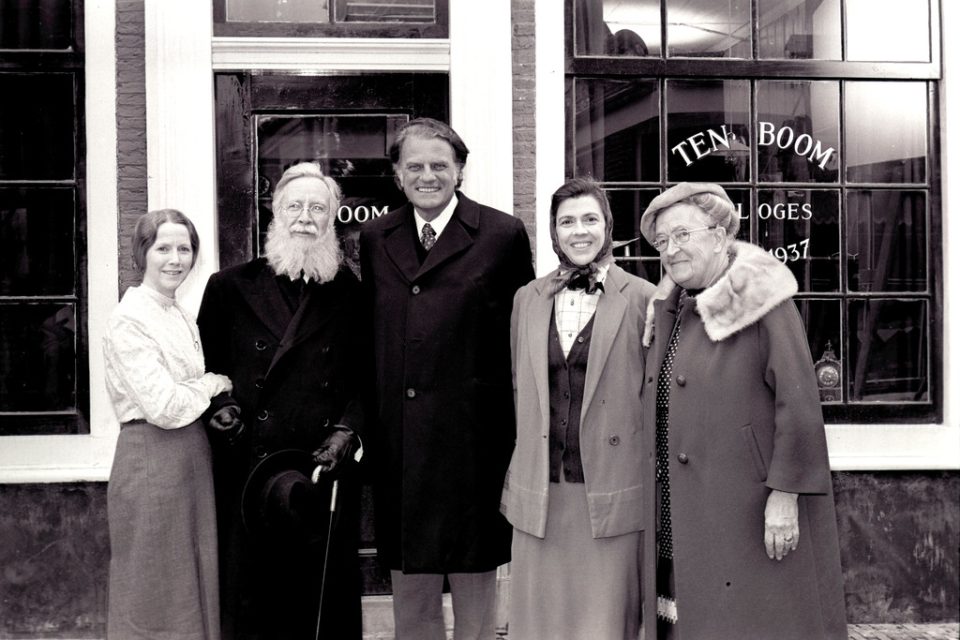
Born in 1892, Corrie was the youngest daughter of Casper ten Boom, a humble watchmaker known for his kindness and devotion to God. The family’s faith was simple: love your neighbor, no matter the cost. When the Nazis invaded the Netherlands in 1940, that belief was put to the ultimate test.
As Jewish families began disappearing from the streets, Corrie, her sister Betsie, and their father made a decision that would change their lives. They joined the Dutch underground, turning their home above the watch shop into a secret refuge. Behind a false wall in Corrie’s bedroom, they built “the hiding place” — a small, windowless chamber that could hold six people. The risk was deadly. Helping Jews was punishable by execution. But the Ten Boom family did it anyway, guided by faith stronger than fear.
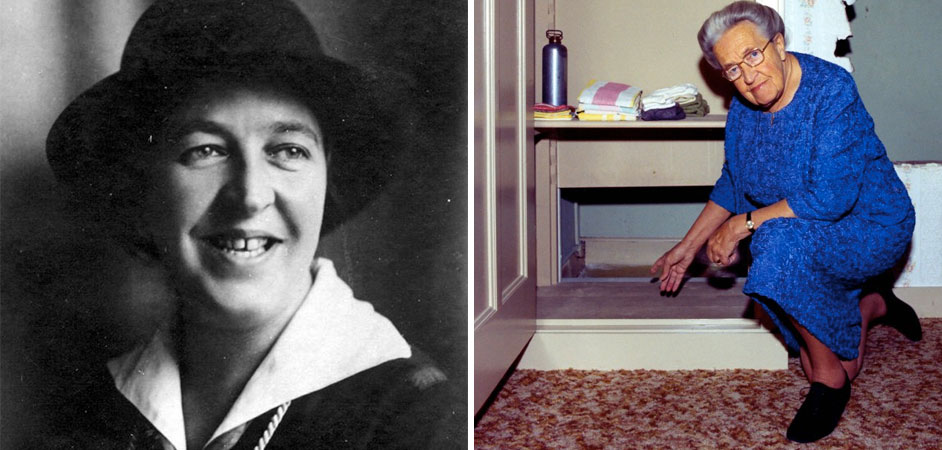
For two years, they sheltered men, women, and children fleeing persecution. Corrie smuggled ration cards, coordinated safe houses, and worked with resistance groups — all while keeping up the appearance of an ordinary life. The family prayed every night that their secret would remain hidden. But in February 1944, betrayal came.
A Dutch informant tipped off the Gestapo. The Ten Boom home was raided. Corrie, Betsie, and their father were arrested. Six people were hidden in the secret room upstairs; thanks to a miracle, none of them were discovered during the raid. But the family paid the price.
Corrie’s elderly father died just ten days after being imprisoned. Corrie and Betsie were sent first to Scheveningen Prison, then to Ravensbrück — a brutal concentration camp for women in Germany. The sisters endured freezing conditions, disease, and constant brutality. Yet Betsie’s faith never faltered. “There is no pit so deep,” she told Corrie, “that God’s love is not deeper still.”

Betsie’s health declined quickly, but her spirit glowed brighter. Before dying in December 1944, she whispered her final wish to Corrie: “We must tell them, Corrie. We must tell them that there is no hatred so deep that His love cannot reach it.”
Weeks later, Corrie was released — by a clerical error. One week after her departure, all women her age in Ravensbrück were executed. She always called her freedom “God’s miracle.”
When the war ended, Corrie returned home to an empty house and a broken heart. But she refused to let bitterness win. She began traveling across Europe, preaching forgiveness and reconciliation. She visited prisons, hospitals, and churches, sharing her message that healing could only come through love.
In 1947, during a speech in Munich, Corrie faced the ultimate test of her faith. After her talk, a man approached her — a former guard from Ravensbrück. She recognized him instantly. He had once mocked the naked women as they walked past him to the showers. “Fraulein,” he said, “I have become a Christian. I know God has forgiven me. But I would like to hear it from your lips.” And he extended his hand.
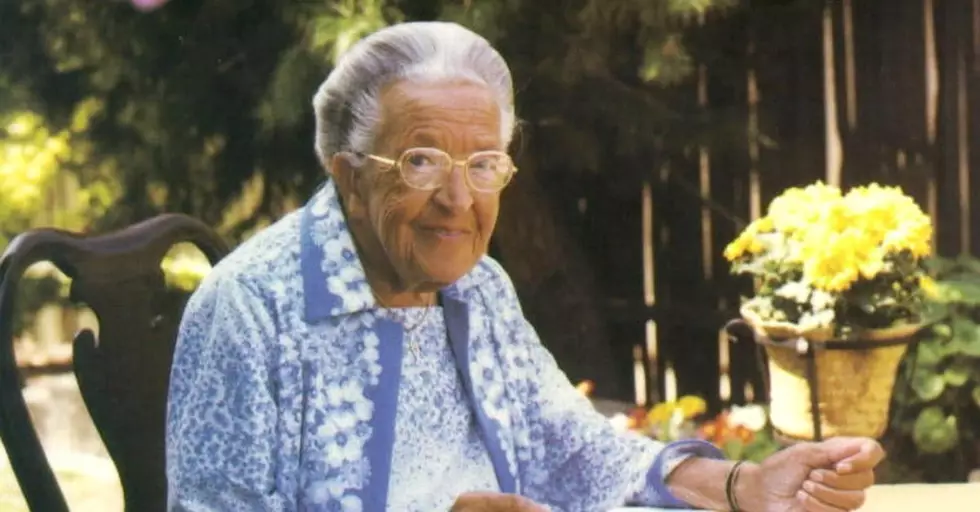
Corrie froze. Memories of cold, fear, and humiliation rushed back. Forgive him? It seemed impossible. Then she remembered her sister’s words: There is no pit so deep that God’s love is not deeper still. With trembling hands, she took his. “I forgive you,” she said. “With all my heart.”
In that moment, she said, she felt God’s love flood through her — stronger than any hatred she had ever known.
For the rest of her life, Corrie ten Boom traveled the world, sharing her story and spreading a message of faith, courage, and mercy. Her book, The Hiding Place, became an international bestseller and a film that continues to inspire millions. She lived to see the world healed in part by her words, and when she died in 1983 at the age of 91, she left behind a legacy not of tragedy, but of triumph.
Corrie’s story reminds us that forgiveness is not weakness. It is the highest form of strength — the power to rise from suffering without letting it harden the heart. In a world still scarred by violence and division, her life remains a testament to the truth that love always wins — even in the darkest hiding place.