The Most Successful Surgery in the World: Jeza’s Journey to a Complete Smile. Hyn

Five-year-old Jeza bounded into the Ribera Medical Center hand-in-hand with his mother, the sunlight glinting in his eyes, a wide grin stretching across his face. Though the walls of the hospital were familiar from last year’s visit, the sense of excitement and warmth that greeted him made every step feel new. Volunteers from the Smile Network waved cheerfully, staff members smiled knowingly, and a few young friends—also patients from the 2024 Ajijic surgical campaign—cheered in recognition. To Jeza, it felt less like a hospital and more like a second home, a place where hope, joy, and transformation converged.
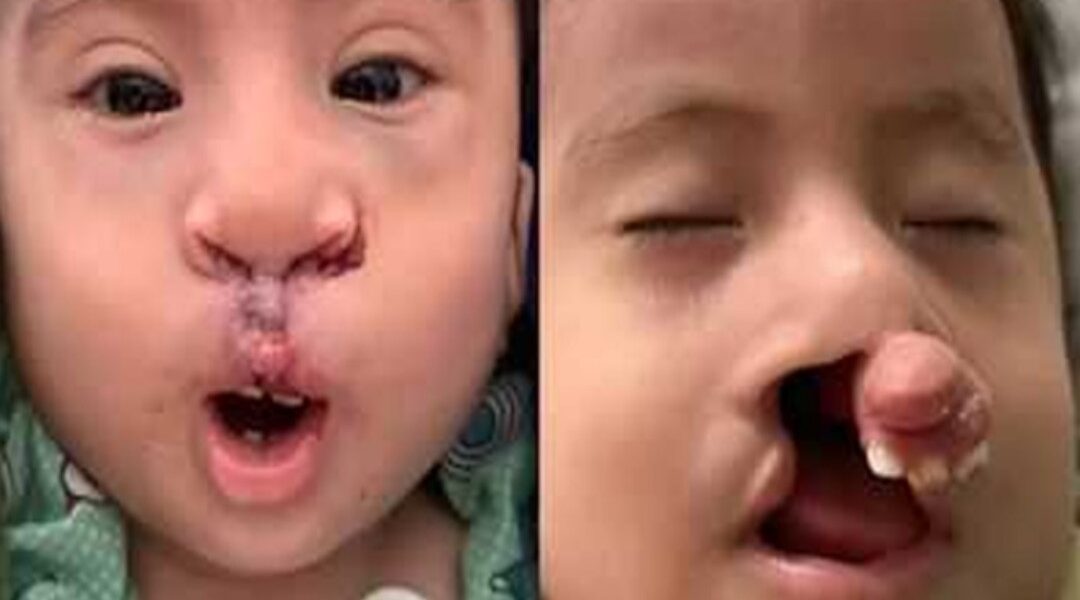
Just a year ago, Jeza’s life had been different. His cleft lip had made social interactions daunting. Children often stared, whispered, or hesitated to engage, leaving him shy, withdrawn, and hesitant to explore the world around him. At home, his mother shared stories of mornings filled with tears over meals, school struggles, and the quiet ache of seeing her child hesitant to participate, even when his spirit wanted to shine. Every day was a delicate balance—encouraging him to be confident while protecting him from the stares and words of those who didn’t understand.
Everything began to change after his first surgery. The Smile Network team, alongside local surgeons and volunteers, had repaired Jeza’s cleft lip. It was a moment of profound transformation—not just physically, but emotionally and socially. Jeza’s smile, once incomplete and cautious, now radiated pride, courage, and innocence unshadowed by self-consciousness. Kindergarten, which had seemed intimidating, became a place of exploration, laughter, and new friendships. His mother recounted how he walked through the school doors head held high, a quiet testament to the power of medical care combined with love and advocacy.
This year, Jeza returned to Ribera for the next crucial step in his journey: cleft palate repair. While the cleft lip surgery had restored the visible confidence in his smile, the palate repair addressed deeper challenges—feeding difficulties, speech delays, and potential breathing issues that could impact every aspect of his growing life. Dr. Gibreel from the Mayo Clinic, renowned for his precision and compassionate approach, led the surgical team. Months of preparation had gone into this operation, from preoperative assessments to coordinated care plans, ensuring Jeza would receive the best possible outcome.

For Jeza, the day began with excitement tempered by curiosity. He hugged familiar volunteers, waved to staff who had watched him grow, and even played with other children awaiting procedures. His mother, a constant source of calm and encouragement, reminded him softly that today was another step forward—a continuation of the journey they had begun together. She could see the determination in his eyes, the same spark that had carried him through the challenges of his previous surgery and the first days of school.
The surgery itself was long and meticulous, lasting several hours. More than a dozen specialists—including anesthesiologists, plastic surgeons, nurses, and speech therapists—worked in harmony, ensuring that every detail was addressed. The procedure involved repairing the cleft palate, restoring structural integrity, and setting the stage for optimal speech development and feeding ability. For Jeza, the surgery represented more than a medical intervention—it was an opportunity to step fully into a life free from barriers his condition had previously imposed.
When he awoke, his mother was at his side, holding his hand, whispering words of comfort and love. Jeza’s eyes opened, bright and alert, and he looked around, taking in the room and the familiar faces of the Smile Network team. Though groggy from anesthesia, the strength in his small hands and the warmth in his gaze spoke volumes. He had endured hours of surgery with the trust and courage that only a child facing adversity could summon.
In the days that followed, Jeza’s recovery was monitored closely. The medical team guided his mother and the caregivers on feeding techniques, wound care, and exercises to support his speech development. Jeza approached every step with the same resilience he had shown from the moment he first walked into Ribera. Each milestone—a calm feed, a clear pronunciation of a word, a giggle shared with a volunteer—became a celebration, a marker of progress that extended far beyond the operating room.

For his mother, the transformation was profound. She recalled the early years, the uncertainty, the sleepless nights, and the constant worry. Now, she could see a child stepping confidently into his future, a little boy whose smile reflected not only his physical repair but the resilience of a spirit nurtured by love, care, and dedicated medical support. The bond they had with the Smile Network team deepened, rooted in gratitude and shared commitment to Jeza’s ongoing well-being.
Jeza’s story is far from over. The cleft palate repair marks a critical milestone, but it is also a beginning—a foundation for continued growth, learning, and social development. Future speech therapy, routine check-ups, and follow-up care will ensure that he continues to thrive, but the journey itself has already inspired those who have witnessed it. Volunteers, staff, and community members who followed Jeza’s progress have seen firsthand the impact of comprehensive, compassionate care, and the way a medical intervention can ripple into confidence, joy, and belonging.
As Jeza holds his mother’s hand and navigates the world with a radiant smile, he embodies hope in its purest form. His story reminds everyone that the most successful surgery is not measured merely in clinical outcomes—it is seen in the laughter of a child, the pride of a parent, and the courage to embrace life fully despite the challenges that once seemed insurmountable.
Jeza’s journey continues, one step at a time, each day a testament to resilience, love, and the transformative power of care. The world sees a child with a beautiful smile, but his story carries a deeper message: with support, expertise, and unwavering belief, children like Jeza can thrive, grow, and shine beyond what anyone imagined.
Rico’s Miracle: A Tiny Heart, a Lifetime of Courage 90

It was election night, a night when the world seemed glued to screens, waiting for history to unfold. But for us, the story that mattered most was not on television. It was in a quiet hospital room, dimly lit, where a tiny life would forever change ours. That night, we met
Rico, a newborn whose fragile body held more battles than most would face in a lifetime.
At first glance, Rico seemed just like any other baby — small, delicate, and helpless in our arms. But the doctors’ words soon pierced the calm: he had
a hole in his heart. That was only the beginning. His condition was complex, and every breath, every movement, every heartbeat was an achievement. We quickly realized that this tiny boy’s challenges went much deeper than we could have imagined. That night, as the world outside was caught up in politics and predictions, we were caught up in a different kind of reality — one where
holding a child, soothing a cry, and caring for a fragile life became the center of everything.

The early days were filled with uncertainty. Rico needed constant monitoring, feeding tubes to nourish his small body, and sometimes ventilators to help him breathe. Every day was a delicate balance between hope and fear. Our joy at holding him was always tinged with anxiety: Would he take a bottle? Could his heart handle the exertion of feeding? Would he make it through another night? Every tiny milestone — a successful feed, a peaceful nap, a stable heartbeat — felt like a monumental victory.
Hospital visits became routine, though none of it ever felt normal. Machines hummed, alarms beeped, and medical staff worked tirelessly to stabilize him. Yet through it all, Rico demonstrated a quiet resilience. He did not cry out in dramatic fits of courage. He simply survived. Each breath he drew, each small sigh, each movement of his tiny fingers was a reminder that strength often resides in the smallest bodies. We learned that courage doesn’t always roar — sometimes it whispers in steady heartbeats and gentle sighs.

Rico’s journey was not just physical. It was emotional, mental, and spiritual. Each procedure, each tube, each hospital stay was a test not only of his body but of our endurance, our patience, and our capacity for hope. There were nights when fear pressed heavy on our hearts, moments when we questioned whether he would make it, whether we could keep going. And yet, each day, Rico proved us wrong. He showed that life, even at its most fragile, has an extraordinary capacity to endure.
Over the years, Rico faced hurdles that would have overwhelmed even older children. He endured surgeries that required precision, care, and courage. He fought infections, setbacks, and complications, each one a silent battle waged without complaint. Through it all, we stood by him, learning to read the subtle signs of his strength and vulnerability, celebrating the tiniest victories, and mourning the moments we could not control.

Five years later, when we look at Rico, we see more than survival. We see a child who has faced unimaginable challenges and emerged resilient, joyful, and full of love
. His laughter now fills rooms, his curiosity drives him to explore, and his presence teaches us lessons that extend far beyond his tiny stature. Saying “yes” to Rico all those years ago was saying yes to hope, yes to a future we could not imagine, and yes to the miracles that unfold one breath at a time.
Rico’s story is a testament to the power of faith, perseverance, and unwavering love. It reminds us that even the most fragile beginnings can produce the strongest hearts, that courage can live in quiet persistence, and that miracles do not always arrive in dramatic moments — sometimes, they arrive in the subtle, steady rhythm of life itself. Each day with him is a reminder that every breath is precious, every smile a victory, and every heartbeat a celebration.

His journey also serves as a beacon of hope for other families navigating complex medical conditions. Rico’s challenges highlight the importance of early care, attentive observation, and a support network that surrounds children and families with love and guidance. His triumphs inspire parents to hold on, to advocate, and to believe in the possibility of life when circumstances seem overwhelming.
Through every setback and every small success, Rico teaches us about resilience. He shows that joy is possible even after fear, that love can carry a family through sleepless nights, and that hope can flourish even in the darkest hours. The child who once needed ventilators and tubes now embraces life with curiosity and laughter, reminding us all that miracles often begin in the quiet moments, and courage is often measured in breath and persistence rather than grand gestures.

Rico has changed us forever. He has taught us that life is fragile, yet astonishingly strong; that love is patient, yet fierce; and that hope is not abstract, but a tangible force that sustains families when nothing else seems certain. Each milestone he reaches, each giggle, each glance of understanding, is a victory over adversity and a testament to the strength of the human spirit.
In the end, Rico’s story is not just about surviving illness. It is about thriving against the odds, about the quiet heroism of children whose bodies and hearts endure far beyond expectations. It is about a family who refused to give up, who loved without hesitation, and who learned that every breath, every heartbeat, every moment together is a miracle worth cherishing.
Rico’s life, from that fragile election night to the vibrant, energetic boy he is today, stands as a reminder to all of us: even in the face of overwhelming challenges, hope persists, courage thrives, and love conquers fear.