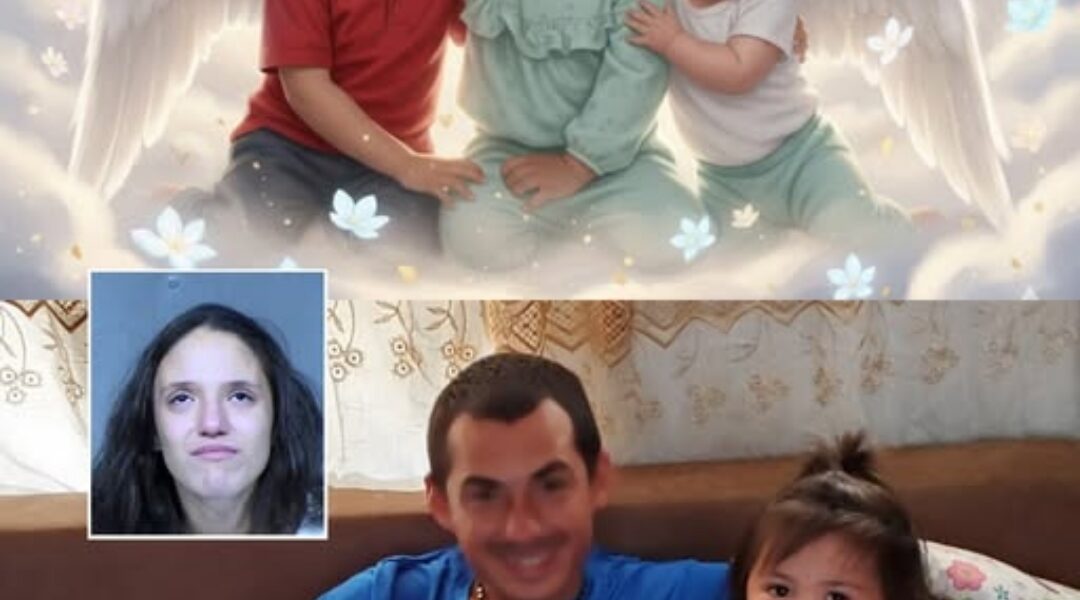

The house on 24th Street looked no different from any other in the neighborhood.
Its paint was chipped in places, the lawn slightly overgrown, a pink tricycle resting against the porch.
To a passerby, it was just another family home — the kind of place where cartoons played in the background, and a mother called out, “Dinner’s ready!” from the kitchen.
But on the night of January 21, 2020, that house fell silent.
A silence so deep it felt almost holy, or haunted.
Inside sat a 22-year-old woman named Rachel Henry.
Her hair was unkempt, her hands trembling, her gaze lost somewhere beyond the walls.
She was rocking back and forth on the floor, a small blanket in her lap.
A child’s blanket — pink, frayed at the edges, still carrying the faint scent of baby lotion and sleep.

On the couch behind her lay her three children — Zane, age three; Miraya, nearly two; and baby Catalaya, just seven months old.
They were arranged neatly, side by side, as if resting after a long day of play.
But their faces were too still.
Too quiet.
Too gone.
Outside, the Phoenix night hummed with the usual life — cars in the distance, a dog barking, the wind rustling through dry grass.
No one knew that behind the blue door, something unthinkable had taken place.
Rachel hadn’t always been this way.
Once, she was a girl from Oklahoma — shy, soft-spoken, with freckles that lit up when she smiled.
She dreamed of being a mother.
She loved the idea of bedtime stories, of birthday cakes, of little shoes lined neatly by the door.
But life has a way of testing the fragile ones.

Addiction didn’t arrive all at once.
It came quietly, like fog.
First, a way to cope.
Then a way to survive.
Then the only way to exist.
Methamphetamine, cruel and cunning, whispered promises of relief, of energy, of escape — and took everything instead.
By the time she realized what it had done, she had already lost her children once.
In Oklahoma, child services had stepped in.
She swore she would change, and for a while, she did.
She entered rehab, cleaned up, fought hard.
Her family believed in her again.
When they moved to Phoenix that summer, everyone thought it was a fresh start.

But addiction is patient.
It waits in the shadows.
And when loneliness returns, it whispers again.
The signs were there — the weight loss, the restless nights, the paranoia.
Her laughter became nervous, her eyes darting.
Neighbors later recalled how she looked “spaced out,” but no one thought much of it.
After all, she was young, overwhelmed, a mother of three with little help.
On that January evening, something inside her snapped.
Perhaps it was exhaustion.
Perhaps hallucinations.
Perhaps the crushing guilt of a mother who felt unworthy.
We will never truly know.

Investigators would later describe her confession as “eerily calm.”
No tears, no hesitation.
Just words, one after another, as though she were recounting a dream she could not wake from.
She said she began with Miraya — her 23-month-old.
The little girl had been fussy, crying for milk.
Rachel, overwhelmed, began to hum softly.
Then, almost without realizing, she covered her daughter’s mouth and nose.
Miraya kicked.
She struggled.
Rachel kept singing.
The sound of the lullaby mixed with muffled gasps, until there was only quiet.

Zane, her eldest, saw everything.
He shouted, “No, Mommy! No!”
He tried to pull her hand away.
In her confession, Rachel said she told him, “It’s okay, baby. It’s just sleep.”
But Zane knew.
He ran.
She chased him.
Two relatives entered the house then — interrupting her.
They spoke briefly, unaware of what had just happened in the next room.
Moments later, they left again.
The silence returned.

Rachel found Zane in the bedroom.
He had soiled his pants, frightened and crying.
She told him she would help him change.
He trusted her — the way only a child can trust their mother, completely and without fear.
She laid him on the floor, placed one leg over his body, and pressed her hand over his mouth.
He scratched at her chest, pinched her, fought.
She sang to him too.
“Twinkle, twinkle, little star…”
Until the light went out of his eyes.
For baby Catalaya, the last of them, she said it was different.
She fed her, rocked her, and sang until the baby fell asleep in her arms.
Then she placed her hand gently over the infant’s face.
“She didn’t fight,” Rachel whispered to the detective. “She just stopped breathing.”

Hours later, she arranged them on the couch, side by side, as if tucking them in for a nap.
Then she sat down and waited.
When police arrived, Rachel was quiet.
She identified herself, gave her birth date, but said nothing more.
Her face was blank, her eyes hollow.
No anger.
No tears.
Just emptiness.

In the days that followed, the world tried to understand.
Reporters swarmed the story.
Neighbors spoke in whispers.
“Why would she do that?” they asked.
There were no answers.
The prosecutor later revealed that Rachel had acknowledged her meth addiction, that her children had once been taken away for that very reason.
The Arizona Department of Child Safety said they had no prior reports — no warnings, no alerts.
The system, as always, only sees the cracks once someone falls through them.

At the funeral in Oklahoma, the father stood motionless as three tiny coffins were lowered into one vault.
Zane’s toy truck was placed beside him.
Miraya’s blanket covered her small chest.
And baby Catalaya’s pacifier rested between them all.
The family sang softly through their tears — the same lullaby Rachel once sang before everything broke.
Later, the children’s aunt posted online:
“They’re resting together now, next to Uncle Brad. It was beautiful. All three together in one lot.”
Beautiful.
And unbearable.
No motive was ever found.
No mental illness declared.
Just the lingering truth that sometimes, darkness is not loud.
Sometimes it comes dressed in love and sings lullabies.
Rachel remains behind bars, awaiting her sentence.
She has pleaded not guilty, perhaps clinging to a sliver of denial, or perhaps because she no longer knows where the truth begins and ends.
Her eyes, once full of life, now stare through the glass like someone who lives between two worlds — one where her children still breathe, and one where silence reigns.

The house in Phoenix still stands.
Neighbors say it feels “off,” that even the air around it feels heavier.
Sometimes, at dusk, the windows catch the setting sun and reflect a pale, pinkish glow — the same shade as a child’s blanket left behind.
There are tragedies that defy explanation.
This is one of them.
It is not only a story of death, but of descent — of how addiction, untreated and unspoken, can strip away humanity until only shadows remain.
Behind every horror, there is a history.
Behind every monster, there was once a person who needed help.
Rachel Henry’s story is not an excuse — it is a warning.
Because sometimes, what breaks a family does not begin with violence.
It begins with neglect, with silence, with systems that look away, and with a young mother who once just needed someone to ask, “Are you okay?”
Page 2
The house on 24th Street looked no different from any other in the neighborhood.
Its paint was chipped in places, the lawn slightly overgrown, a pink tricycle resting against the porch.
To a passerby, it was just another family home — the kind of place where cartoons played in the background, and a mother called out, “Dinner’s ready!” from the kitchen.
But on the night of January 21, 2020, that house fell silent.
A silence so deep it felt almost holy, or haunted.
Inside sat a 22-year-old woman named Rachel Henry.
Her hair was unkempt, her hands trembling, her gaze lost somewhere beyond the walls.
She was rocking back and forth on the floor, a small blanket in her lap.
A child’s blanket — pink, frayed at the edges, still carrying the faint scent of baby lotion and sleep.
On the couch behind her lay her three children — Zane, age three; Miraya, nearly two; and baby Catalaya, just seven months old.
They were arranged neatly, side by side, as if resting after a long day of play.
But their faces were too still.
Too quiet.
Too gone.
Outside, the Phoenix night hummed with the usual life — cars in the distance, a dog barking, the wind rustling through dry grass.
No one knew that behind the blue door, something unthinkable had taken place.
Rachel hadn’t always been this way.
Once, she was a girl from Oklahoma — shy, soft-spoken, with freckles that lit up when she smiled.
She dreamed of being a mother.
She loved the idea of bedtime stories, of birthday cakes, of little shoes lined neatly by the door.
But life has a way of testing the fragile ones.
Addiction didn’t arrive all at once.
It came quietly, like fog.
First, a way to cope.
Then a way to survive.
Then the only way to exist.
Methamphetamine, cruel and cunning, whispered promises of relief, of energy, of escape — and took everything instead.
By the time she realized what it had done, she had already lost her children once.
In Oklahoma, child services had stepped in.
She swore she would change, and for a while, she did.
She entered rehab, cleaned up, fought hard.
Her family believed in her again.
When they moved to Phoenix that summer, everyone thought it was a fresh start.
But addiction is patient.
It waits in the shadows.
And when loneliness returns, it whispers again.
The signs were there — the weight loss, the restless nights, the paranoia.
Her laughter became nervous, her eyes darting.
Neighbors later recalled how she looked “spaced out,” but no one thought much of it.
After all, she was young, overwhelmed, a mother of three with little help.
On that January evening, something inside her snapped.
Perhaps it was exhaustion.
Perhaps hallucinations.
Perhaps the crushing guilt of a mother who felt unworthy.
We will never truly know.
Investigators would later describe her confession as “eerily calm.”
No tears, no hesitation.
Just words, one after another, as though she were recounting a dream she could not wake from.
She said she began with Miraya — her 23-month-old.
The little girl had been fussy, crying for milk.
Rachel, overwhelmed, began to hum softly.
Then, almost without realizing, she covered her daughter’s mouth and nose.
Miraya kicked.
She struggled.
Rachel kept singing.
The sound of the lullaby mixed with muffled gasps, until there was only quiet.
Zane, her eldest, saw everything.
He shouted, “No, Mommy! No!”
He tried to pull her hand away.
In her confession, Rachel said she told him, “It’s okay, baby. It’s just sleep.”
But Zane knew.
He ran.
She chased him.
Two relatives entered the house then — interrupting her.
They spoke briefly, unaware of what had just happened in the next room.
Moments later, they left again.
The silence returned.
Rachel found Zane in the bedroom.
He had soiled his pants, frightened and crying.
She told him she would help him change.
He trusted her — the way only a child can trust their mother, completely and without fear.
She laid him on the floor, placed one leg over his body, and pressed her hand over his mouth.
He scratched at her chest, pinched her, fought.
She sang to him too.
“Twinkle, twinkle, little star…”
Until the light went out of his eyes.
For baby Catalaya, the last of them, she said it was different.
She fed her, rocked her, and sang until the baby fell asleep in her arms.
Then she placed her hand gently over the infant’s face.
“She didn’t fight,” Rachel whispered to the detective. “She just stopped breathing.”
Hours later, she arranged them on the couch, side by side, as if tucking them in for a nap.
Then she sat down and waited.
When police arrived, Rachel was quiet.
She identified herself, gave her birth date, but said nothing more.
Her face was blank, her eyes hollow.
No anger.
No tears.
Just emptiness.
In the days that followed, the world tried to understand.
Reporters swarmed the story.
Neighbors spoke in whispers.
“Why would she do that?” they asked.
There were no answers.
The prosecutor later revealed that Rachel had acknowledged her meth addiction, that her children had once been taken away for that very reason.
The Arizona Department of Child Safety said they had no prior reports — no warnings, no alerts.
The system, as always, only sees the cracks once someone falls through them.
At the funeral in Oklahoma, the father stood motionless as three tiny coffins were lowered into one vault.
Zane’s toy truck was placed beside him.
Miraya’s blanket covered her small chest.
And baby Catalaya’s pacifier rested between them all.
The family sang softly through their tears — the same lullaby Rachel once sang before everything broke.
Later, the children’s aunt posted online:
“They’re resting together now, next to Uncle Brad. It was beautiful. All three together in one lot.”
Beautiful.
And unbearable.
No motive was ever found.
No mental illness declared.
Just the lingering truth that sometimes, darkness is not loud.
Sometimes it comes dressed in love and sings lullabies.
Rachel remains behind bars, awaiting her sentence.
She has pleaded not guilty, perhaps clinging to a sliver of denial, or perhaps because she no longer knows where the truth begins and ends.
Her eyes, once full of life, now stare through the glass like someone who lives between two worlds — one where her children still breathe, and one where silence reigns.
The house in Phoenix still stands.
Neighbors say it feels “off,” that even the air around it feels heavier.
Sometimes, at dusk, the windows catch the setting sun and reflect a pale, pinkish glow — the same shade as a child’s blanket left behind.
There are tragedies that defy explanation.
This is one of them.
It is not only a story of death, but of descent — of how addiction, untreated and unspoken, can strip away humanity until only shadows remain.
Behind every horror, there is a history.
Behind every monster, there was once a person who needed help.
Rachel Henry’s story is not an excuse — it is a warning.
Because sometimes, what breaks a family does not begin with violence.
It begins with neglect, with silence, with systems that look away, and with a young mother who once just needed someone to ask, “Are you okay?”