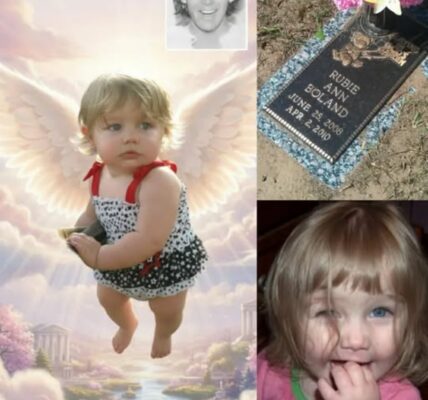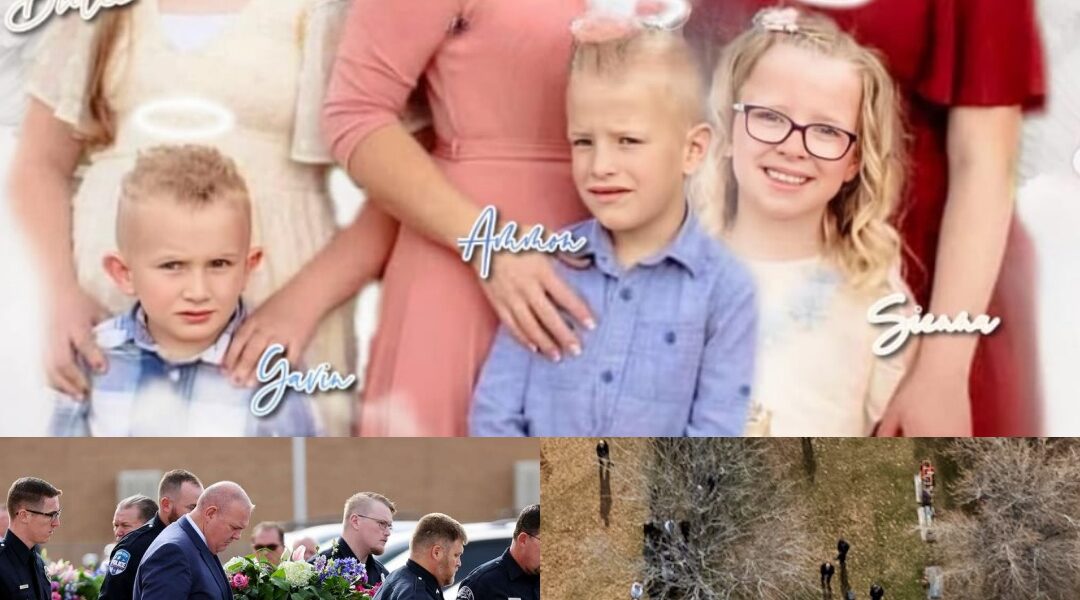

The story begins like so many others — a smiling family portrait, a perfect home, a mother whose love seemed to know no limits.
But behind those smiles, something dark was growing — something no one wanted to believe was real until it was far too late.

On January 4, 2023, the world awoke to a nightmare.
Inside a quiet suburban home, eight lives were gone — seven of them innocent.

At the center of this tragedy was
Tausha Shaunell Earl Haight, a devoted mother, a faithful friend, and a woman who had spent years trying to hold together a life that was slowly breaking apart.
Her story — and the stories of her five children — have become a haunting reminder of the unseen dangers that can exist behind closed doors.

The Woman Everyone Thought Was Safe
Those who knew Tausha describe her as radiant.
She volunteered at church, organized school activities, and made every child feel seen and loved.
She was the kind of mother who remembered every birthday, every lost tooth, every small joy that others might overlook.

Her social media posts were filled with warmth — pictures of family hikes, homemade crafts, and laughter.
To the outside world, she was living the dream: a loving husband, five beautiful children, and a close-knit extended family.

But beneath that calm exterior, cracks were beginning to show.

Friends began to notice that Tausha’s once-bright spirit had dimmed.
She smiled less.
She withdrew more.
And when she did speak about her marriage, her words were careful — like someone tiptoeing through a house full of broken glass.

The Man Behind the Mask
Michael Haight was well-liked by many — respected in his community, seen as a responsible father and successful businessman.
But those closest to Tausha knew a different man.

In 2020, police were called to the Haight home after a disturbing report.
Their oldest daughter, Macie, just 14 at the time, told officers that her father had been physically and emotionally abusive.
He admitted to controlling his wife’s phone, monitoring her every message, and frequently yelling at the children.

The officers took notes, wrote a report, and left.
No charges were filed.

Tausha, ever hopeful, wanted to believe things could change.
She told friends that maybe this would be the wake-up call her husband needed — that love and faith could still heal what was broken.

But those closest to her knew — something about her tone had shifted.
It wasn’t hope anymore. It was fear dressed as optimism.

The Quiet Escalation
Over the next two years, Tausha continued to juggle the impossible — maintaining normalcy for her children while living under the watchful eye of a man who refused to let go of control.
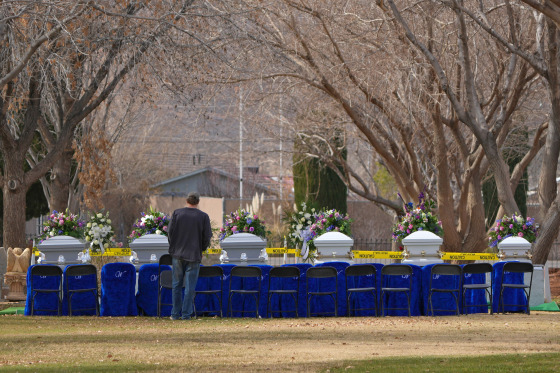
Every part of her life was monitored.
Michael checked her calls, followed her to appointments, and questioned her every move.
Friends described his behavior as “suffocating,” but Tausha downplayed it, often deflecting concern with soft laughter or a change of subject.
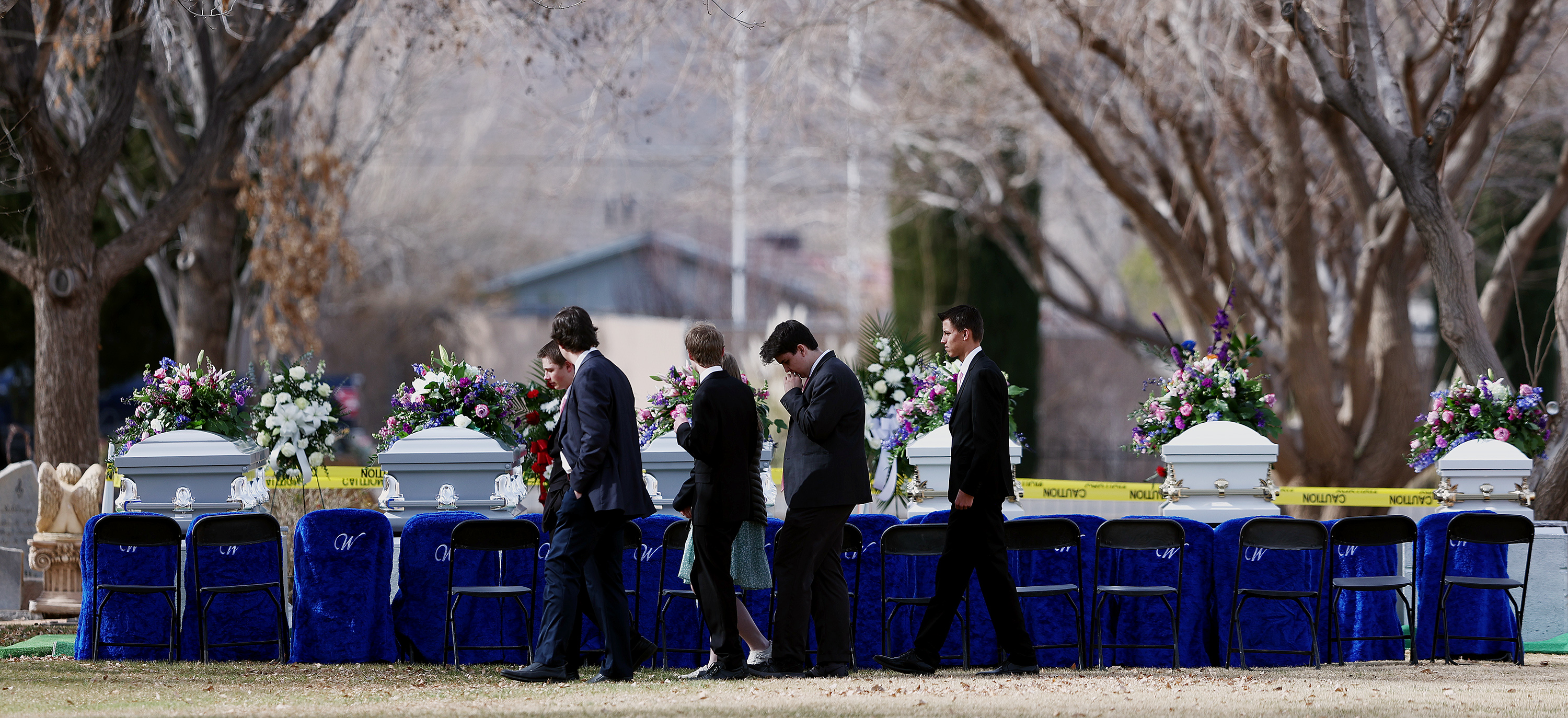
Her therapist, however, saw the truth.
By late 2022, Tausha had started speaking about leaving — not just for her own safety, but for her children’s.
She worried about Michael’s access to firearms, about his temper, about what might happen if she finally took that step.
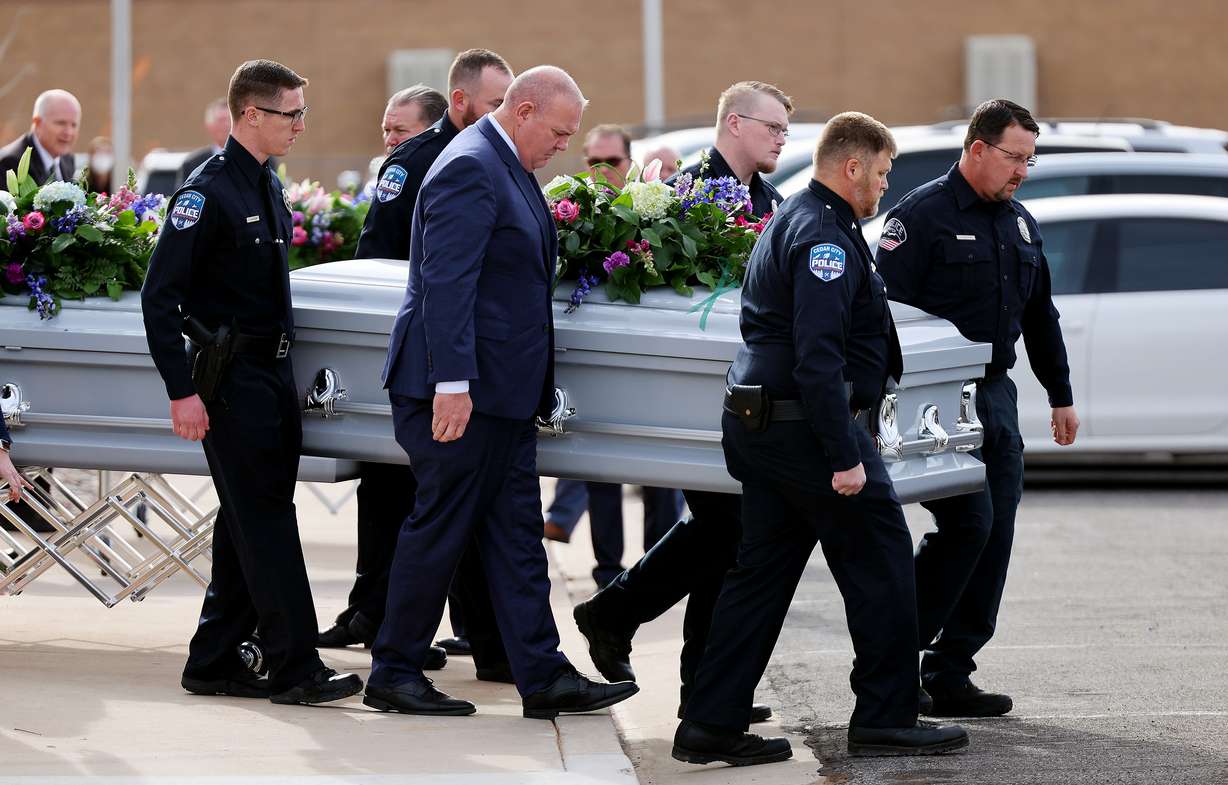
She was terrified — but determined.
On December 21, 2022, she filed for divorce.
Just six days later, Michael was formally served with the papers.
And in that moment, everything changed.
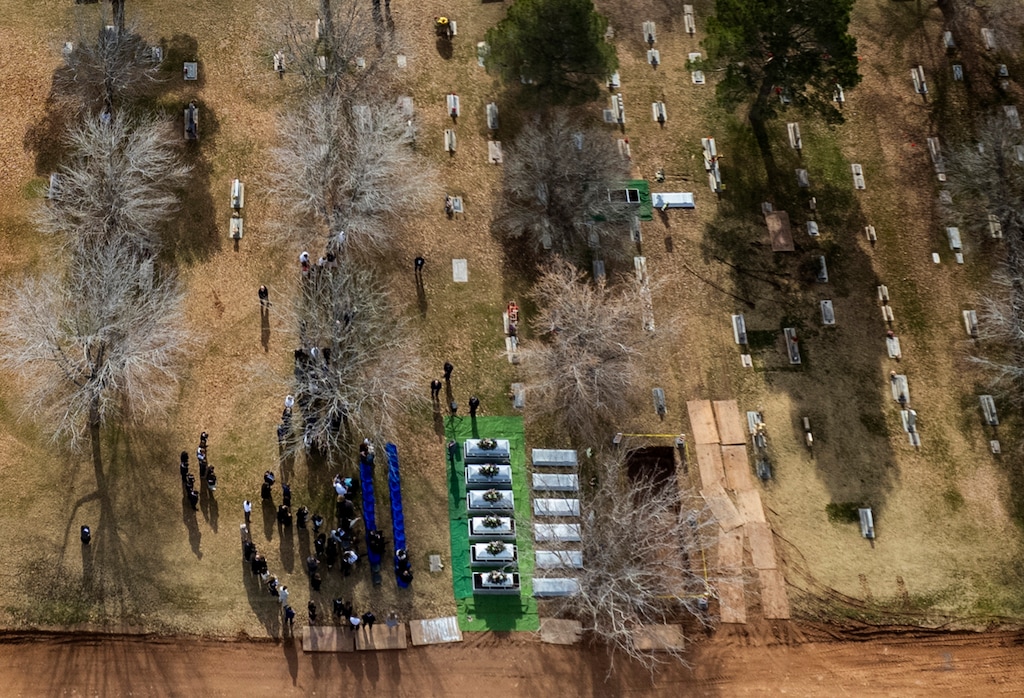
The Days Before the Storm
The final weeks of 2022 should have been a time of new beginnings.
Instead, they became a countdown.
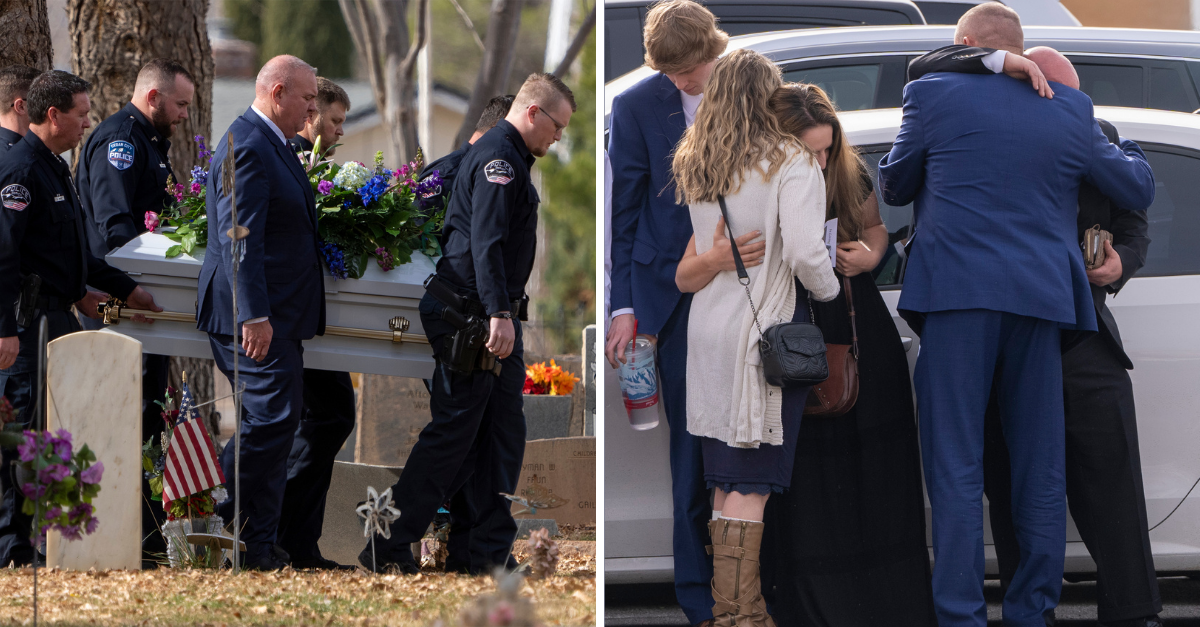
Friends recall Tausha seeming more anxious than usual.
She missed a therapy session.
She stopped responding to texts.
Even her smile — that trademark expression of kindness — seemed strained.

Then, on January 3, home surveillance footage captured something chilling.
Michael, his voice sharp, his movements rigid — his behavior controlling.
It was as if he knew the world he had built on domination was slipping away.
The next day, everything went silent.

The Unthinkable
It was January 4, 2023 — a date now etched into memory.
Police were called to the Haight residence after Tausha failed to show up for a scheduled appointment.

Inside, they found a scene too devastating to comprehend.
Tausha.
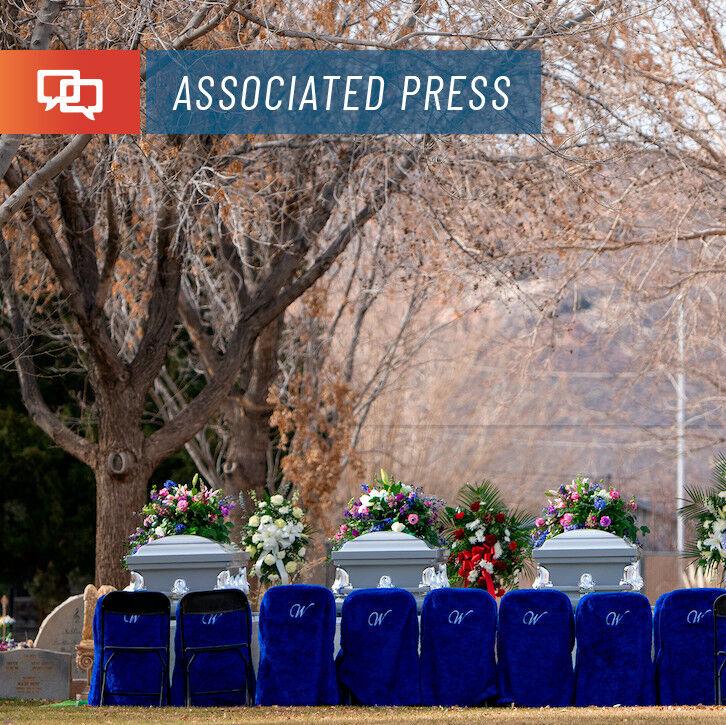
Her five children — Macie (17), Briley (12), twins Sienna and Ammon (7), and Gavin (4).
Her mother, Gail Earl, who had moved in to support her daughter through the separation.

All gone.
The man responsible — her husband, Michael Haight — had turned the gun on himself after ending the lives of those he claimed to love.
In the corner of the room, police found something else — silence.
The kind that screams louder than any sound.
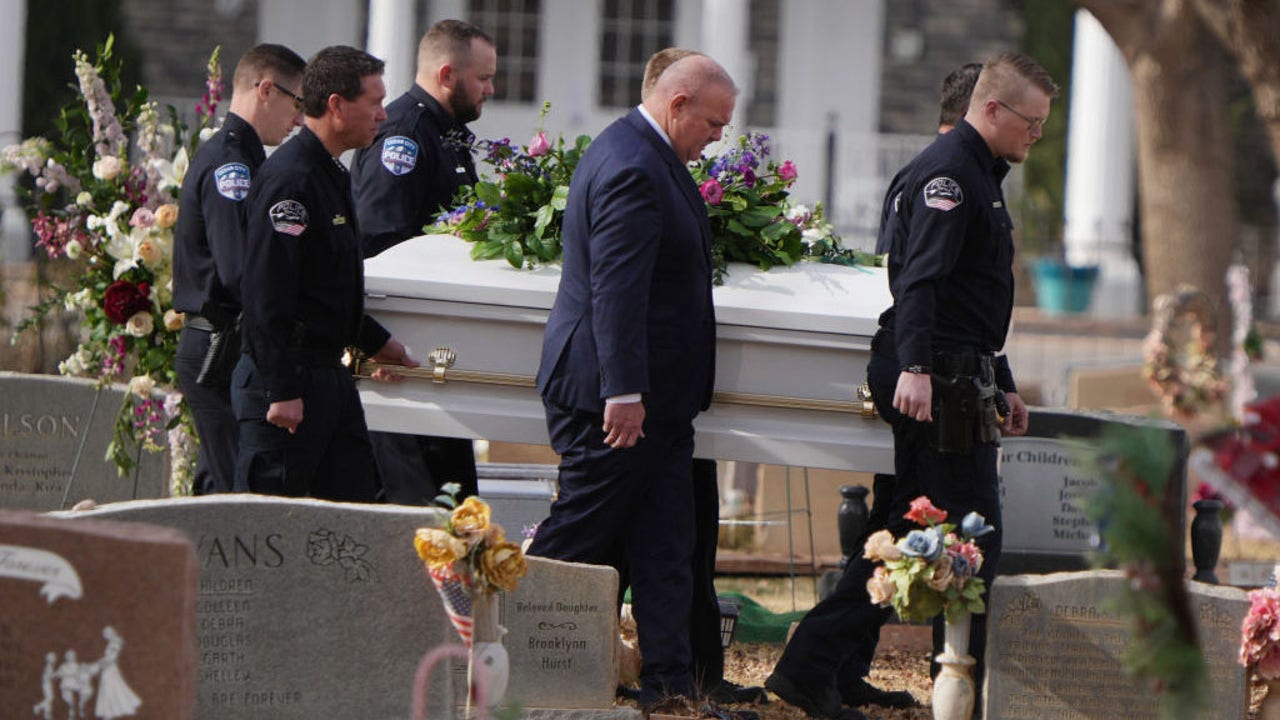
The Questions That Followed
How could this happen?How could so many warnings go unanswered?

Police reports from 2020 had documented controlling and abusive behavior.
Therapists had expressed concern about Michael’s mental state and his access to firearms.
Friends had sensed danger, but none imagined this outcome.

The system — one that was supposed to protect — had once again failed to connect the dots.
And in the aftermath, one of the most haunting revelations surfaced:
Just weeks before the murders, Michael had been praised by relatives in an obituary written for his victims.
The tribute, later retracted, described him as a loving father — a moment that sparked outrage and disbelief.
Because how could love and violence ever share the same name?

The Legacy of Tausha
In the months following the tragedy, Tausha’s loved ones have worked tirelessly to ensure her memory is not defined by her death — but by her life.
They speak of her warmth, her patience, her quiet strength.
Of how she found joy in the smallest things — bedtime stories, birthday cakes, family movie nights.
Of how she believed in the goodness of people, even when that belief cost her everything.

A family friend described her perfectly:
“She loved with her whole heart, even when it was breaking.”
Her children’s names are now spoken in memorial walks, candlelight vigils, and community events that call for reform — for better protections for victims of domestic abuse, for earlier interventions, for systems that listen.
Because behind every statistic is a mother like Tausha — someone who tried to leave, who tried to be brave, who did everything right and still didn’t make it out.

The Warning Signs Society Missed
In hindsight, the red flags are glaring:
-
Control — monitoring her phone, isolating her from others.
-
Anger — frequent yelling, intimidation, and emotional manipulation.
-
Possession — the belief that if he couldn’t have her, no one could.

These aren’t just signs of a bad relationship — they are precursors to danger.
Experts say that leaving an abuser is often the most dangerous time for a victim.
For Tausha, that proved devastatingly true.

But what if the system had acted sooner?
What if every concern, every police report, every whispered warning had been treated as a cry for help rather than a domestic dispute?
Would Tausha — and her six loved ones — still be here today?
The Voices That Remain
Today, Tausha’s friends and relatives continue to speak her name, not as a victim, but as a symbol.
A symbol of every woman who hides bruises behind smiles, who minimizes pain to keep peace, who loves so deeply that she forgets to protect herself.

Her story is painful, but it’s also powerful.
Because it forces the world to confront the question no one wants to ask:
How many more Tausha Haights will there be before we finally listen?
A Mother’s Final Message
Tausha’s therapist once shared a line she repeated often:
“Love shouldn’t hurt.”
It’s simple.
But in those three words lies everything she ever wanted — safety, kindness, and peace for her children.
She never got to see that future.
But perhaps her story will help someone else reach theirs.
So tonight, as candles flicker in her memory, may the world remember the lesson written in her life and her loss:
If someone tells you they’re scared, believe them.
If something feels wrong, it probably is.
And if you see control disguised as love — speak up.
Because sometimes, the cost of silence is everything.
“Accident or Assault? The Unanswered Mystery of August Borden”.5573

In the small town of Tuscumbia, Alabama, the mysterious incident involving August Borden, a freshman football player at Deshler High School, has left a trail of unanswered questions, lingering doubts, and a sense of injustice that continues to stir the community. What was initially thought to be a freak accident has since evolved into a heated debate over the thoroughness of the investigation, the school district’s actions, and whether August’s injuries were the result of a tragic accident or something far more sinister.
August Borden’s story began like any other football player’s, full of promise and excitement. A freshman at Deshler High School, August had aspirations of making a name for himself on the football field. On the afternoon of Tuesday, August 19, 2025, the team had just finished a workout, and as the players walked back to the entrance of the school, the unthinkable happened. August was found unconscious and bleeding on the steps outside the school.
The scene that unfolded in the aftermath of August’s collapse was both chaotic and terrifying. No one knew exactly what had happened. The football players had just finished their workout, and as they walked back towards the entrance, August was found in a state that would leave his life hanging in the balance. Emergency medical services were called, and August was immediately rushed to a nearby hospital. But despite their best efforts, he coded—his heart stopped, and for a terrifying moment, it seemed as though he might not make it.
Miraculously, medical staff were able to revive August, but the battle wasn’t over. He was airlifted to the University of Alabama at Birmingham (UAB) Hospital, where he was admitted into the intensive care unit (ICU) and placed on a ventilator. His injuries were severe and life-threatening: a fractured skull, two broken orbital sockets, and a concussion so severe that it threatened his ability to function properly.

The news of August’s injuries quickly spread throughout the community, and the question on everyone’s mind was: how did this happen? Was it truly an accident, or was something more sinister at play?
As the investigation into August’s condition began, two sides of the story emerged. Some claimed that the injuries were the result of a freak accident—perhaps a fall or an unfortunate mishap that occurred during the workout. Others, however, suspected foul play. There were rumors circulating that August had been assaulted—perhaps even attacked by one or more of his teammates. The most significant detail to emerge was the fact that a fellow student, during the investigation, had admitted to bear hugging August just prior to him collapsing. Yet, despite this admission, no one was sure whether the incident was connected to August’s injuries or whether it was simply a coincidental action that happened before the collapse.
The tension in the community grew as the investigation progressed. Was this just a tragic accident that spiraled out of control, or was something more disturbing behind it? As the investigation continued, it became clear that there were more questions than answers.

At first, the local authorities seemed to believe that the incident was simply an accident. The Madison County District Attorney’s office released a statement declaring that no charges would be filed in connection with August’s injuries, labeling it as a “freak accident.” But the statement did little to calm the growing concern in the community. How could something so serious, something that nearly took a young life, be dismissed so easily as an accident?
In response to the public’s questions and the lack of transparency from the local authorities, Tuscumbia City Schools hired an external counsel to conduct an independent investigation into the incident. The goal, they said, was to ensure that the investigation was thorough and unbiased—something the public demanded after the initial findings seemed to fall short.

On December 9, 2025, the results of that independent investigation were made public. The counsel, hired by the school district, agreed with the findings of the Madison County District Attorney’s Office. They, too, believed that August’s injuries were the result of a freak accident. The report concluded that there was no foul play involved, and the case was officially closed. According to Russ Tate, the Superintendent of Tuscumbia City Schools, the findings from the independent investigation were similar to those of the Madison County DA’s office, which led to the case being closed without any further investigation.

But for Jason Borden, August’s father, the case being closed felt anything but right. He had never believed that this was just a random accident, and the more he learned about the circumstances surrounding his son’s injuries, the more doubts began to creep into his mind. Jason questioned the thoroughness and accuracy of the investigation, especially given that the law firm hired to conduct the inquiry was being paid by the school district.
In an interview with 1819 News, Jason expressed his suspicions about the nature of the investigation: “The goal of any internal investigation is to protect that internal agency and clear it of any wrongdoing,” he said. “Was the law firm hired and paid by the school to investigate themselves objectively looking for a reason to condemn the person writing the check? Unlikely. But I look forward to reviewing their findings, should that ever be made available to the public.”

Jason’s words reflect a growing sentiment of distrust in the system and a belief that the investigation may have been compromised from the very beginning. The fact that the school district was responsible for hiring the investigative counsel raised questions about the fairness and transparency of the inquiry. Was the investigation truly independent, or was it designed to protect the school and avoid any potential backlash?
Despite his doubts, Jason remained hopeful that one day, the full truth would come out. His primary concern, however, was the health and recovery of his son. August’s road to recovery had been long and difficult, and while there had been some improvement, the physical and emotional scars from the incident would remain for the rest of his life.

As for August, he is slowly making progress, but the journey ahead is far from easy. His injuries, especially the traumatic brain injury, have left him with significant physical and cognitive challenges. The road to full recovery is uncertain, and while he has shown some improvement, it will take months, possibly years, for him to regain any semblance of the life he had before the incident. August’s story is one of resilience, but it is also one marked by the brutal reality of a young life nearly lost to violence or an accident—questions still remain as to which it truly was.
For the community of Tuscumbia, the case may be officially closed, but the lingering doubts and unanswered questions remain. Was this truly a freak accident, or was there something darker at play? The investigation may be over, but for August’s family, the pursuit of truth continues.