
They found Sarah because a neighbor saw a stranger’s light in the barn at dusk and told the militia. The first German officer who questioned her had the look of a man indulging a curiosity he considered unnatural.
“You, a woman, flying killing machines?” he asked, as if the words were a puzzle. “How perverse.”
He smiled when he wrote something in his small notebook. “Your unusual situation requires special handling,” he told her. The smile had been small and pleased as if he had been handed a rare insect to pin.
Elise Dubois had learned to fold herself into silence. From the rusted attic where she and other resistance women had hidden rifles, to the baker’s cellar where messages went through with the scent of yeast and fear, she had made a profession of being unseen. She had been eighteen when the first train went up in sparks; she had been nineteen when she saw a man she had loved shot in the street. She kept the memory of his last breath in the lines at the corner of her mouth. When the Germans brought her in for questioning and called her a “female terrorist,” it was not a category she had considered before. It fit like a badge she had once torn from a collar and thrown away.
They classified them, in offices with heavy, silent fans, and in dossiers on grey filing paper. They had memos — in June of 1943, in September of 1943, in the obdurate, bureaucratic voice of men who wrote and signed their names without allowing their fingers to tremble — that spoke of “female enemy personnel,” of “special handling,” of “protocols” and “research.” Those words would be found and read years later and the casual, clinical phrasing would make the skin crawl.
They had plans. They had learned from recruitment leaflets and photographs in magazines and had decided they would treat soldiers who were women as specimens. They did not consider how the specimens might fight back.
The first thing they took from Mary and the others was dignity. It was not a single act so much as a sequence of small, precise degradations. The facility, when the truck stopped, had no insignia and no red cross; it was a building that had once been a municipal hospital, its windows painted over. It smelled faintly of disinfectant and old books.
“Strip,” the German woman told them in an English that had been taught in a classroom of people who had equal parts authority and contempt. She was not a nurse; she was something else, an officer trained for this particular purpose. The lights were cold and unforgiving. The women stood shivering under them as men with cameras clicked shutters and took measurements. The process was logged with a proportionate, horrifying industry — forms were filled, boxes ticked, photographs filed in personal troves.
Mary later wrote, in the margins of a journal she kept hidden in a crack in the wall, “They took our names and then tried to unname us.”
When Sarah was led into a courtyard with other French prisoners and ordered to stand naked while officers lectured, she thought she might die from the humiliated pounding in her chest. She remembered the farmer’s daughter’s hands, rough and warm, the cup of milk, and the sudden thinness of being a private thing in a public, televised moment. Elise was shaved, her hair falling heavy on the concrete floor like a private confession. They made them civilian clothes that hung off bones and never fit. They were given slippers in winter, dresses in spring that showed more than modesty allowed. The uniforms — the symbols of service and belonging — were taken and kept just out of reach.
But the worst was the rooms with closed doors where “questioning” required the intimacy of a stranger’s bed. The euphemisms in the German files — “examinations,” “special measures,” “psychological conditioning” — hid what the women called simply “night interrogations.” Men in private rooms and officers’ quarters would wait, sometimes with women guards who had been taught to be merciless, and in the hush of those hours they used shame as a weapon, used the fear of being considered morally compromised to turn something private into a commodity.
They documented it, clinical and relentless. They studied the way modesty could be bent and measured the break. They cared more for outcomes than for souls.
At first, the method seemed to work. Some women were broken into a silence that even their children years later would sense as a hollow room. Others, however, found a different sort of response — a hardened, contrarian kind of resistance that surprised their captors. In the cold, where they had been stripped of uniforms and privacy, they formed alliances.
“We call each other by rank,” Sarah whispered once, when they huddled beneath a thin blanket that let the floor’s biting cold reach their collarbones. “At night, we whisper our units and our missions. When they take someone, we count the days until they come back.”
“We are soldiers,” Mary said the first night under the thin blanket, and in the tired way of people trying not to lose their compass, the other women replied the way a chorus echoes a refrain. “We are soldiers.”
They made signs with their toes under the blankets, a system of pressure for messages. They passed notes tucked into seams and carved tiny symbols into the undersides of bed slats when they were sure a guard was not watching. They found ways to steal warmth and share it. Elise, who had been taught by the resistance to move like a shadow, taught the others to be silent and to watch for cues the guards missed. The nurse who had been taken from the hospital ward taught them how to treat frostbite with little bandages improvised from phosphorus-free bandage wrappers. They invented rituals — a whispered version of the Pledge in English, an appellation in French, an improvised toast in Italian — that cost them nothing and meant everything.
This quiet rebellion baffled the intelligence officers whose job had been to break them. When tactics failed — when isolated women refused to divulge names, dates, platoon movements — the interrogators escalated. They traded in threats as currency and in vulnerability as a tool. Yet what the Germans did not anticipate was the stubbornness of identity once it had been formed in shared danger. Even bruised and unmade, the women held their ranks in full like talismans. Mary learned to make a face that said nothing at all; Sarah learned to write messages with her knuckles against bread; Elise found that a story of an old farmhouse in rural France made people laugh and remember home.
And sometimes resistance was practical: sabotage of records, small but effective. A photograph slipped and torn, a ledger turned and smeared with water so that ink ran like rain. They learned to work the system that had been built against them.
When the Allied push of 1944 turned into a tidal wave that could not be held back, the Germans began to move and destroy evidence. Records were burned and camps emptied. Prisoners were shuffled and routed deeper into the Reich, to places where the truth could be hidden behind the apparatus of retreat. It was during one of these transfers that Mary and three others managed, in two harsh minutes of frenzy, to open the bolt on a transport door.
“Now,” whispered the man who had thought himself their captor and yet became, for a breath, a possible accomplice — an older driver with hesitant hands who had once, in a different life, been a mechanic.
“Go,” Mary said, and they rolled from the moving vehicle like toys flung from the laps of gods. They crawled through mud and bramble to a hedgerow and scattered like birds. Not all made it. Some were picked up on the road. Some, like Elise, who never trusted a chance, had already been moved under cover of darkness the day before.
Those who reached Allied lines did not come like the heroes of parades. They arrived like broken things and carried with them a weight of secrets that settled around their shoulders. They told their stories to officers who listened with the clinical interest of men who had been schooled to weigh facts against policy. Intelligence took notes. Medical officers took temperature; psychiatrists took off days to write.
“You were not alone,” the colonel told them, which was a truth and also an understatement. “But we must be careful about what is released. This will be classified.”
“Classified,” Mary repeated, as if the word were an instruction to fold the story and hide it away in the small dark drawers of government.
“In the interest of maintaining morale and recruiting,” the colonel explained softly, “these files will be restricted.”
It was an inflection that would be repeated for decades: the idea that the nation’s image of itself was fragile and could not be touched by certain truths. For the women who had been through the machines of humiliation and interrogation, the classification of their pain felt like an additional injury. They had been assaulted not only physically and psychologically but by the bureaucratic denial of their experiences.
War ends outwardly in explosions and official declarations. War’s last acts are often small: a guard who doesn’t come to relieve a watch, a door unbolted, a truck that doesn’t return. The Allied soldiers who found the shadow facilities did so with horror that was often unprepared. Men unlearned the parts of their training that made them mechanical about death. They entered rooms and found women with hollowed faces and ragged hair, women who could not look at them and women who poured their stories out like water.
“Where are the cameras?” a young sergeant asked as he led Mary and the others into sunlight after days in a shuttered room near Munich. He was crying already; he did not yet know how to put together the shape of what he had seen.
“We are soldiers like you,” Mary said, and he repeated it in his report because it was what had landed in his chest. But the public did not see their faces. The first photographs were of men in medals, of tanks rolling through city gates, of crowds cheering. The women were shepherded to quiet hospitals, asked to sign confidentiality agreements, and interviewed by officers who were sometimes gentle, sometimes officious, and sometimes utterly unsuited to the gravity of the wounds they were handling.
“You cannot write this,” one major told Elise, pushing a sheaf of papers across the table. “This information will be limited.”
“Why?” she asked, and the major could not meet her eyes.
“Because,” he said, and words failed him. He folded a hand like a hinge and appeared to be thinking of the consequences of being honest.
For those women, the second act of violation was not always the memory of the hours in small rooms but the silence that followed. Family members could not always understand; friends had not lived through what their bodies had been asked to hold. Therapists and doctors, when they met them, lacked vocabulary or time. Society preferred happy endings and heroic tales it could broadcast on flags. The women were left in the shadow.
The years after the war were a slow, dull ache. Sarah married, but she could not bear to be touched for years; a husband who could not know the reasons became a source of chafing confusion. Mary wrote to her mother and then stopped because her mother’s advice — “better not to dwell” — sounded like a small, polite betrayal. Elise went back to a France that had never really been the same as the one she’d left behind; the bakery’s oven was gone, and the man who had once loved her had a different set of scars in his face. They buried themselves in work — in nursing, in teaching, in small economies that allowed them to keep their memories in private boxes.
But secrets have the lifespan of seeds. Sooner or later they find soil. In the 1980s, historians, curious and stubborn in the way historians must be, began to look at documents that had been laid aside. Professor Helen Richards, who had spent a lifetime in archives, found a file that had no right to be there: a memo marked with a stamp and an internal code. She started asking questions and then started listening to voices that had learned to lower their heads.
At first, the survivors would not speak. They had lived with seals placed on their lips by the state itself; they had been told not to lay bare what the enemy had done. And the enemy, over the decades, had been given a kind of mythic European civility by those who preferred to believe in the clean lines of good and bad. It was difficult, then, to place blame and to carry back the cold facts.
When Mary had died in 1988, her niece, clearing out an attic, found a bundle of letters and a small journal. In one final entry Mary wrote, in a hand that trembled the way the dry leaves of a book tremble, “Someday someone will want to know what really happened. Someday people will be ready to hear the truth.”
Professor Richards was ready. She spoke to Sarah and to Elise, who had waited against the years but had not forgotten how to tell the story. The women arrived at her office with war in their bones. They spoke halting at first, then with the long draw of those who had been waiting decades for the permission to be honest.
“It wasn’t only the Germans,” Elise said one afternoon, when the sun had warmed the window of Professor Richards’ study and made the dust in the air look like snow. “It was also our countries, and their fear. They closed doors in our faces.”
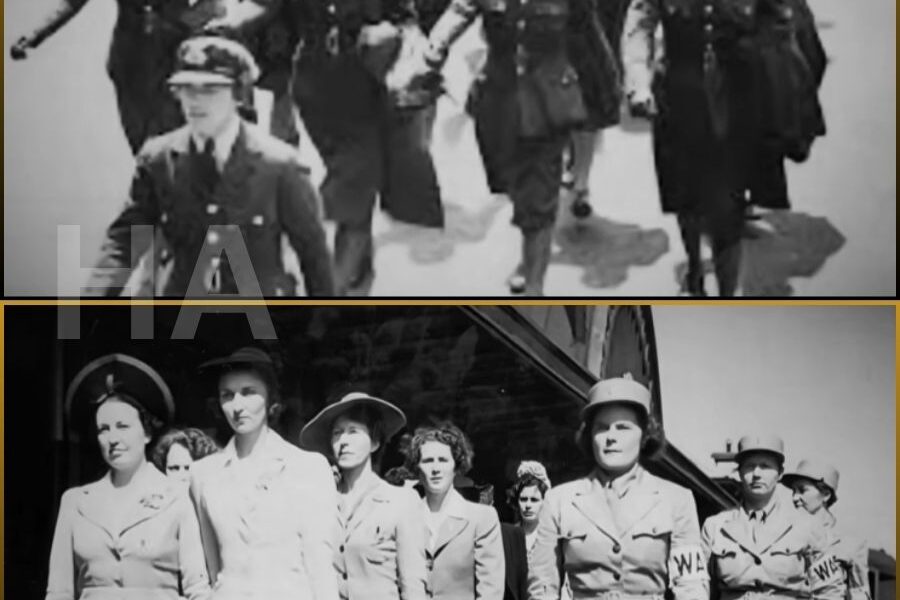
“We were betrayed twice,” Mary wrote, in a letter read aloud at the small gathering, and Sarah’s hands shook as she placed a photograph on the table — a picture of a group of women in uniform taken before the capture, faces bright and full of an expectation of service.
Richards had been trained in the patience of archives, but she had not been trained in the moral weight of these discoveries. She published articles that rippled outward. There was an uproar; there were denials and soft-edged excuses. There were committees and rubrics and bureaucracies finally pushed to open drawers they had kept shut. It was a slow, messy process — the way truth usually is.
The climax of their fight for recognition came in a small, solemn room in 2001, when a handful of women — most now into their seventies and eighties — were invited to a quiet ceremony at an American military facility. “We cannot undo what was done,” the commander said, a man whose voice shook slightly as he read prepared notes. “But we acknowledge it.”
There were no press cameras flaring like sunlight. There was only a small group of people with a pile of papers and the rustle of medals being moved in pocket linings. For the women present, the ceremony had the effect of an exhalation. It was not the public, brassy vindication of newsreels, but it was real. It made names visible again.
When Sarah took the podium, her voice was smaller than it had been in the barn when she had been first questioned. “We did not choose to be trophies,” she said, and the people in the room sat very still. “We were soldiers. We served. We ask only that you call us by what we were: soldiers.”
Her words were not all. They were a small, unrigid thing placed where a wound had been. For Elise, who had taught girls in a school for decades after the war, the ceremony was a reckoning. “It is not only for us,” she said to记者s outside afterwards, when reporters had been allowed in. “It is for the daughters. For the women who might one day choose to wear a uniform and must be assured that the law will protect them.”
The documents that began to be released after the ceremony — redacted in places, damning in many more — showed the brittle, cruel mechanics of a program that had treated women as specimens. They showed memos and protocols and minutes from meetings where men wrote of “exploiting” what they identified as vulnerability. They also showed the other thing the Germans had not anticipated: that solidarity could be a strategy as effective as any counter-intelligence.
Years later, a memorial was erected in a modest park outside a small military museum — a ring of names and a plaque that said nearly what Mary had written in that attic. People came with small wreaths and children who had never lived through war read aloud names and folded flags. The survivors came when they could. A niece of Mary’s read from her aunt’s journal in the open air and the wind carried the words like a benediction.
“We were soldiers first,” Mary’s niece read. “We are soldiers still.”
The world, with its essential habit of forgetting, had been forced into a memory not entirely chosen by ceremony. Faces were now in books; names were carved on stone. There were documentaries and interviews and, at last, a tendency toward truth that could no longer be sealed by classified stamps.
And yet the humane ending was not simply in the unearthing of documents or in the public acknowledgement. It was in small human moments that could not be legislated by a policy memo. It was in the farmers who had hidden pilots in their barns during the occupation and later became citizens of the memory that these women carried. It was in the friendship of a woman who had been a nurse and a woman who had been a mechanic, who met after the war in Portland and drank tea and did not pretend the old wounds were not there. It was in a young historian who sat with Sarah in 1992 and listened with the kind of attention that lets people speak their truths without fear of being hushed.
On a chilly November afternoon, many years after the war ended and long after the first formal acknowledgements, Sarah visited a small class of ROTC cadets at a university. She sat in a lecture room and spoke into a circle of faces that were more hopeful than hardened. A cadet, twenty years old, asked a question that was not disrespectful but raw with curiosity.
“Did you ever forgive them?” he asked.
Sarah paused. The audience was still. In that pause she could feel the small machine of memory winding itself forward and back.
“Forgiveness is a private thing,” she said finally. “I cannot undo what was done. I can, though, demand that the world learn so that such things have less chance to happen again. We must recognize people for what they are and protect them under the law. That is, in itself, a kind of forgiveness: to trust the future will be different because we made it so.”
Elise, who had taught for years and had taught girls to read and to count and to think of themselves as agents, found a young woman in the crowd after the talk and held her hand with a small kindness. “Tell your daughters,” she said. “Tell them stories of courage, not of shame. We were brave.”
Mary’s name, folded into a file by decades of silence, lived then in letters and in living people who taught the new generations to speak honestly about history. When a granddaughter of one of Mary’s fellow officers found a cache of letters and placed them gently in a museum archive, she wrote in the donor’s book: “For the truth.”
The truth had cost them all the small comforts of anonymity. It had cost sleep and quiet nights and normalcy. But it gave them back their definitions. They were soldiers. They had served. They had resisted. They had loved and lost and kept on living.
At the end of her life, Sarah had a small house with a garden and a bird feeder and a dog that could not be trusted with delicate things. She planted roses every spring and would sometimes sit beside the bed and read aloud to visitors from a battered volume of poetry.
“You remind me of courage,” she would tell any young woman who came into her kitchen and was not yet ready to lay down her questions. “Courage is not always a shout; sometimes it is a steady hand with tea.”
Elise, back in France, had a granddaughter who, when asked by a schoolteacher why she took history so seriously, replied: “Because my grandmother taught me that we owe people the dignity of being remembered.”
Mary’s journals were tucked in climate-controlled boxes in a national archive. Young historians would read them and learn not only about the depravity of a program but about the ways in which human beings — women in particular, stubborn, sometimes underestimated creatures — respond to the worst. They learned that solidarity matters. They learned that identity can be a defense, a talisman, and a weapon. They learned that silence can be a prison.
When the government finally convened a small committee to evaluate the policies that had allowed secrecy, the recommendations were simple and practical: clearer legal protections, education for officers about trauma, a commitment to transparency. The memoirs and the documents did not fix what had been done, but they made the law better — and laws, when enacted with care, can save lives.
And in the way that love softens the hardest edges, the women who had endured found small, human consolations: a neighbor who would sit with them and let them speak about bad dreams until they faded; a friend who understood what it meant to flinch when someone reached for their shoulder; a child who asked without judgment, “Grandmother, why do you close your eyes sometimes when someone hugs you?” — and then sat, patient as a candle, to listen to the story.
On the stone plaque in that small park, beneath the names and the dates, there is a phrase that someone chose with care: “Not to be forgotten.” People pin tokens there on windy days — small reminders that history is also a ledger of people. It is an awkward, human thing, this memorializing. It is not tidy. It will not satisfy every question. But it means that the women who had once been relegated to shadows were now standing where the light could touch them.
“Remember us,” Mary had scribbled in her last entry, and someone did. The remembering was imperfect and late, but it was real. The world, stumbling as it always does, had been made to bend toward truth.
They had been soldiers first. That recognition — later than it should have been, quieter than it deserved — was the thing that, at the end, mattered to them. Not the medals, not the headlines, not even the apologies; but to be called by what they had been and to see their story taught to the young who would inherit their battles.
In a letter read at the memorial opening, Sarah wrote: “We learned to whisper our courage into one another’s ears. Now, speak it aloud. Teach it as plainly as you teach how to tie a knot. The world is safer when we say what we saw, and when we make laws that refuse to let such things be hidden beneath stamps that say ‘classified.’”
And when a child in the crowd asked why the word “soldier” was different from the word “woman,” Sarah reached down, picked up a small paper flag that had fallen from a wreath, and handed it to the child.
“Because you can be both,” she said simply. “And because when the world remembers that, it will be kinder.”
The wind moved and the flags fluttered. The sun struck the simple ring of names and the faces in the crowd looked at one another and, for a time, felt the small, clean warmth of acknowledgement. It was not a cure for the past, but a promise for the future — an insistence that no one else be betrayed twice.